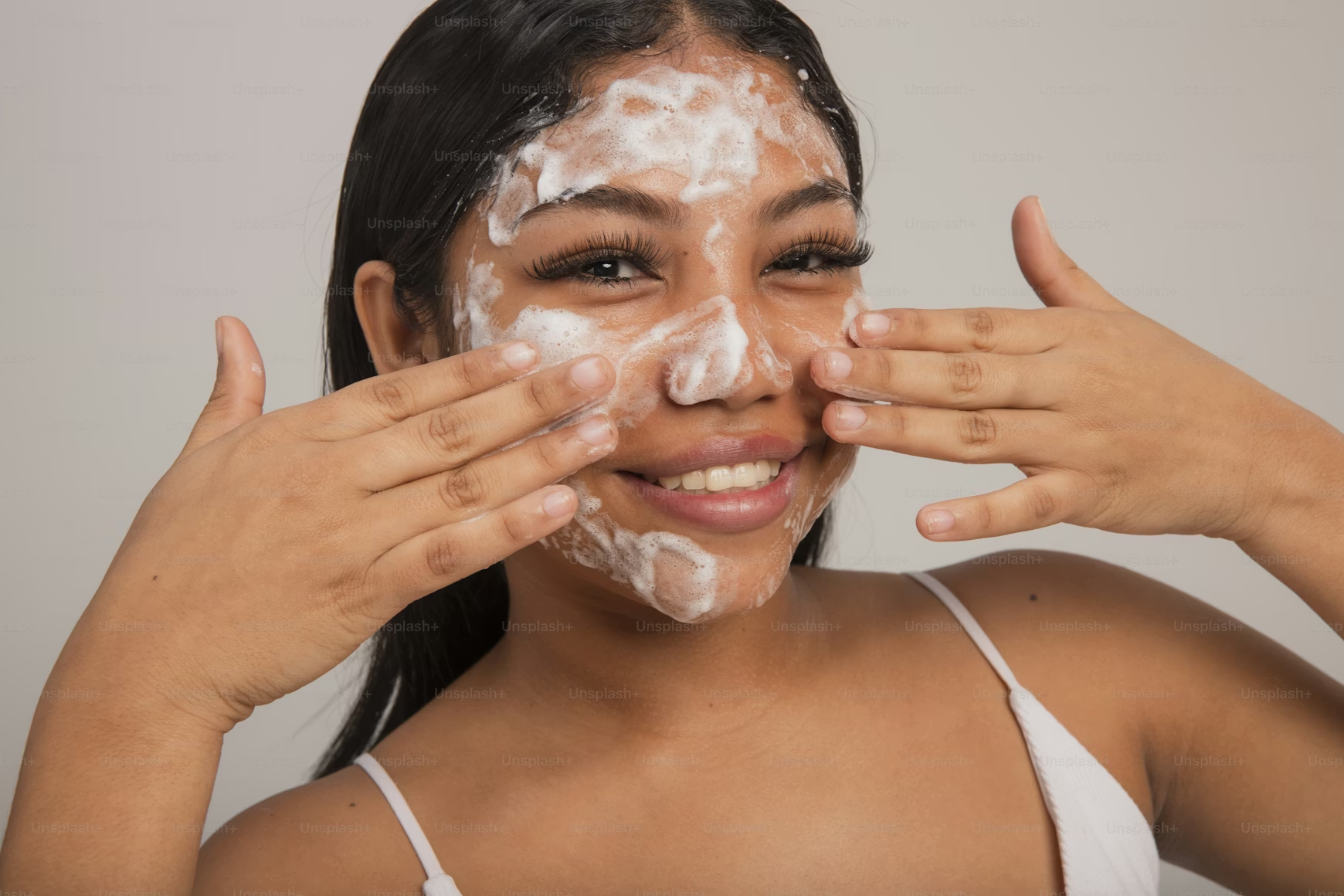
Introduction:
Acne-prone skin needs a cleanser that does two things:
- Actually removes oil and debris without stripping
- Doesn’t irritate or cause more breakouts
Most drugstore cleansers fail at #1. Most “gentle” cleansers fail at #2.
Over 3 months of testing, I narrowed down the best cleansers for acne-prone skin by testing them on myself. Let’s take a look at my real and honest reviews:
Table of Contents
QUICK COMPARISON TABLE
| Cleanser | Rating | Price | Best For | Key Feature |
|---|---|---|---|---|
| Paula’s Choice RESIST Perfectly Balanced Foaming Cleanser | ⭐⭐⭐⭐⭐ (5/5) | $28–32 | Best overall | 2% SA + hydrating formula |
| CeraVe Foaming Cleanser | ⭐⭐⭐⭐⭐ (5/5) | $8–10 | Best budget | Niacinamide + Ceramides |
| Mung Bean Cleanser | ⭐⭐⭐⭐⭐ (5/5) | $8–12 | Sensitive skin | Powder-to-cream, minimal ingredients |
| La Roche-Posay Toleriane Purifying Foaming Cleanser | ⭐⭐⭐⭐ (4/5) | $12–15 | Sensitive + acne-prone | Thermal spring water + gentle |
| Cetaphil Gentle Skin Cleanser | ⭐⭐⭐ (3/5) | $5–8 | Extremely reactive skin only | Too gentle, doesn’t clean effectively |
| Byoma Blemish Acne Clearing Cleanser | ⭐⭐ (2/5) | $10–12 | NOT RECOMMENDED | Too harsh, caused cystic breakouts |
#1 BEST OVERALL: Paula’s Choice RESIST Perfectly Balanced Foaming Cleanser
Rating: ⭐⭐⭐⭐⭐ (5/5)
Price: $28–32
Key stats: 2% Salicylic Acid, pH-balanced, fragrance-free
Why it wins:
Paula’s Choice RESIST is the only cleanser I tested that actually cleans AND respects your skin barrier.
Most BHA cleansers dry you out. This one doesn’t. That’s because Paula’s Choice formulated it with:
- 2% Salicylic Acid (effective for acne without overkill)
- Hydrating surfactants (removes oil without stripping)
- Panthenol + Allantoin (calms and heals)
- pH-balanced (doesn’t disrupt skin barrier)
What I noticed after 3 months of use:
✅ Removes oil and light makeup without harsh scrubbing
✅ No drying or tight feeling (unlike Neutrogena or Stridex)
✅ Calms redness from active breakouts
✅ Doesn’t cause irritation even when layered with other actives (retinol, vitamin C)
✅ Lasts a long time (small amount goes a long way)
❌ Expensive ($28–32 per bottle)
❌ Takes 2–3 weeks to see full benefits (BHA needs time)
❌ Not ideal if you’re broke (but worth the splurge)
Ingredient breakdown:
| Ingredient | Purpose | Why it matters |
|---|---|---|
| Salicylic Acid (2%) | Chemical exfoliant | Unclogs pores without physical scrubbing |
| Potassium Cocoyl Glycinate | Gentle surfactant | Removes oil without stripping |
| Panthenol | Humectant + healer | Soothes irritation, locks in moisture |
| Allantoin | Skin protectant | Calms redness, promotes healing |
| Glycerin | Humectant | Keeps skin hydrated while cleansing |
How to use:
- Wet face with lukewarm water
- Pump 1–2 times into palm (goes a long way)
- Massage gently for 30–45 seconds
- Rinse thoroughly with water
- Pat dry (don’t rub)
- Follow with toner/essence, serum, moisturizer
Pro tip: Use in the morning only if you’re new to BHA. Once your skin adapts (2–3 weeks), use twice daily.
Who should buy:
✅ Acne-prone skin that’s not super sensitive
✅ Combo/oily skin
✅ People using prescription actives (tretinoin, adapalene)
✅ Anyone willing to invest in quality
Who should skip:
❌ Extremely sensitive/reactive skin (use #3 or #4 instead)
❌ Budget-conscious shoppers (use #2 instead)
❌ People with very dry skin (might need extra hydration)
#2 BEST BUDGET OPTION: CeraVe Foaming Cleanser
Rating: ⭐⭐⭐⭐⭐ (5/5)
Price: $8–10
Key stats: Niacinamide, 3 Ceramides, Hyaluronic Acid
Why it’s a winner:
CeraVe Foaming is the best “bang for buck” cleanser for acne-prone skin. It’s not fancy, but it works.
The formula focuses on balance: removes oil effectively without destroying your skin barrier.
What I noticed:
✅ Removes oil and sunscreen without feeling tight
✅ Affordable ($8–10 per bottle)
✅ Dermatologist-approved (Niacinamide + Ceramides)
✅ No fragrance or irritating ingredients
✅ Works with all acne medications (tretinoin, benzoyl peroxide, etc.)
❌ No active ingredients (won’t treat acne on its own)
❌ Takes longer to rinse (slightly foamy formula)
❌ Doesn’t have the “clean” feeling of a BHA cleanser
Ingredient breakdown:
| Ingredient | Purpose | Why it matters |
|---|---|---|
| Niacinamide (4%) | Regulates sebum | Helps with oily skin + reduces inflammation |
| Ceramides (3 types) | Skin barrier repair | Prevents moisture loss, strengthens protection |
| Hyaluronic Acid | Humectant | Keeps skin hydrated while cleansing |
| Cetyl Alcohol | Emollient | Softens and conditions (NOT drying) |
How to use:
- Wet face with water
- Pump 1–2 times into palm
- Massage for 30 seconds
- Rinse thoroughly (this one foams, so rinse well)
- Pat dry
Pro tip: Use twice daily. Morning and night. It’s gentle enough for daily use.
Who should buy:
✅ Budget-conscious shoppers
✅ Beginners to skincare
✅ People using strong actives (needs a gentle cleanser)
✅ Combo/oily acne-prone skin
✅ Anyone who wants simplicity
Who should skip:
❌ People who want a BHA cleanser (it doesn’t have actives)
❌ Extremely sensitive skin (use #3 instead)
#3 BEST FOR SENSITIVE/REACTIVE SKIN: Beplain Mung Bean Cleanser
Rating: ⭐⭐⭐⭐⭐ (5/5)
Price: $8–12
Key stats: Powder-to-cream formula, Mung bean extract, Rice flour, Activated charcoal
Why it’s special:
The Mung Bean Cleanser is the gentlest option on this list—and still effective.
It’s a powder that transforms into a creamy paste when you mix it with water. This gives you control over consistency and allows the gentle ingredients to work without harsh surfactants.
What I noticed:
✅ Removes oil gently (no stripping)
✅ Zero irritation (even on compromised skin barriers)
✅ Calms redness immediately (Mung bean is anti-inflammatory)
✅ Minimal ingredients (no fragrance, no sulfates, no alcohol)
✅ Lasts forever (small amount per use)
❌ Powder formula is inconvenient for travel
❌ Takes longer to use (mixing step)
❌ No active ingredients (gentle but not treating)
Ingredient breakdown:
| Ingredient | Purpose | Why it matters |
|---|---|---|
| Mung Bean Extract | Anti-inflammatory | Calms redness, reduces irritation |
| Rice Flour | Gentle exfoliant | Removes dead skin without harsh chemicals |
| Activated Charcoal | Absorbs oil | Doesn’t dry out—just removes excess sebum |
| Kaolin Clay | Pore cleansing | Lifts debris without stripping |
How to use:
- Pour ½ teaspoon into palm
- Add a few drops of water
- Mix into paste
- Apply to damp face, massage gently
- Rinse thoroughly with warm water
- Pat dry
Pro tip: Mix it thicker if you want more exfoliation, thinner if you want a creamy cleanse.
Who should buy:
✅ Sensitive or reactive acne-prone skin
✅ People with compromised skin barriers (over-cleansed, damaged)
✅ Anyone recovering from harsh treatments
✅ Those who prefer minimal ingredients
Who should skip:
❌ People who want convenience (powder is annoying)
❌ Anyone wanting a BHA/AHA cleanser
❌ Travel-heavy people
#4 BEST FOR SENSITIVE + ACNE-PRONE: La Roche-Posay Toleriane Purifying Foaming Cleanser
Rating: ⭐⭐⭐⭐ (4/5)
Price: $12–15
Key stats: Thermal spring water, Niacinamide, Ceramides, no fragrance
Why it’s solid:
La Roche-Posay sits in the sweet spot between gentle and effective.
It’s not a BHA cleanser, but the Thermal Spring Water (La Roche-Posay’s signature ingredient) provides antioxidant protection and calming properties that make it especially good for acne-prone, sensitive skin.
What I noticed:
✅ Cleans without stripping (similar to CeraVe, but slightly better for sensitive skin)
✅ Thermal water is genuinely soothing (reduces redness)
✅ Dermatologist-approved formula
✅ No fragrance (important for reactive skin)
✅ Works well as a gentle second cleanser in double-cleanse routines
❌ More expensive than CeraVe (but not as pricey as Paula’s Choice)
❌ No active ingredients (purely cleansing + soothing)
❌ Takes longer to find (not in every drugstore)
Ingredient breakdown:
| Ingredient | Purpose | Why it matters |
|---|---|---|
| Thermal Spring Water | Antioxidant + soothing | Reduces inflammation, calms redness |
| Niacinamide | Sebum regulation | Balances oily skin without irritation |
| Ceramides | Barrier repair | Prevents moisture loss |
| Sodium Hydroxide (pH buffer) | pH balance | Maintains skin’s natural pH |
How to use:
- Wet face with water
- Pump 1–2 times into palm
- Massage for 30–45 seconds
- Rinse thoroughly with warm water
- Pat dry
Pro tip: Use as a second cleanser after an oil cleanser for sensitive skin (double cleanse method).
Who should buy:
✅ Sensitive + acne-prone skin (the combo)
✅ People recovering from harsh treatments
✅ Anyone using strong prescription actives (tretinoin, azelaic acid)
✅ Those with inflammation-prone skin
Who should skip:
❌ Budget shoppers (go with CeraVe #2)
❌ People wanting BHA treatment (it doesn’t have actives)
#5 POPULAR BUT NOT RECOMMENDED: Cetaphil Gentle Skin Cleanser
Rating: ⭐⭐⭐ (3/5)
Price: $5–8
Key stats: Ultra-gentle, dermatologist classic, fragrance-free
Why it’s disappointing:
Cetaphil is the dermatologist-recommended classic for a reason—it’s incredibly gentle. But for acne-prone skin specifically, it doesn’t do its job.
What I noticed:
✅ Ultra-gentle (won’t irritate even extremely reactive skin)
✅ Affordable ($5–8)
✅ Doesn’t strip (good for very dry skin)
❌ Doesn’t actually clean (leaves an oily residue)
❌ Doesn’t remove makeup or sunscreen effectively
❌ No active ingredients (purely a rinse-off product)
❌ Leaves skin feeling filmy (not that “clean” feeling)
The honest take:
Cetaphil works great IF you have extremely dry, sensitive skin with no acne. But if you’re using this blog, you have acne-prone skin, which means you need a cleanser that actually removes sebum and debris.
Cetaphil just doesn’t do that. It’s like washing your face with a cream—it feels nice but doesn’t clean.
Who should buy:
✅ Only if you have extremely reactive skin AND are using prescription actives (tretinoin, etc.)
✅ People with very dry, non-acne-prone skin
Who should skip:
❌ Anyone with acne-prone skin (use #2, #3, or #4 instead)
❌ Combo/oily skin
❌ People who want actual cleansing
NOT RECOMMENDED: Byoma Blemish Acne Clearing Cleanser
Rating: ⭐⭐ (2/5)
Price: $10–12
Key stats: 2% Salicylic Acid, Zinc, Azelaic Acid (3 actives in one cleanser)
Why I don’t recommend it:
Byoma tried to do too much in one cleanser.
Combining 2% SA + Azelaic Acid + Zinc is overkill for a cleanser (which only sits on skin for 30 seconds).
What happened:
- Day 1–3: Seemed fine, skin felt clean
- Day 4: Woke up with multiple cystic breakouts (the worst kind)
- Day 5–7: Increased redness, irritation, more breakouts
- By Day 7: Stopped using it
The formula is too harsh for a leave-on product and too harsh for a rinse-off cleanser. It’s designed to be strong, but it’s just irritating.
What I noticed:
❌ Caused cystic breakouts (major red flag)
❌ Too many actives combined (overkill)
❌ Stripping and drying
❌ Irritation increased with continued use
Who should skip:
❌ Everyone with acne-prone skin (not worth the risk)
❌ Sensitive skin
❌ Combination skin
If you want a BHA cleanser, use Paula’s Choice (#1) instead.
WHICH CLEANSER SHOULD YOU CHOOSE?
Decision tree:
Is your skin extremely sensitive/reactive?
- YES → #3 (Mung Bean) or #4 (La Roche-Posay)
- NO → Continue
Do you want to treat acne with your cleanser?
- YES → #1 (Paula’s Choice RESIST with 2% SA)
- NO → Continue
What’s your budget?
- Under $10 → #2 (CeraVe)
- $10–15 → #4 (La Roche-Posay)
- $25+ → #1 (Paula’s Choice)
CLEANSER RANKINGS BY SKIN TYPE
Oily/Acne-Prone Skin:
- Paula’s Choice RESIST (best overall)
- CeraVe Foaming (budget pick)
- Mung Bean (if sensitive)
Combination Skin:
- Paula’s Choice RESIST
- CeraVe Foaming
- La Roche-Posay Toleriane
Sensitive + Acne-Prone:
- Mung Bean Cleanser
- La Roche-Posay Toleriane
- CeraVe Foaming (if Mung Bean is inconvenient)
Dry + Acne-Prone:
- La Roche-Posay Toleriane
- Mung Bean Cleanser
- CeraVe Foaming
Very Reactive/Compromised Barrier:
- Mung Bean Cleanser
- La Roche-Posay Toleriane
- Cetaphil (if you need something ultra-gentle)
FOAMING VS. GEL VS. CREAM CLEANSERS: WHAT’S THE DIFFERENCE?
Foaming Cleansers
- Texture: Foams up when rubbed on skin
- Best for: Oily and combo skin
- Why: More effective at removing oil
- Examples: Paula’s Choice, CeraVe, La Roche-Posay
- Downside: Can feel stripping if over-formulated
Gel Cleansers
- Texture: Light, translucent gel
- Best for: Combo and oily skin
- Why: Refreshing feel, good cleansing
- Examples: Most K-beauty cleansers
- Downside: Can dry out sensitive skin
Cream Cleansers
- Texture: Rich, creamy consistency
- Best for: Dry and sensitive skin
- Why: Hydrating while cleansing
- Examples: Cetaphil, CeraVe Hydrating Cleanser
- Downside: Might not remove oil effectively
Powder Cleansers
- Texture: Dry powder that mixes with water
- Best for: Sensitive and acne-prone skin
- Why: Gentle, customizable, minimal actives
- Examples: Mung Bean Cleanser
- Downside: Inconvenient, takes longer to use
For acne-prone skin: Foaming or gel are better because they remove sebum more effectively.
ACTIVE INGREDIENTS IN CLEANSERS: EXPLAINED
Salycic Acid (BHA)
What it does: Unclogs pores, reduces excess oil
Strength: 0.5%–2% in cleansers
Best for: Oily, acne-prone skin
Examples: Paula’s Choice RESIST, Stridex Wipes, Neutrogena Oil-Free Acne Wash
Note: Works best in leave-on products (toners, serums) but OK in cleansers
Azelaic Acid
What it does: Antibacterial, anti-inflammatory, treats rosacea + acne
Strength: 10%–20% (typical products)
Best for: Rosacea, acne, hyperpigmentation
Note: Rare in cleansers (too strong for rinse-off formula)
Warning: Don’t combine with other actives in cleansers (see Byoma issue)
Benzoyl Peroxide
What it does: Kills acne bacteria, reduces inflammation
Strength: 2.5%–10%
Best for: Acne with bacteria (whiteheads, pustules)
Note: Uncommon in cleansers (usually in spot treatments)
Warning: Can bleach fabrics and hair
Glycolic Acid (AHA)
What it does: Exfoliates surface dead skin cells
Strength: 4%–8% in cleansers
Best for: Dull skin, congestion
Note: Less common in cleansers than BHA
Warning: Can be drying; not ideal for sensitive skin
Pro tip: Don’t use a BHA cleanser + BHA toner on the same day. One is enough.
FAQ: CLEANSER QUESTIONS ANSWERED
Q: Can I use a cleanser with Salicylic Acid if I’m using tretinoin?
A: Yes, but carefully. Paula’s Choice RESIST is specifically designed for this (gentle + effective). Start with 1–2x per week and work up. Your skin might need a break period. Listen to your skin—if it’s red or tight, dial back.
Q: How long does it take to see results from a BHA cleanser?
A: 2–3 weeks minimum. Your skin needs time to adjust. Some people see results in 5–7 days; others take a month. If you’re not seeing improvement after 4 weeks, it might not be the right cleanser.
Q: Can I use a BHA cleanser if I have severe cystic acne?
A: BHA cleaners help with comedonal acne (blackheads, whiteheads), but cystic acne usually needs prescription treatment (antibiotics, accutane, spironolactone). Use a gentle cleanser (#3 or #4) and see a dermatologist.
Q: What if my cleanser is making my skin worse?
A: Stop immediately. Your skin barrier might be compromised. Use the Mung Bean Cleanser (#3) for 2 weeks to recover. Then slowly reintroduce other products.
Q: Can I use a physical exfoliant if I’m using a BHA cleanser?
A: No. BHA is chemical exfoliation. Adding physical scrubbing = over-exfoliation. Stick with one method.
THE BOTTOM LINE
| Cleanser | Best for | Price | Why |
|---|---|---|---|
| Paula’s Choice RESIST | Best overall | $28–32 | Treats acne + hydrates |
| CeraVe Foaming | Best budget | $8–10 | Affordable + effective |
| Mung Bean | Best for sensitive | $8–12 | Ultra-gentle |
| La Roche-Posay | Best for combo | $12–15 | Balanced formula |
| Cetaphil | Skip for acne | $5–8 | Doesn’t clean effectively |
| Byoma | NOT recommended | $10–12 | Too harsh, caused breakouts |
Start here:
- If budget isn’t an issue: Paula’s Choice RESIST (#1)
- If you’re on a budget: CeraVe Foaming (#2)
- If your skin is sensitive: Mung Bean Cleanser (#3)
NEXT STEPS
Now that you have the right cleanser, here’s what to do next:
- Cleanse 2x daily (morning and night)
- Wait 2–3 weeks before judging results
- Layer actives properly (don’t mix multiple exfoliants)
- Follow with moisturizer (always, even if you’re oily)
- Wear SPF (sunscreen prevents breakouts and hyperpigmentation)
Questions? Drop them in the comments below! 👇