Category: acne-prone skincare

  • How to Make a Pimple Go Away Fast: Science-Backed Methods That Actually Work

    How to Make a Pimple Go Away Fast: Science-Backed Methods That Actually Work

    You woke up, looked in the mirror, and there it is—a new pimple: whether it’s a whitehead, a stubborn cyst, or that angry red bump, you want it gone. Now.

    I’ve been there countless times. After years of trial and error with various treatments, I’ve discovered what actually accelerates healing and, more importantly, what prevents scarring and hyperpigmentation in the process.

    Here’s what I’ve learned works.

    The Reality: Speed Matters: And We Want Fast Results

    A pimple doesn’t just disappear overnight. But what you do in the first 24-48 hours matters a lot. The faster you treat it correctly, the faster it heals. The slower you treat it—or worse, if you pick at it—the longer it sticks around and the higher the chance it leaves a mark.

    Most people don’t realize that scarring isn’t inevitable. It’s a choice, and that choice happens right now: when the pimple is fresh.

    Understanding What Causes Scarring

    Before I get into treatment, you need to understand why some pimples scar and others don’t.

    A pimple is an inflammation beneath the skin which occurs when bacteria multiply in a pore and your immune system sends white blood cells to fight them. The resulting swelling is what you see on the surface. In most cases, this resolves cleanly, and your skin goes back to normal.

    When you squeeze, pick, or irritate a pimple, you’re doing two things:

    • Breaking the skin barrier and creating micro-tears
    • Pushing inflammation deeper into the dermis (the layer below the epidermis where collagen lives)

    If inflammation reaches the dermis, your body responds by laying down collagen to “repair” the damage, and unfortunately, collagen doesn’t always fill in evenly. Sometimes it creates an indentation (atrophic scar) or a raised bump (hypertrophic scar). Either way, it’s permanent without professional treatment.

    The good news: If you don’t pick, squeeze, or heavily irritate the pimple, most of the inflammation stays in the epidermis and resolves cleanly without scarring.

    That’s why early gentle intervention is so important.

    Different Pimple Types Require Different Approaches

    Not all pimples are created equal. Here’s how to identify what you’re dealing with and how to treat it:

    Whiteheads (comedones): A visible white or yellowish head at the surface. The pore has opened slightly, and you can see pus/sebum.

    • Best treatment: Flat hydrocolloid pimple patch
    • Timeline: 6-12 hours to significant flattening

    Blackheads: A dark spot where the pore is open but oxidized (not dirt). Often on the nose or chin.

    • Best treatment: These don’t need patches—they’re not inflamed. Use a gentle exfoliant or leave them alone.
    • Note: Don’t squeeze these either. You’ll cause inflammation and create a pimple.

    Papules (red bumps): Inflamed, but no visible head. The infection is deeper, closer to the surface but not yet open.

    • Best treatment: Micro-needle pimple patch to bring it to a head faster
    • Timeline: 12-24 hours to whitehead formation, then another 12-24 hours to flattening

    Cystic/Nodular pimples: Large, painful, deep bumps under the skin. No head. Often sensitive to touch.

    • Best treatment: Micro-needle pimple patches for 6-8 hours, then switch to a flat patch once a whitehead forms.
    • Timeline: 24-48 hours to see a significant reduction
    • Note: These are most prone to scarring if picked. Leave them alone and let the patches do the work.

    Method 1: Pimple Patches (Hydrocolloid)

    What they are: Flat, sticky patches that adhere directly to the skin. The most common brands are Mighty Patch and Hero Cosmetics.

    When to use them: Only when you can see a whitehead or the pore is visibly opening. If the pimple is under the skin, a regular patch won’t work because it needs direct contact with the head of the pimple.

    How they work: Hydrocolloid patches absorb the pus and oil from the pimple, flattening it and reducing inflammation. They also create a barrier so you’re not tempted to touch, pick, or squeeze it.

    My experience: I love these. They’re simple, they work, and I can wear them under makeup or just leave them on overnight. I’ve seen whiteheads flatten noticeably within 6-8 hours.

    Timeline:

    • Hours 0-2: The patch adheres and starts absorbing fluid
    • Hours 6-8: The pimple begins to flatten visibly
    • Hours 12-24: Most of the inflammation is gone; the patch turns white as it absorbs material
    • Day 2-3: The pimple is significantly smaller

    Cost: $8-15 for a pack of 20-30 patches. One pimple = one patch.

    Application Protocol for Hydrocolloid Patches

    This is critical, and most people get it wrong:

    1. Wash your face with a gentle, fragrance-free cleanser (like All Free Clear). Use lukewarm water.
    2. Dry your skin completely. This is non-negotiable. The patch will not adhere well to damp skin, and any residual moisture reduces its ability to absorb fluid. Be sure to pat dry with a clean towel and wait 1-2 minutes if needed.
    3. Do not apply moisturizer, serums, or any other products to the area where the patch will be placed. Although this may seem counterintuitive, moisturizer creates a barrier between your skin and the patch which prevents the hydrocolloid from making proper contact and significantly reduces its ability to pull out fluid and oil.
    4. Apply the patch directly to the clean, dry skin. Press firmly for 10-15 seconds to ensure full adhesion.
    5. After applying, wait 5-10 minutes before applying any other skincare. This allows the patch to fully set.
    6. Once the patch has set, you can apply moisturizer around it (not under it or on top of it). Apply your regular skincare to the rest of your face.
    7. Change the patch every 6-8 hours or once it turns white. A saturated patch won’t absorb anymore and becomes just a band aid. Remove it, wash the area, dry completely, and apply a fresh patch.
    8. Make sure to apply a fresh patch on clean, dry skin. Sleep on your back or the opposite side to avoid pressing the patch into the pillow.

    Why This Matters:

    Moisturizer sits on top of your skin and creates an occlusive layer. The patch needs direct contact with your skin to adhere and create the microenvironment that absorbs fluid. If there’s a barrier of moisturizer between the patch and your skin, it’s like trying to tape something through a sheet of plastic—it won’t stick, and it won’t work.

    Method 2: Micro-Needle Pimple Patches for Cystic Pimples

    What they are: Patches with tiny microneedles embedded in them. Brands like Mighty Patch and Hero Cosmetics make these too.

    When to use them: This is crucial—use these for cystic pimples or deep, under-the-skin pimples that a regular patch can’t touch. If it’s a whitehead, stick with the flat patch (Method 1).

    How they work: The microneedles penetrate the skin barrier and deliver active ingredients (usually salicylic acid or niacinamide) directly into the pimple. They also create tiny channels that help bring the inflammation to the surface faster.

    My experience: I love these for stubborn cystic pimples. In the event that I get one of those deep, painful bumps that won’t come to a head, a micro-needle patch is a game-changer. I press firmly to ensure good contact and leave it on for 6-8 hours (or overnight).

    Timeline:

    • Hours 0-6: The microneedles penetrate; you might feel slight tingling or warmth
    • Hours 6-12: The pimple starts bringing inflammation to the surface
    • Day 2-3: The cyst flattens and may come to a whitehead (then you can switch to a regular patch)
    • Day 3-4: Significant reduction in size and pain

    Cost: $10-18 for a pack of 6-8 patches. Slightly pricier than flat patches, but worth it for cystic acne.

    Applying Micro-Needle Patches on a Cystic Pimple

    1. Wash your face with a gentle, fragrance-free cleanser. Use lukewarm water.
    2. Dry your skin completely. Again, this is essential. The patch needs direct contact with dry skin to work effectively.
    3. Do not apply any moisturizer, serums, or products to the area. The same reason as above: barriers (like moisturizer) prevent the needles from penetrating properly and reduce efficacy.
    4. Apply the patch directly to the clean, dry skin. Press firmly for 15-20 seconds. You want good contact so the microneedles can penetrate the skin barrier effectively. You may feel slight tingling or warmth—this is normal.
    5. Leave the patch on for 6 to 8 hours. Micro-needle patches work differently from flat hydrocolloid patches because they penetrate the skin to deliver active ingredients ,whereas flat hydrocolloid patches sit on top of the skin and absorb fluid. An overnight application is ideal for these micro-needle patches.
    6. After removing the patch, do not apply moisturizer immediately. Wait 10-15 minutes, then you can apply your regular skincare routine.
    7. The next day, assess the pimple. If it’s come to a whitehead, switch to a regular hydrocolloid patch (Method 1). If it’s still under the skin but noticeably smaller, apply another micro-needle patch.

    Why this matters: Micro-needle patches work by penetrating the skin barrier. Any barrier (moisturizer, serum, oil) on top of your skin prevents the needles from doing their job. You need direct skin contact for the active ingredients to be delivered and for the needles to penetrate effectively.

    Method 3: Silicone Scar Sheets

    What they are: Thin, flexible silicone sheets that adhere to the skin and create a microenvironment that hydrates and flattens scar tissue.

    When to use them: During the recovery phase of a pimple, specifically days 3-7 when the pimple is flattening but still visibly inflamed or textured.

    How they work: Silicone occludes the skin, increasing hydration and allowing collagen to remodel more evenly. This prevents the pimple from leaving behind texture or indentation.

    My experience: I rate these 7/10. They genuinely help even out texture during recovery, especially on pimples that were deep or cystic. I apply them for 24-48 hours during the healing window.

    Timeline:

    • Day 1-2 of application: The silicone hydrates the area; redness may look slightly worse (it’s just more visible)
    • Day 2-3: Texture noticeably evens out
    • Day 3-7: Continued flattening; hyperpigmentation fades faster
    • After removal: Your skin stays smoother than it would have without the sheet.

    Cost: $15-25 for a pack of 4-5 sheets.

    Important note: These aren’t a replacement for pimple patches in the active phase. Use pimple patches first (days 0-2), then switch to silicone sheets (days 3-7) once the pimple is flat.

    What NOT to Do When Trying to Make a Pimple Go Away Fast:

    Let me be direct: Don’t squeeze, pick, or irritate the pimple. I know it’s tempting. I know you want to “get the stuff out.” But every time you touch it, you’re:

    • Pushing bacteria deeper into the skin
    • Creating micro-tears that lead to scarring
    • Extending the healing timeline
    • Increasing the chance of hyperpigmentation

    Your hands have bacteria on them. Your nails are sharp. A pimple is an open (or near-open) wound. The math doesn’t work.

    Also avoid:

    • Harsh scrubbing or exfoliating the area while it’s active
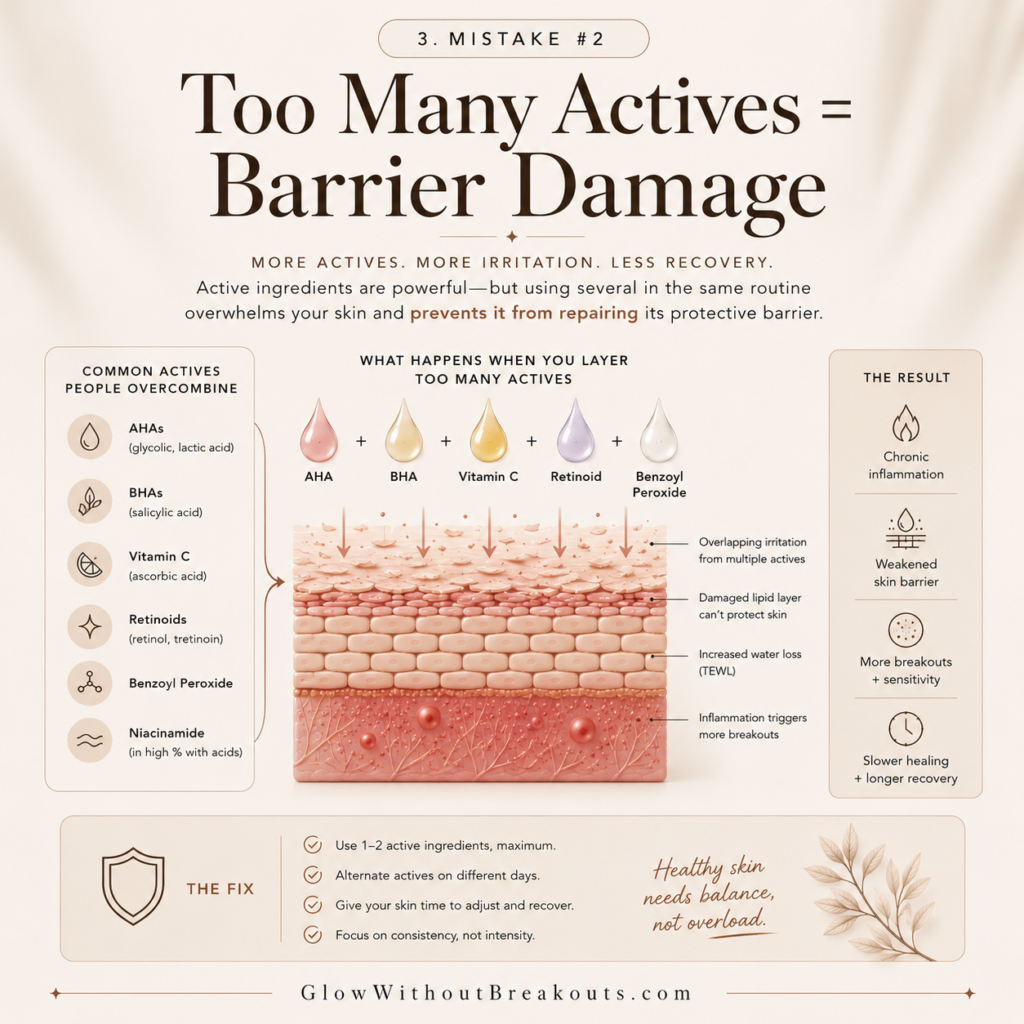
    • Applying multiple active ingredients (benzoyl peroxide + salicylic acid + retinol at the same time = irritation)
    • Sleeping on your face directly on the pimple (increases pressure and oil transfer)
    • Tight hats or headbands that trap sweat and bacteria on the pimple
    • Touching it with your hands (even just to check if it’s better)

    Hygiene and Environment Matter More Than You Think

    While you’re treating the pimple, your environment and habits matter:

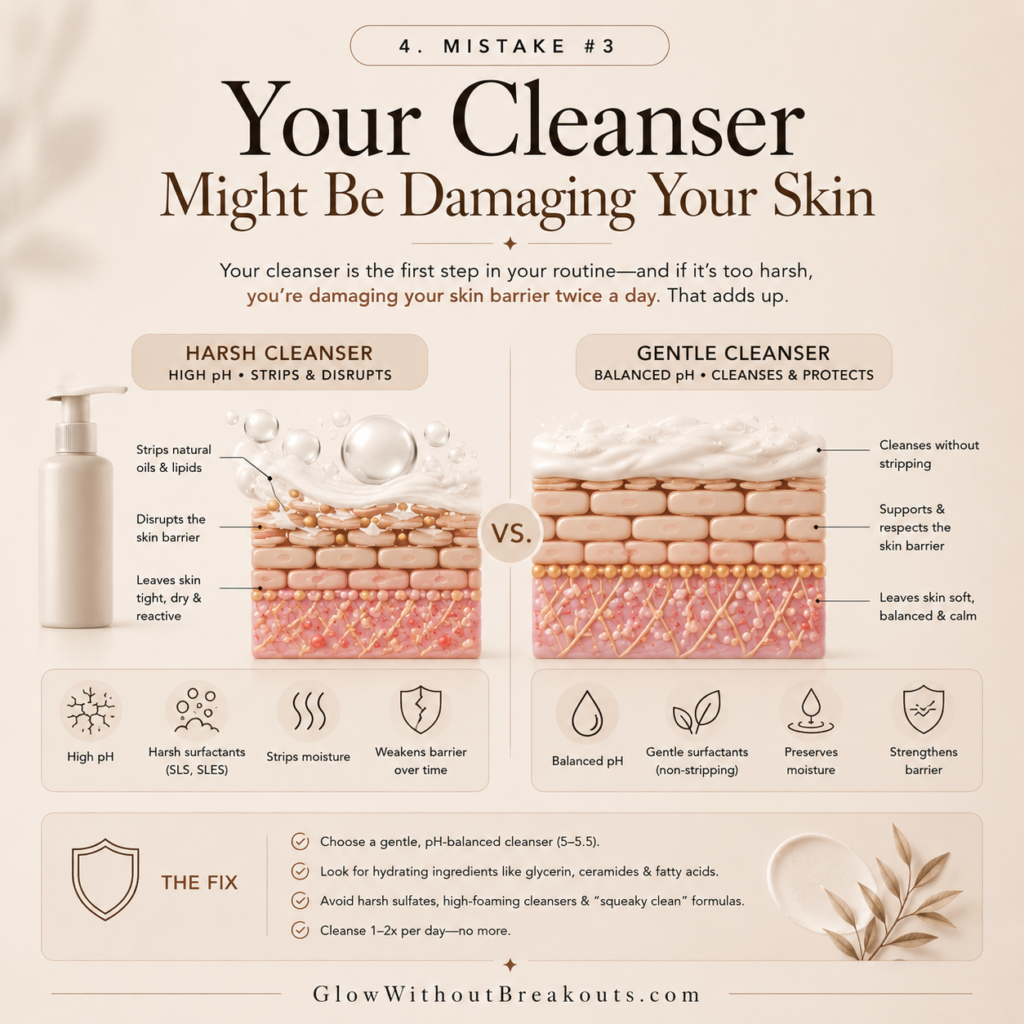
    Cleanse twice daily, gently. Use a fragrance-free, sulfate-free cleanser (like All Free Clear, which I use). Don’t over-wash; twice daily is enough. More than that strips your skin and causes irritation.

    Change your pillowcase every 2-3 days while the pimple is active. Oil, bacteria, and dead skin cells accumulate on pillowcases and transfer to your face every night. By swapping it more frequently, you reduce the chances of re-infection and prevent the pimple from getting worse.

    Use clean hands only. If you’re applying a patch or sheet, wash your hands first. Don’t touch the pimple unnecessarily.

    Watch your water. Hard water can irritate healing pimples and contains minerals that can trap bacteria. If you have hard water at home, consider a filtered showerhead ($20-$40). Not only is a filtered showerhead great for filtering hard water, but it also helps with overall skin health, especially during healing phases. An investment in this is a must, and you can’t go wrong.

    Sleep position matters. If possible, sleep on your back or the opposite side from the pimple. Sleeping directly on the pimple increases pressure and transfers oil/bacteria from your pillowcase back to the skin.

    The Realistic Timeline: From Pimple to Clear

    Here’s what to expect if you follow the above methods:

    Active Phase (Day 0-2):

    Apply pimple patch (flat or micro-needle, depending on type) to freshly washed, dry skin.

    • Keep it clean and dry.
    • Don’t touch it
    • Change the patch every 6-8 hours.
    • Expected result: 30-50% flattening

    Transition Phase (Days 2-4):

    • If it’s a whitehead and fully flat, you’re done: just let it heal.
    • If it still has redness or slight texture, apply a silicone sheet.
    • Gentle cleansing only
    • Expected result: 70-80% flattening, redness decreasing

    Recovery Phase (Days 4-7):

    • Continue silicone sheets if needed.
    • Gentle cleansing only
    • Avoid makeup if possible (let skin breathe)
    • Apply moisturizer normally now.
    • Expected result: 90%+ flattening, hyperpigmentation starting to fade

    Post-pimple phase (Days 7-14):

    • No more patches or sheets needed
    • Focus on sun protection (hyperpigmentation gets worse with sun exposure)
    • Normal skincare routine resumes
    • Expected result: Pimple is essentially gone; mark fades over weeks

    Weeks 2-4:

    • Any remaining hyperpigmentation fades gradually.
    • If texture or indentation remains, that’s scarring (different treatment needed—see our full scar treatment guide)

    Common Mistakes People Make

    Mistake #1: Applying moisturizer before the patch. This reduces adhesion and effectiveness by up to 50%. Clean, dry skin only.

    Mistake #2: Waiting too long to start treatment. The first 24 hours are critical. Start immediately when you notice the pimple.

    Mistake #3: Squeezing “just a little bit.” There’s no such thing. Any squeezing can cause inflammation and increase the risk for scarring. Let the patches do the work.

    Mistake #4: Mixing treatments aggressively. Don’t use benzoyl peroxide,salicylic acid, and a patch at the same time. The pimple is already inflamed. You’re just adding more irritation.

    Mistake #5: Not changing the patch when it’s saturated. Here’s the key: once a patch turns white, it’s done. Replace it with a fresh one, and continue this cycle until you apply a patch that stays clear after a full cycle; that’s your signal that the pimple has emptied completely.

    Mistake #6: Using the wrong patch type. Flat patches for whiteheads. Micro-needle patches for cystic/under-the-skin pimples. Using the wrong one wastes money and time.

    Mistake #7: Abandoning the routine too early. Even after the pimple looks “gone,” there’s still inflammation and hyperpigmentation risk. Stay consistent through day 7+.

    The Cost Breakdown

    If you want to be fully prepped for pimples:

    • Hydrocolloid patches: $8-15 for a pack of 20-30 (lasts months)
    • Micro-needle patches: $10-18 for a pack of 6-8 (lasts weeks)
    • Silicone sheets: $15-25 for a pack of 4-5 (lasts weeks)
    • Gentle cleanser (fragrance-free): $5-10 (lasts months)
    • Filtered showerhead: $20-40 (one-time investment)

    Total initial investment: $58-108 for a complete toolkit

    You don’t need all of these at once. Start with hydrocolloid patches ($10) and see how your skin responds. Add micro-needle patches if you’re prone to cystic acne. Add silicone sheets if you’re noticing texture or hyperpigmentation after pimples heal. Build your toolkit over time.

    Why I’m Telling You This

    I’ve wasted money on expensive treatments, fancy serums, and dermatologist visits for pimples that could have been prevented or minimized with the right early intervention. The methods above aren’t glamorous or Instagram-worthy. They’re just… effective.

    The pimple you have right now doesn’t have to leave a scar. The choice you make in the next 24 hours matters more than the choice you make in the next 24 days.

    Treat it early. Treat it right. Use clean, dry skin. Don’t touch it. Don’t pick it. Use the tools that actually work.

    And if you do end up with scarring despite your best efforts, we’ve got you covered with a full guide on treatment options that actually work: from microneedling to chemical peels to subcision (releasing May 10th, 2026). But ideally, you won’t need it.

    That’s how you make a pimple go away fast, and actually stay gone without the marks.

  • TIPS TO PREVENT ACNE AND NEW BREAKOUTS

    TIPS TO PREVENT ACNE AND NEW BREAKOUTS


    I spent years fighting acne. Not just dealing with it, but actively at war with my skin. I tried everything: expensive treatments, dermatologists, prescription medications, you name it. After constant fighting, I learned what actually changed the game for me: prevention. Preventing breakouts is much easier than trying to get rid of breakouts.

    The shift didn’t come from some miracle product or fancy skincare routine. It came from understanding what was actually triggering my breakouts in the first place. Once I figured that out, I stopped getting new ones. And I’m talking about preventing breakouts that used to happen constantly.

    Let me walk you through what actually works, because these aren’t just random skincare tips I read online. These are lessons I learned the hard way, through trial and error, paying attention to my skin, and making changes that genuinely put a halt to my breakouts from coming back.


    The Laundry Detergent Reality Check

    This one sounds ridiculous, I know. But it’s one of the most underrated acne triggers nobody talks about.

    About two years ago, my back was completely clear. No bacne whatsoever. I was proud of myself. I’d worked hard to get there after years of no luck. Then, out of nowhere, my back started breaking out again. It wasn’t my diet. I hadn’t changed my skincare routine. I was still exercising and managing stress. Nothing had shifted in my lifestyle.

    I was genuinely confused.

    Searching for an answer, I went back to basics and started analyzing everything. I asked myself if there were changes in my environment, routine, or products. And then it hit me: I’d switched laundry detergents a few weeks before the breakouts started. I wasn’t even thinking about it at the time. It was just a new bottle of something I grabbed at the store.

    So I switched back to my old detergent—the fragrance-free one I used to use—and within about two weeks, the bacne started clearing up. Now it’s almost completely gone again.

    Here’s the thing: your pillowcase, your sheets, and your clothes are touching your skin constantly. If your detergent is loaded with heavy fragrances and irritating chemicals, you’re basically washing your breakout triggers straight into the fabric that’s pressed against your face and body all night. It doesn’t matter how perfect your skincare routine is if your sheets are working against you.

    Switch to a fragrance-free, gentle detergent. That’s it. It sounds simple because it is. But it’s also a game-changer if this is your trigger.


    The Water Quality Situation (And Why I Keep Moving)

    I’ve moved a lot. Like, a lot a lot. And I noticed something weird every single time: I’d get breakouts within the first week or two of moving to a new place. Different house, different breakouts. It was consistent enough that I couldn’t ignore it.

    At first, I thought it was stress-related. Moving is stressful, after all. But then I realized the timing was too fast. Stress breakouts take a few weeks to appear. These were happening immediately.

    Then I realized it was probably the water.

    Different cities and neighborhoods have different water mineral content. Some water is harder (this means there are more minerals), some is softer, some have higher chlorine levels, some have other chemical treatments. Your skin can be sensitive to these differences, especially if you’re already prone to acne.

    So I invested in a filtered showerhead. Not just for my face, but for my whole shower. And honestly? It made a noticeable difference.

    When I changed environments again, instead of getting breakouts within days, my skin stayed mostly clear. The filtered showerhead removes a lot of mineral deposits and chlorine that can irritate and dry out your skin. Removing those irritants is key because your skin will start to overproduce oil to compensate for the lack of moisture, which in turn leads to more breakouts.

    If you’re getting random breakouts after moving, or if you’ve always struggled with acne and recently moved, try a filtered showerhead first. It’s more affordable than most skincare products, and it actually works. It’s also better for your skin in general—less harsh chemicals and less mineral buildup.


    The Skin Barrier Truth

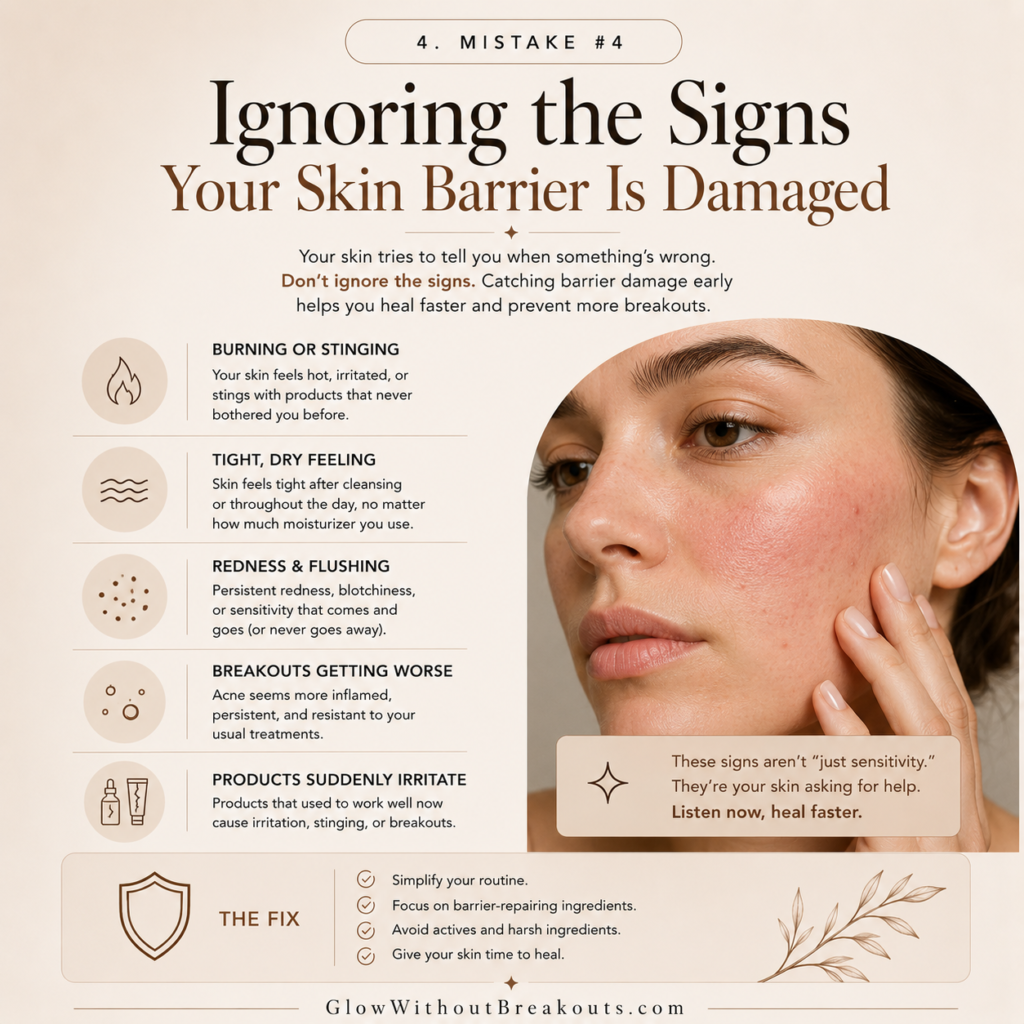
    This is where everything changed for me. Understanding that I was destroying my own skin barrier was the moment I stopped getting constant breakouts.

    I used to think that if I had acne, I needed to destroy it with harsh cleansers. Stronger is better, right? Wrong. So wrong.

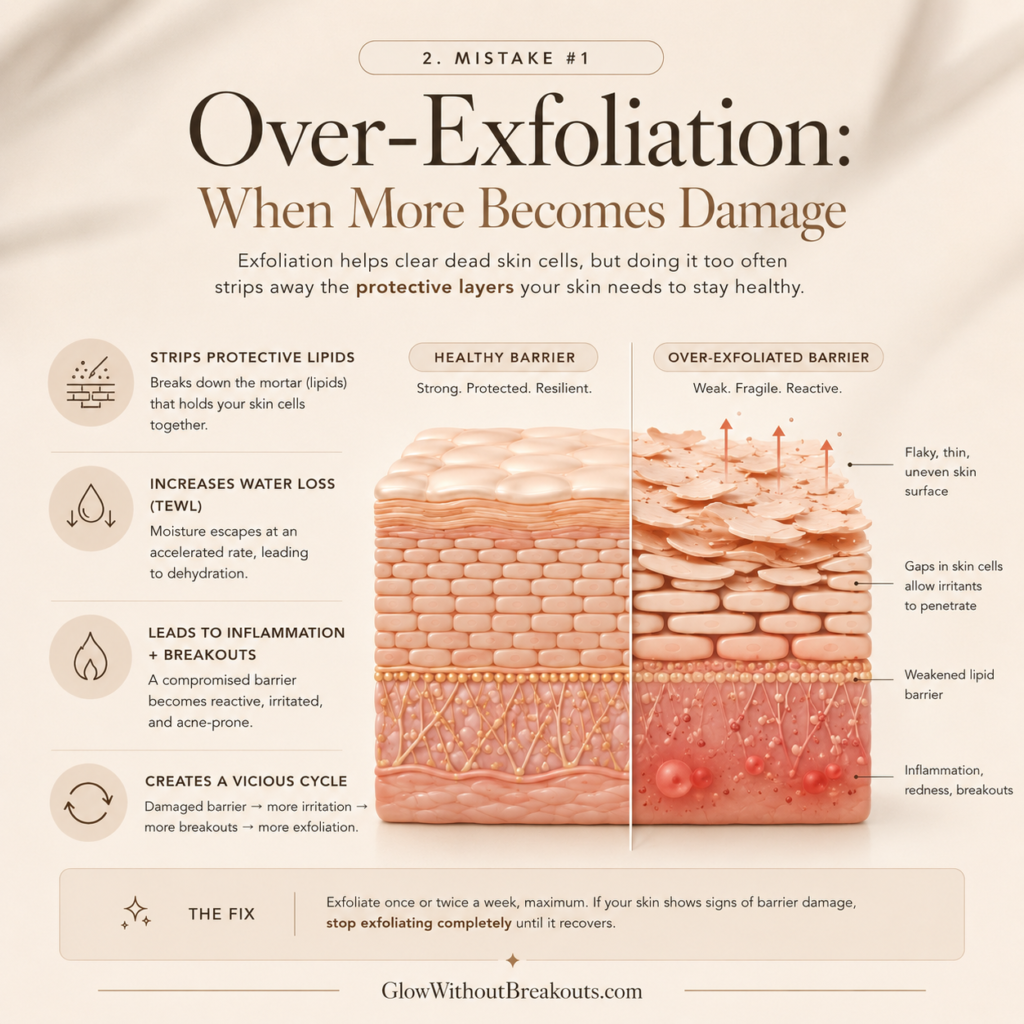
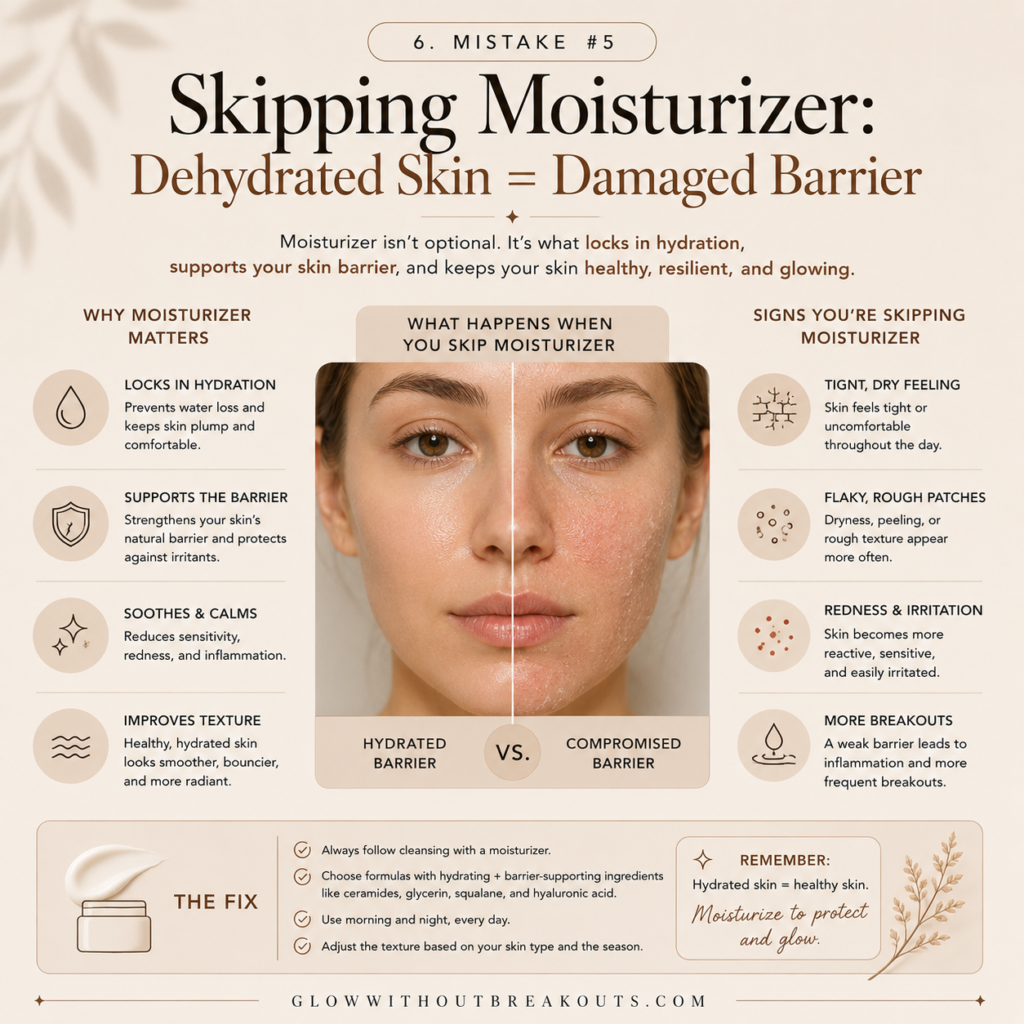
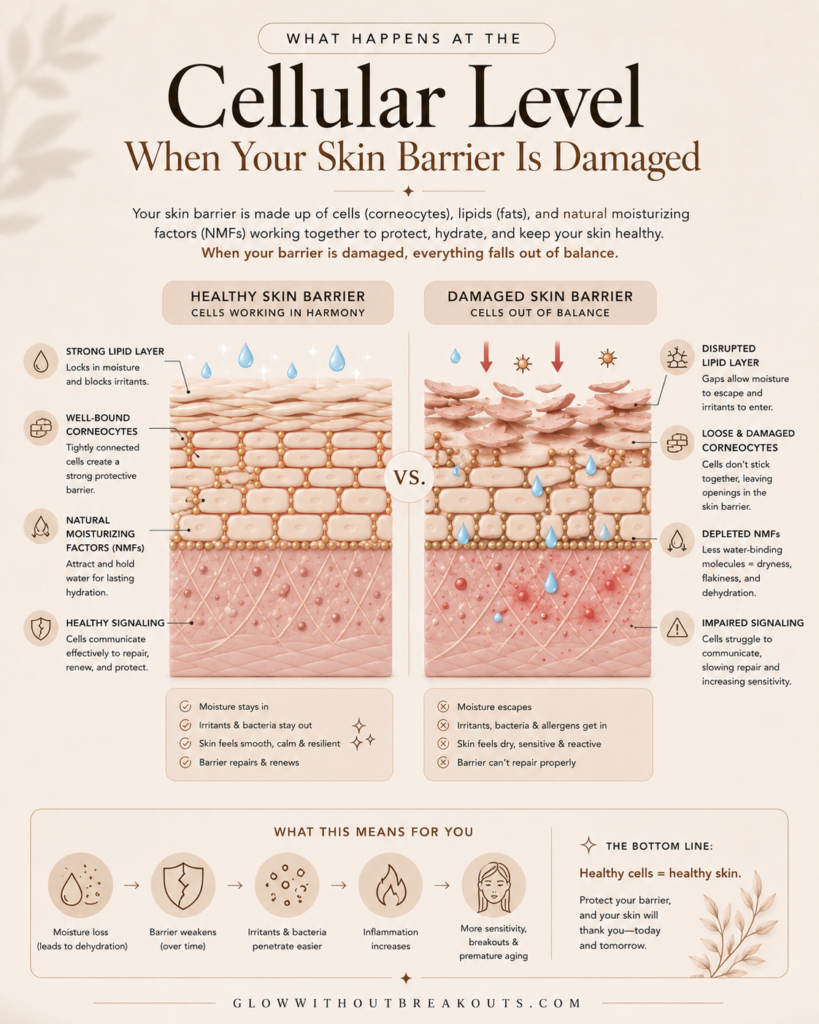
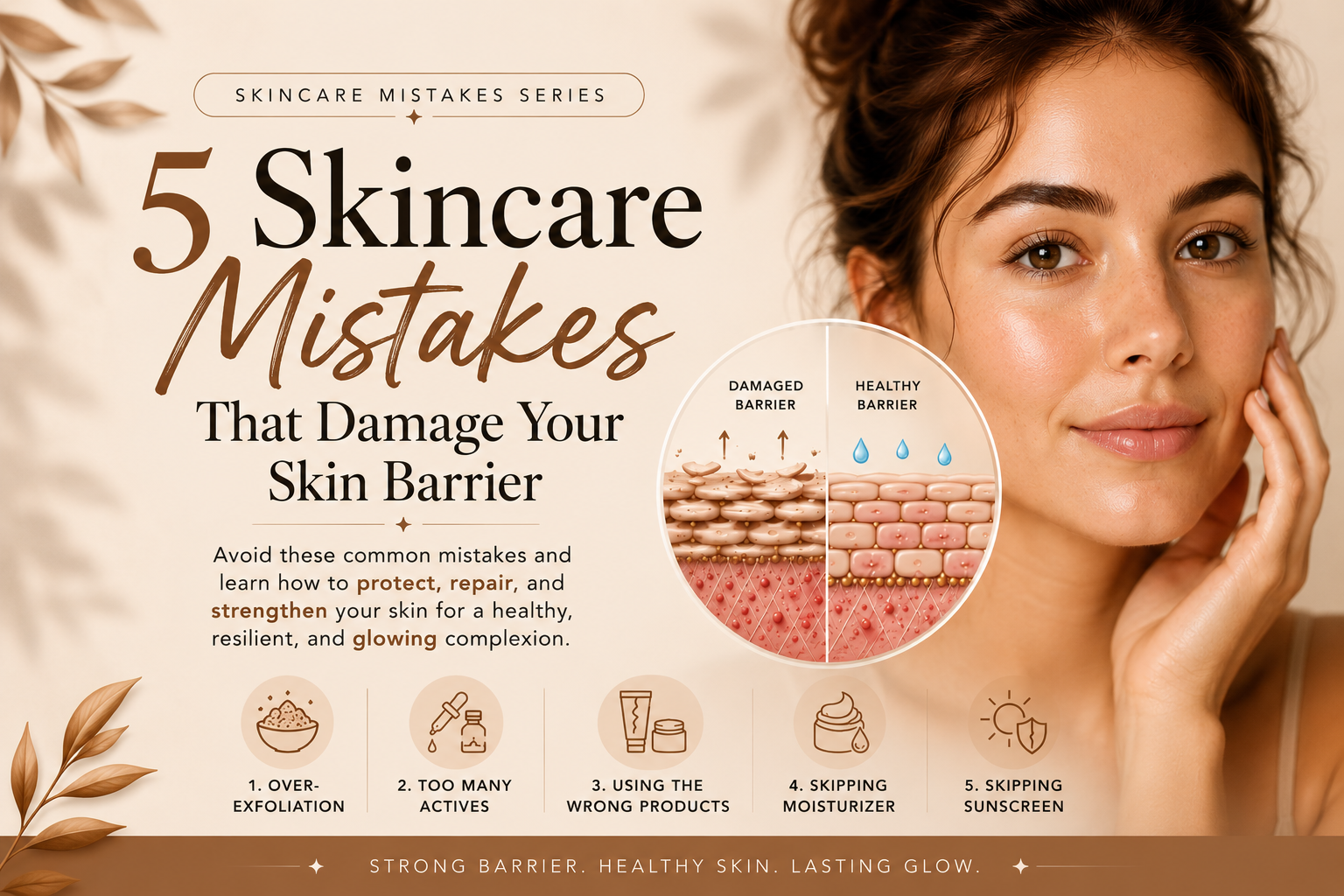
    When you over-wash your face or use overly harsh cleansers multiple times a day, you’re stripping away your skin’s protective barrier. Your skin barrier is basically your skin’s defense system. The barrier keeps good things in (moisture, healthy oils) and bad things out (bacteria, irritants). When you destroy it, your skin freaks out.

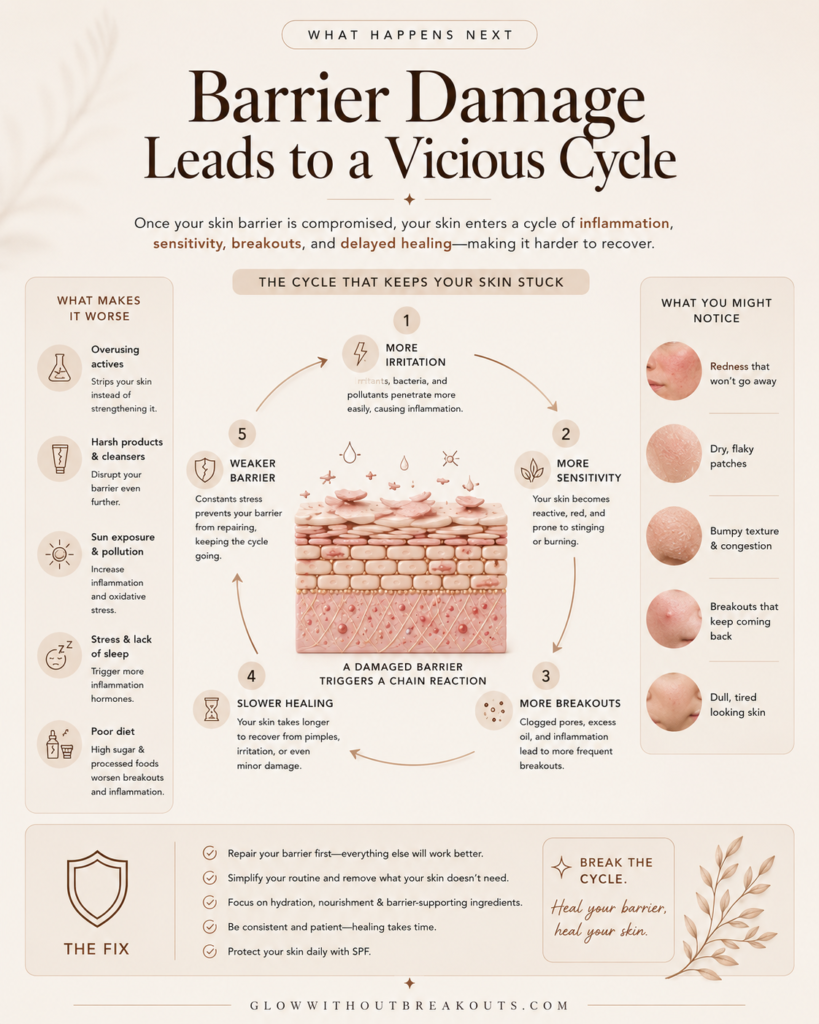
    As I mentioned previously, dry and irritated skin will start to overproduce oil to compensate if the skin lacks moisture. In other words, when you wash your skin too strongly, your body panics and produces excess oil to compensate. Now you’ve got dehydrated skin that’s also oily—which is the perfect environment for acne.

    I lived in this cycle for years. I’d wash my face with a strong acne cleanser in the morning, and at night, my skin would become stripped of essential moisture and hydration. As a result, my skin would be so oily and dry at the same time. I’d be using blotting sheets constantly… It was exhausting.

    Now here’s what I actually do:

    In the morning, I rinse my face with lukewarm water. That’s it. If I feel like I need a little extra, I use a gentle or hydrating cleanser: something that cleanses without destroying. This removes surface-level bacteria and any buildup from sleeping without stripping my skin. As someone who has acne-prone skin, you may be thinking, “I need to wash my face with a cleanser specific for acne, which has active acne-fighting ingredients.” I totally understand the hesitation; however, I found that doubling up on harsher cleansers only did more harm than good and damaged my skin barrier. I strongly suggest using a good acne cleanser once a day at nightime for a deep cleanse to really get into your pores and remove the day’s buildup, bacteria, and sebum, and to keep the mornings light.

    Once I implemented this change, my skin responded within a couple of days, and the oil production lessened. I stopped needing blotting sheets. And most importantly, I stopped getting constant breakouts.

    If you’re washing your face multiple times with strong cleansers, stop. Your skin barrier is suffering, and when this happens, it promotes more harm than good.


    Oil Cleansing (Yes, Really)

    Cleansing with oil may sound counterintuitive when dealing with acne, but oil cleansing is a skin regimen I swear by.

    A few times a week, I’ll do an oil cleanse. You take an oil cleanser, massage it into your face for a minute or two, and then rinse it off with warm water. The oil breaks down the buildup in your pores: dead skin, sebum, and bacteria, and brings it to the surface where you can rinse it away.

    Rubbing oil on your face sounds like it would make your skin more oily. It doesn’t. Doing this actually helps prevent breakouts because you’re not letting that buildup accumulate inside your pores.

    Do this 2-3 times a week, and you’ll notice your skin feels clearer and less congested.


    Sunscreen Every Single Day

    Non-negotiable. Daily sunscreen, every day, even when it’s cloudy.

    UV damage damages your skin barrier. A damaged skin barrier equals more breakouts. Furthermore, if you’re using any acne treatments (especially if you take prescribed medication for acne, such as Accutane), your skin will likely be more sensitive to sun damage.

    Make sure it’s non-comedogenic, though. Not all sunscreens are created equal. Some will absolutely clog your pores and cause breakouts. Look for a “non-comedogenic”sunscreen and test it out.

    This is one of the easiest prevention methods that people constantly skip. Don’t be that person.

    I have an entire post dedicated to sunscreen for acne-prone skin and my recommendations. Check out the link below!


    Birth Control (If It’s Hormonal)

    If your breakouts are hormonal—meaning they show up around your period or follow your cycle—birth control can legitimately help.

    Certain types of birth control pills can regulate the hormones that trigger acne. Not all of them, but some are specifically approved for acne . If you suspect your acne is hormonal, birth control might be worth talking to your doctor about.

    It’s not a cure-all, and it won’t work for everyone, but if hormones are your trigger, this can be a game-changer. Birth control pills are something that I was prescribed for acne as a teenager, and I’ve taken them on and off again throughout the years. In my experience, this medication did work for me and continues to prevent my hormonal acne.


    Face Masks and Deep Cleaning

    Once a week, I do a deeper clean with a face mask. I like mud masks or ones with tea tree oil because they actually draw out impurities and don’t just sit on top of your skin.

    This isn’t about scrubbing your skin raw. It’s about a gentle deep clean once a week to help prevent buildup that can cause breakouts.

    After I use a face mask, I always moisturize. Morning and night, every day. Moisturizing is not optional if you want to prevent acne. Your skin needs hydration to function properly and maintain the skin barrier we talked about.


    Clean Your Makeup Brushes

    If you wear makeup, this step is non-negotiable. Dirty brushes are basically spreading bacteria all over your face.

    Wash your brushes at least once a week; more often if your skin is breaking out. It’s one of the easiest prevention methods that people constantly overlook.


    The Real Secret

    Pay attention to your skin. Notice what actually changes things for you. Over the years, I’ve found that each and every tip shared with you in this post has worked on my acne-prone skin. If you’re struggling with acne and bad breakouts, I strongly encourage you to implement these tips. You might find something from this article that becomes a total gamechanger for your skin. And as someone who gets the struggle, someone who’s been there, covered in breakouts, wondering if it will ever get better, I want to share meaningful content with you that you can actually take away and use.

    Maybe it’s the detergent switch, the filtered showerhead, or maybe it’s finally protecting your skin barrier instead of destroying it. For you, it might be something different, but here’s what I know: once you can identify your actual triggers and address them instead of just reacting to breakouts when they happen, you’ll finally stop getting them. And that’s a feeling worth fighting for.


    Commonly Asked Questions:

    Q: I switched to a filtered showerhead and didn’t see a difference. Does that mean my acne isn’t water-related?

    A: Not necessarily. Water quality is one trigger among many. If you switched showerheads and nothing changed, it probably means water mineral content isn’t your main acne culprit. But that doesn’t mean the showerhead is a waste—it’s still good for your skin in general. Your breakouts might be triggered by something else on this list: your detergent, your skin barrier, hormones, or something completely different. That’s why I say pay attention to your skin and notice what actually changes things for you.

    Q: Can stress cause breakouts even if I’m doing everything else right?

    A: Yes. Stress is a real acne trigger because it affects your hormones, your immune system, and your skin barrier. You can have perfect habits—great detergent, filtered water, perfect skin barrier routine—and still get breakouts during stressful periods. That’s just how our bodies work. Managing stress is important for clear skin, even if it’s not always easy to do. Exercise, sleep, meditation, whatever helps you manage stress—do that. But also give yourself grace. If you’re doing everything right and you still get a breakout during a stressful time, it doesn’t mean you failed. It means you’re human. Once the stress passes, your skin usually settles back down.

    Q: How long does it take to see results from these prevention tips?

    A: This varies, but you should start noticing changes within 2-4 weeks if something is actually working for you. The detergent switch and sheet washing can show results surprisingly fast—sometimes within 1-2 weeks if that was your main trigger. The skin barrier stuff takes a little longer because your skin needs time to rebalance and stop overproducing oil. If you’re switching to a filtered showerhead after moving, you might notice improvement within the first week. The key is to implement one or two changes at a time, not everything at once. That way you can actually tell what’s working and what isn’t. If you change everything overnight, you won’t know which tip made the difference.

    Q: Do I really need to wash my sheets twice a week? That seems excessive.

    A: I get it. It’s a lot. But here’s the thing—if you’re breaking out on your face or back, your sheets are literally touching your skin for 8 hours a night. That’s a lot of time for bacteria, dead skin cells, and sebum to build up. At minimum, wash them once a week. If you’re actively dealing with breakouts, twice a week makes a noticeable difference.

  • THE BIGGEST SKINCARE MISTAKE I MADE (AND HOW IT TOOK 7 YEARS TO FIX)

    THE BIGGEST SKINCARE MISTAKE I MADE (AND HOW IT TOOK 7 YEARS TO FIX)

    I was fourteen when my dermatologist told me to strip my skin bare.

    Not in those exact words, obviously. But that’s what it felt like when she handed me a prescription for Neutrogena’s Oil-Free Acne Wash and said the magic words every acne-prone teenager wants to hear: “Don’t use moisturizer. You need to dry out the acne.”

    I left that office feeling like I finally had the answer. Finally had permission to wage war on my skin.

    So I did exactly what she said. Every morning and night, I’d scrub my face with that Neutrogena cleanser—the one that felt medicinal and made my skin feel tight immediately. Then I’d slather on topical benzoyl peroxide on every breakout I could find. No moisturizer. Just chemical warfare against my own face.

    The first week felt amazing. My skin felt dry, which I’d been told meant the acne was dying. Surely that meant it was working.

    By week two, my skin felt like leather. Not just dry—actually painful. Tight in a way that made me hesitant to move my face too much. Talking hurt. Smiling hurt. I’d catch myself in the mirror, and my skin looked almost raw, like I’d been out in the sun without protection for hours. But I kept going because the acne was still there, so clearly I just needed to be more aggressive.

    By month three, I realized what was actually happening: my skin was rebelling.

    The dryness got worse, but so did the oil. Specifically, my T-zone became an absolute oil slick by midday. I’d use oil blotting sheets—multiple times a day, sometimes going through an entire pack. Those sheets would come away completely soaked. I’d think, “See? This proves I have oily skin.” But I was wrong about what that really meant.

    What I didn’t understand at fourteen was that my skin barrier was completely destroyed. A healthy skin barrier is supposed to be a protective wall that keeps moisture in and irritants out. Mine was shattered. So my skin did what any survival instinct would do: it panicked and started producing oil like crazy, trying to compensate for all the moisture I was stripping away.

    I was caught in a vicious cycle. The drier my skin got from the cleanser and benzoyl peroxide, the more oil it produced. The more oil, the more breakouts. The more breakouts, the more I’d scrub and treat and dry out my skin. It was a loop I couldn’t escape, and I had no idea I was the one creating it.

    This went on for years. Literally years.

    I didn’t really start seeing improvement until I was eighteen. That’s when something clicked. I started actually reading about skincare instead of just doing what I was told. I learned that moisturizer wasn’t the enemy—it was the solution. I learned about the skin barrier and why it mattered. I learned that oily skin isn’t always because you have naturally oily skin; sometimes it’s because your skin is desperately thirsty and overcompensating.

    By the time I was twenty-one, I’d done enough research to completely transform my approach. I ditched the Neutrogena cleanser. I stopped the benzoyl peroxide routine. I actually invested in a good moisturizer and started being gentle with my skin instead of punishing it.

    The change was honestly shocking. When I finally started moisturizing consistently and stopped stripping my skin, the oil production normalized almost immediately. Not completely gone—I still have combination skin, which is just my skin type—but manageable. The oil blotting sheets that used to be soaked by noon? I don’t even carry them anymore. I might blot once or twice if I’m having a particularly humid day, but it’s not the constant, desperate situation it used to be.

    Now, at my age I am now, I get compliments on my skin all the time. People ask me what I do, assuming I have some complicated ten-step routine or expensive products. The answer is so much simpler: I listen to my skin instead of punishing it.

    The biggest mistake I made wasn’t that I had acne—plenty of fourteen-year-olds do. The mistake was following advice from someone who didn’t explain why that advice worked, and then not questioning it when my skin started screaming that something was wrong. I spent seven years thinking I had naturally oily skin when really I just had a destroyed skin barrier.

    If I could go back and tell fourteen-year-old me anything, it would be this: your skin barrier is everything. Acne sucks, but a broken barrier is worse. You can have clear skin and healthy skin, but you can’t have healthy skin by destroying it in the process.

    The oily skin that made me miserable for seven years? It was just my skin asking for help in the only way it knew how.

  • Best Sunscreen for Acne-Prone Skin: Non-Comedogenic Options That Won’t Cause Breakouts

    Best Sunscreen for Acne-Prone Skin: Non-Comedogenic Options That Won’t Cause Breakouts

    Having sunscreen in your daily skin routine is a MUST. There ARE non-comedogenic sunscreens that work beautifully for acne-prone skin, you just need to know which ones. In this guide, I’m sharing the 4 best sunscreens I’ve personally tested, plus what makes a sunscreen “acne-friendly” so you can choose confidently.

    Why Sunscreen is Non-Negotiable for Acne-Prone Skin

    Here’s what nobody tells you about acne and sun exposure:

    UV rays make acne scars darker. When you have post-acne hyperpigmentation (those dark marks left behind), sun exposure makes them MORE visible. The UV rays trigger your skin to produce more melanin in those already-damaged areas, making scars look deeper and darker.

    Sun damage worsens inflammation. If you’re currently dealing with active acne, UV exposure can increase inflammation and actually trigger more breakouts.

    Hyperpigmentation becomes permanent without protection. As I’m sure my readers know, acne-prone skin is already sensitive. Without sunscreen, those temporary dark marks can become permanent discoloration that takes years to fade.

    The bottom line? Skipping sunscreen to avoid breakouts is like skipping antibiotics to avoid side effects. You’re creating a bigger problem to avoid a smaller one.

    The solution is finding the RIGHT sunscreen that protects your skin without triggering new breakouts.

    What Makes a Sunscreen “Acne-Friendly”? (The Science)

    Not all sunscreens are created equal, especially for acne-prone skin. Here’s what to look for:

    Non-Comedogenic Rating

    This is the most important factor. “Non-comedogenic” means the formula has been tested and proven NOT to clog pores. Look for this label on the packaging, as this is a must if you are prone to acne.

    Oil-Free Formula

    Acne thrives in oily environments. Sunscreens with heavy oils (like coconut oil) or creamy textures can trap bacteria and sebum on your skin. Choose oil-free or gel-based formulas instead.

    Matte or Semi-Matte Finish

    Sunscreens with a matte finish feel lighter on skin and don’t look shiny. They’re also less likely to trap heat and bacteria, which means fewer breakouts. Avoid sunscreens that leave a dewy, greasy sheen.

    Minimal Ingredients

    The fewer ingredients, the lower your risk of irritation. Fragrance, essential oils, and unnecessary additives can all trigger breakouts. Look for simple, straightforward formulas.

    No Added Fragrance

    Fragrance is a common acne trigger. Even “natural” fragrance can irritate acne-prone skin. Choose fragrance-free options.

    Top 4 Best Sunscreens for Acne-Prone Skin

    #1: La Roche-Posay Anthelios Matte Fluid SPF 60

    Price: $35-40 | Finish: Matte

    This is my personal favorite, and honestly, it’s a game-changer.

    The first time I applied this, I was shocked by how lightweight and matte it felt on my skin. It literally feels like you’re wearing a blurring matte primer for makeup on your face, not sunscreen. This product delivers zero shine, no greasiness, and no heavy feeling. Just a smooth, invisible layer of protection. And the best part- the matte feel stays all day. Most sunscreens tend to make my skin feel oily and melt off my face in a greasy mess in a couple of hours. This sunscreen? It truly won’t disappoint.

    What makes it special for acne-prone skin:

    Dermatologist-tested specifically for acne and sensitive skin

    Non-comedogenic rating, so it won’t clog pores

    Lightweight formula absorbs in seconds.

    Truly matte finish that doesn’t trap heat or bacteria

    Fragrance-free, so no irritation

    I’ve been using this for 8 months now, and I haven’t had any breakouts caused by it. My hyperpigmentation has also visibly improved because I’m finally protecting my skin consistently.

    The only downside? It’s pricey. But if budget isn’t an issue, this is worth every penny.

    Best for: Anyone with acne-prone skin who wants the best matte finish available.

    2: Hero Cosmetics Force Shield Sunscreen SPF 50

    Price: $25-30 | Finish: Matte

    Hero Cosmetics is a brand built specifically for acne-prone skin, and it shows in their sunscreen formula.

    Force Shield is designed with acne sufferers in mind. It’s lightweight, matte, and doesn’t feel like you’re wearing anything at all. The texture is silky and absorbs quickly, which means it won’t sit on top of your skin and trap bacteria.

    What makes it special for acne-prone skin:

    Specifically formulated for acne-prone skin (the brand’s whole mission)

    Matte finish that controls shine without feeling cakey

    Lightweight gel texture absorbs in seconds.

    Non-comedogenic and dermatologist-tested

    Mid-range price between budget and luxury options

    I’ve used this for 4 months, and it’s my second favorite after La Roche-Posay. The main difference is the finish. Hero Cosmetics is slightly less matte than La Roche-Posay, but it’s more affordable.

    Best for: People who want quality acne-focused skincare at a reasonable price.

    #3 CeraVe Face Lotion SPF 50

    Price: $15-18 | Finish: Lightweight

    CeraVe is the budget-friendly option that actually delivers.

    This was my first serious attempt at an acne-friendly sunscreen, and it surprised me. For the price, the quality is impressive. It’s lightweight, absorbs quickly, and doesn’t leave any residue on your skin.

    What makes it good for acne-prone skin:

    Ceramides + hyaluronic acid hydrate without heaviness

    Fragrance-free formula

    Non-comedogenic, so safe for breakout-prone skin

    Affordable, so you won’t skip reapplication

    Widely available at most drugstores

    The texture is more of a lotion than a gel, so it’s not matte like other sunscreens, but it’s still lightweight and doesn’t feel greasy. For someone with moderately oily skin, this is perfect.

    I’ve used this for 2 months, and my skin was overall clear for this time.

    Best for: Budget-conscious people with acne-prone skin who want hydration + protection.

    #4: EltaMD UV Clear SPF 46

    Price: $35-40 | Finish: Lightweight (slightly dewy)*

    Full transparency: I haven’t personally tested this one, but it’s consistently rated the #1 dermatologist-recommended sunscreen for acne-prone skin, so it deserves a spot on this list.

    EltaMD is the dermatologist’s favorite for a reason. It’s a mineral sunscreen (which is rarer in the acne-friendly space), but it’s formulated to be lightweight instead of thick and pasty.

    What makes it great for acne-prone skin:

    Mineral formula uses zinc oxide and titanium dioxide to reflect UV rays.

    Less likely to irritate very sensitive or active acne

    Non-comedogenic and hypoallergenic

    A dermatologist recommended for acne-prone skin.

    Available in a tinted version if you want light coverage

    If you have very sensitive, active acne or have reacted poorly to chemical sunscreens, this is worth trying.

    Best for: People with sensitive, active acne who prefer mineral sunscreen.

    What NOT to Use: Sunscreens to Avoid

    Not all sunscreens are created equal. Here are the ones that caused me problems:

    Any sunscreen with coconut oil: Coconut oil is comedogenic (pore-clogging). Even though it’s natural, it’s not your friend if you have acne. Avoid any formula listing coconut oil in the first 5 ingredients.

    Heavy, creamy sunscreen lotions: if a sunscreen feels thick and creamy when you apply it, it’s probably too heavy for acne skin. Acne-prone skin needs lightweight, fast-absorbing formulas.

    Sunscreens with fragrance: Fragrance irritates acne. Even natural fragrance. Choose fragrance-free options only.

    How to Apply Sunscreen Without Triggering Breakouts

    Even the best sunscreen won’t work if you apply it wrong. Here’s the proper technique:

    Step 1: Start with clean, dry skin. Apply sunscreen to freshly cleansed skin. If your skin is damp, the sunscreen won’t bond properly.

    Step 2: Use enough product. You need a quarter-size amount for your entire face. Most people use way too little and compromise their protection. Don’t skimp.

    Step 3: Apply after your full skincare routine The order matters: Cleanser → Toner (if you use one) → Moisturizer → Sunscreen → Makeup

    Sunscreen should be the last step before makeup because it needs to sit on top of your skin to create a protective barrier.

    Step 4: Wait 15 minutes before applying makeup. Let the sunscreen fully set before layering anything else on top. This prevents pilling and ensures it bonds to your skin properly.

    Step 5: Reapply every 2 hours. If you’re outdoors, reapply sunscreen every 2 hours. For everyday use indoors, once in the morning is usually sufficient (though some dermatologists recommend reapplication mid-day even indoors).

    Frequently Asked Questions

    Q:Does sunscreen cause acne?

    A: No, the wrong sunscreen causes acne. Most commercial sunscreens are formulated for general skin, not acne-prone skin. They’re often too heavy, too oily, or contain ingredients that trigger breakouts. But non-comedogenic, lightweight sunscreens absolutely do NOT cause acne.

    Q: Can I wear matte sunscreen if I have oily skin?

    A: YES. Matte sunscreen is actually ideal for oily skin. It controls shine without adding extra oil. Look for “matte finish” or “oil-free” labels specifically.

    Q: What SPF should I use?

    A: SPF 30 is the minimum recommended by dermatologists. SPF 50 offers slightly more protection and is worth the upgrade. Anything above SPF 50 offers minimal additional protection, so you don’t need to go higher.

    Q: Can I use sunscreen under makeup?

    A: Absolutely. In fact, you should. Apply sunscreen, wait 15 minutes for it to set, then apply your primer and makeup as normal. Many makeup primers and foundations now include SPF, but it’s not enough on its own—you still need a dedicated sunscreen underneath.

    Q: Do I need sunscreen indoors?

    A: This is debated among dermatologists. UVA rays can penetrate windows, but the exposure is minimal compared to outdoor sun. If you spend most of your day indoors, you can skip it. But if you sit near windows or go outside at all, wear it.

    Q: Can I use the same sunscreen year-round?

    A: Yes, absolutely. Pick one that works for your skin and stick with it. Consistency is more important than switching products seasonally.

    What’s Your Experience?

    I want to know: What sunscreen works best for YOUR acne-prone skin? Have you tried any of these? Did they work, or did they cause breakouts?

    Drop a comment below—I would love to hear what’s working for you. Your experience might help someone else find their perfect sunscreen.

    And if you haven’t found an acne-friendly sunscreen yet, start with one of these four. Your skin is worth the investment.