You woke up, looked in the mirror, and there it is—a new pimple: whether it’s a whitehead, a stubborn cyst, or that angry red bump, you want it gone. Now.
I’ve been there countless times. After years of trial and error with various treatments, I’ve discovered the best ways to make a pimple go away fast, and, more importantly, what prevents scarring and hyperpigmentation in the process.
Here’s what I’ve learned works.
Table of Contents
The Reality: Speed Matters: And We Want Fast Results
A pimple doesn’t just disappear overnight. But what you do in the first 24-48 hours matters a lot. The faster you treat it correctly, the faster it heals. The slower you treat it—or worse, if you pick at it—the longer it sticks around and the higher the chance it leaves a mark.
Most people don’t realize that scarring isn’t inevitable. It’s a choice, and that choice happens right now: when the pimple is fresh.
Understanding What Causes Scarring
Before I get into treatment, you need to understand why some pimples scar and others don’t.
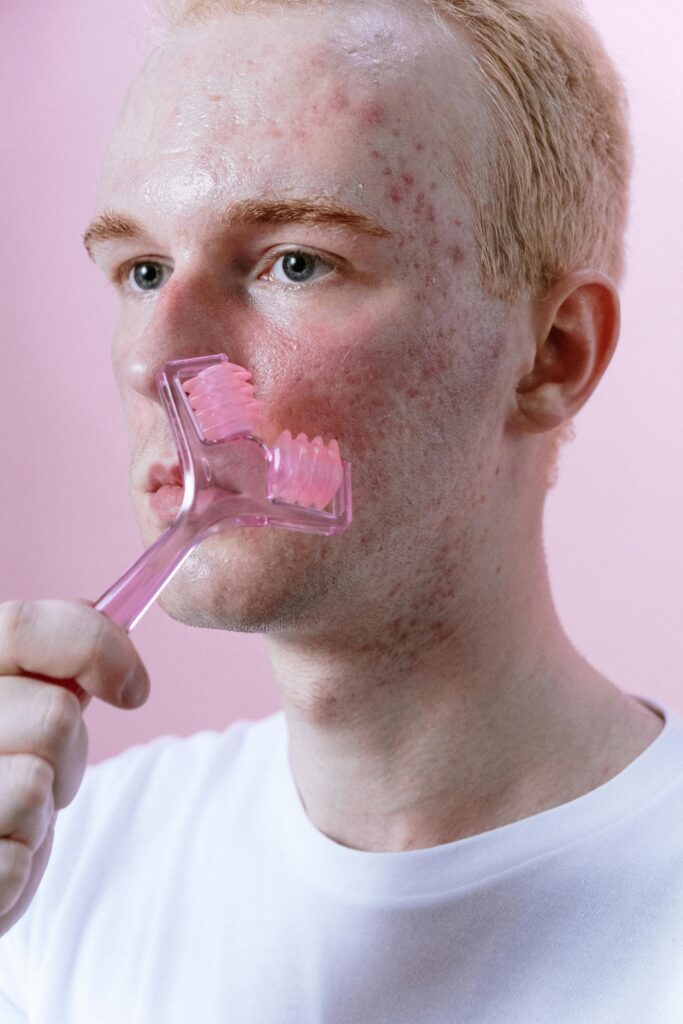
A pimple is an inflammation beneath the skin which occurs when bacteria multiply in a pore and your immune system sends white blood cells to fight them. The resulting swelling is what you see on the surface. In most cases, this resolves cleanly, and your skin goes back to normal.
When you squeeze, pick, or irritate a pimple, you’re doing two things:
- Breaking the skin barrier and creating micro-tears
- Pushing inflammation deeper into the dermis (the layer below the epidermis where collagen lives)
If inflammation reaches the dermis, your body responds by laying down collagen to “repair” the damage, and unfortunately, collagen doesn’t always fill in evenly. Sometimes it creates an indentation (atrophic scar) or a raised bump (hypertrophic scar). Either way, it’s permanent without professional treatment.
The good news: If you don’t pick, squeeze, or heavily irritate the pimple, most of the inflammation stays in the epidermis and resolves cleanly without scarring.
That’s why early gentle intervention is so important.
Different Pimple Types Require Different Approaches
Not all pimples are created equal. Here’s how to identify what you’re dealing with and how to treat it:
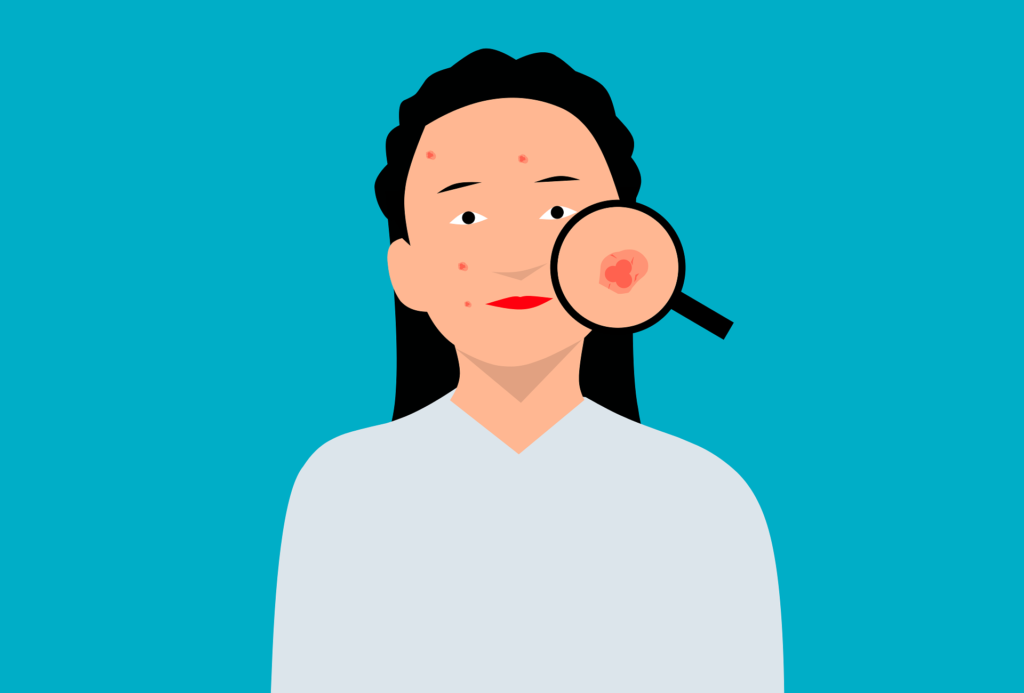
Whiteheads (comedones): A visible white or yellowish head at the surface. The pore has opened slightly, and you can see pus/sebum.
- Best treatment: Flat hydrocolloid pimple patch
- Timeline: 6-12 hours to significant flattening
Blackheads: A dark spot where the pore is open but oxidized (not dirt). Often on the nose or chin.
- Best treatment: These don’t need patches—they’re not inflamed. Use a gentle exfoliant or leave them alone.
- Note: Don’t squeeze these either. You’ll cause inflammation and create a pimple.
Papules (red bumps): Inflamed, but no visible head. The infection is deeper, closer to the surface but not yet open.
- Best treatment: Micro-needle pimple patch to bring it to a head faster
- Timeline: 12-24 hours to whitehead formation, then another 12-24 hours to flattening
Cystic/Nodular pimples: Large, painful, deep bumps under the skin. No head. Often sensitive to touch.
- Best treatment: Micro-needle pimple patches for 6-8 hours, then switch to a flat patch once a whitehead forms.
- Timeline: 24-48 hours to see a significant reduction
- Note: These are most prone to scarring if picked. Leave them alone and let the patches do the work.
Best Ways to Make a Pimple go Away Fast, Method 1: Pimple Patches (Hydrocolloid)
What they are: Flat, sticky patches that adhere directly to the skin. The most common brands are Mighty Patch and Hero Cosmetics.
Product links: pimple patches
When to use them: Only when you can see a whitehead or the pore is visibly opening. If the pimple is under the skin, a regular patch won’t work because it needs direct contact with the head of the pimple.
How they work: Hydrocolloid patches absorb the pus and oil from the pimple, flattening it and reducing inflammation. They also create a barrier so you’re not tempted to touch, pick, or squeeze it.
My experience: I love these. They’re simple, they work, and I can wear them under makeup or just leave them on overnight. I’ve seen whiteheads flatten noticeably within 6-8 hours.
Timeline:
- Hours 0-2: The patch adheres and starts absorbing fluid
- Hours 6-8: The pimple begins to flatten visibly
- Hours 12-24: Most of the inflammation is gone; the patch turns white as it absorbs material
- Day 2-3: The pimple is significantly smaller
Cost: $8-15 for a pack of 20-30 patches. One pimple = one patch.
Application Protocol for Hydrocolloid Patches
This is critical, and most people get it wrong:
- Wash your face with a gentle, fragrance-free cleanser (like All Free Clear). Use lukewarm water.
- Dry your skin completely. This is non-negotiable. The patch will not adhere well to damp skin, and any residual moisture reduces its ability to absorb fluid. Be sure to pat dry with a clean towel and wait 1-2 minutes if needed.
- Do not apply moisturizer, serums, or any other products to the area where the patch will be placed. Although this may seem counterintuitive, moisturizer creates a barrier between your skin and the patch which prevents the hydrocolloid from making proper contact and significantly reduces its ability to pull out fluid and oil.
- Apply the patch directly to the clean, dry skin. Press firmly for 10-15 seconds to ensure full adhesion.
- After applying, wait 5-10 minutes before applying any other skincare. This allows the patch to fully set.
- Once the patch has set, you can apply moisturizer around it (not under it or on top of it). Apply your regular skincare to the rest of your face.
- Change the patch every 6-8 hours or once it turns white. A saturated patch won’t absorb anymore and becomes just a band aid. Remove it, wash the area, dry completely, and apply a fresh patch.
- Make sure to apply a fresh patch on clean, dry skin. Sleep on your back or the opposite side to avoid pressing the patch into the pillow.
Why This Matters:
Moisturizer sits on top of your skin and creates an occlusive layer. The patch needs direct contact with your skin to adhere and create the microenvironment that absorbs fluid. If there’s a barrier of moisturizer between the patch and your skin, it’s like trying to tape something through a sheet of plastic—it won’t stick, and it won’t work.
Best Ways to Make a Pimple go Away Fast, Method 2: Micro-Needle Pimple Patches for Cystic Pimples
What they are: Patches with tiny microneedles embedded in them. Brands like Mighty Patch and Hero Cosmetics make these too.
Product links: mighty patch for cystic pimples
When to use them: This is crucial—use these for cystic pimples or deep, under-the-skin pimples that a regular patch can’t touch. If it’s a whitehead, stick with the flat patch (Method 1).
How they work: The microneedles penetrate the skin barrier and deliver active ingredients (usually salicylic acid or niacinamide) directly into the pimple. They also create tiny channels that help bring the inflammation to the surface faster.
My experience: I love these for stubborn cystic pimples. In the event that I get one of those deep, painful bumps that won’t come to a head, a micro-needle patch is one of the best ways to make a pimple go away fast. I press firmly to ensure good contact and leave it on for 6-8 hours (or overnight).
Timeline:
- Hours 0-6: The microneedles penetrate; you might feel slight tingling or warmth
- Hours 6-12: The pimple starts bringing inflammation to the surface
- Day 2-3: The cyst flattens and may come to a whitehead (then you can switch to a regular patch)
- Day 3-4: Significant reduction in size and pain
Cost: $10-18 for a pack of 6-8 patches. Slightly pricier than flat patches, but worth it for cystic acne.
Applying Micro-Needle Patches on a Cystic Pimple
- Wash your face with a gentle, fragrance-free cleanser. Use lukewarm water.
- Dry your skin completely. Again, this is essential. The patch needs direct contact with dry skin to work effectively.
- Do not apply any moisturizer, serums, or products to the area. The same reason as above: barriers (like moisturizer) prevent the needles from penetrating properly and reduce efficacy.
- Apply the patch directly to the clean, dry skin. Press firmly for 15-20 seconds. You want good contact so the microneedles can penetrate the skin barrier effectively. You may feel slight tingling or warmth—this is normal.
- Leave the patch on for 6 to 8 hours. Micro-needle patches work differently from flat hydrocolloid patches because they penetrate the skin to deliver active ingredients ,whereas flat hydrocolloid patches sit on top of the skin and absorb fluid. An overnight application is ideal for these micro-needle patches.
- After removing the patch, do not apply moisturizer immediately. Wait 10-15 minutes, then you can apply your regular skincare routine.
- The next day, assess the pimple. If it’s come to a whitehead, switch to a regular hydrocolloid patch (Method 1). If it’s still under the skin but noticeably smaller, apply another micro-needle patch.
Why this matters: Micro-needle patches work by penetrating the skin barrier. Any barrier (moisturizer, serum, oil) on top of your skin prevents the needles from doing their job. You need direct skin contact for the active ingredients to be delivered and for the needles to penetrate effectively.
Best Ways to Make a Pimple go Away Fast, Method 3: Silicone Scar Sheets
What they are: Thin, flexible silicone sheets that adhere to the skin and create a microenvironment that hydrates and flattens scar tissue.
Product links: silicone scar sheets
When to use them: During the recovery phase of a pimple, specifically days 3-7 when the pimple is flattening but still visibly inflamed or textured.
How they work: Silicone occludes the skin, increasing hydration and allowing collagen to remodel more evenly. This prevents the pimple from leaving behind texture or indentation.
My experience: I rate these 7/10. They genuinely help even out texture during recovery, especially on pimples that were deep or cystic. I apply them for 24-48 hours during the healing window.
Timeline:
- Day 1-2 of application: The silicone hydrates the area; redness may look slightly worse (it’s just more visible)
- Day 2-3: Texture noticeably evens out
- Day 3-7: Continued flattening; hyperpigmentation fades faster
- After removal: Your skin stays smoother than it would have without the sheet.
Cost: $15-25 for a pack of 4-5 sheets.
Important note: These aren’t a replacement for pimple patches in the active phase. Use pimple patches first (days 0-2), then switch to silicone sheets (days 3-7) once the pimple is flat.
What are NOT the Best Ways to Make a Pimple go Away Fast:
Let me be direct: Don’t squeeze, pick, or irritate the pimple. I know it’s tempting. I know you want to “get the stuff out.” But every time you touch it, you’re:
- Pushing bacteria deeper into the skin
- Creating micro-tears that lead to scarring
- Extending the healing timeline
- Increasing the chance of hyperpigmentation
Your hands have bacteria on them. Your nails are sharp. A pimple is an open (or near-open) wound. The math doesn’t work.
Also avoid:
- Harsh scrubbing or exfoliating the area while it’s active
- Applying multiple active ingredients (benzoyl peroxide + salicylic acid + retinol at the same time = irritation)
- Sleeping on your face directly on the pimple (increases pressure and oil transfer)
- Tight hats or headbands that trap sweat and bacteria on the pimple
- Touching it with your hands (even just to check if it’s better)
The Best Ways to Make a Pimple Go Away Fast- Hygiene and Environment:
While you’re treating a pimple, being mindful of your environment and hygiene is one of the best ways to make a pimple go away fast.

Cleanse twice daily, gently. Use a fragrance-free, sulfate-free cleanser (like All Free Clear, which I use). Don’t over-wash; twice daily is enough. More than that strips your skin and causes irritation.
Change your pillowcase every 2-3 days while the pimple is active. Oil, bacteria, and dead skin cells accumulate on pillowcases and transfer to your face every night. By swapping it more frequently, you reduce the chances of re-infection and prevent the pimple from getting worse.
Use clean hands only. If you’re applying a patch or sheet, wash your hands first. Don’t touch the pimple unnecessarily.
Watch your water. Hard water can irritate healing pimples and contains minerals that can trap bacteria. If you have hard water at home, consider a filtered showerhead ($20-$40). Not only is a filtered showerhead great for filtering hard water, but it also helps with overall skin health, especially during healing phases. An investment in this is a must, and you can’t go wrong.
Sleep position matters. If possible, sleep on your back or the opposite side from the pimple. Sleeping directly on the pimple increases pressure and transfers oil/bacteria from your pillowcase back to the skin.
The Realistic Timeline: From Pimple to Clear
Here’s what to expect if you follow the above methods:

Active Phase (Day 0-2):
Apply pimple patch (flat or micro-needle, depending on type) to freshly washed, dry skin.
- Keep it clean and dry.
- Don’t touch it
- Change the patch every 6-8 hours.
- Expected result: 30-50% flattening
Transition Phase (Days 2-4):
- If it’s a whitehead and fully flat, you’re done: just let it heal.
- If it still has redness or slight texture, apply a silicone sheet.
- Gentle cleansing only
- Expected result: 70-80% flattening, redness decreasing
Recovery Phase (Days 4-7):
- Continue silicone sheets if needed.
- Gentle cleansing only
- Avoid makeup if possible (let skin breathe)
- Apply moisturizer normally now.
- Expected result: 90%+ flattening, hyperpigmentation starting to fade
Post-pimple phase (Days 7-14):
- No more patches or sheets needed
- Focus on sun protection (hyperpigmentation gets worse with sun exposure)
- Normal skincare routine resumes
- Expected result: Pimple is essentially gone; mark fades over weeks
Weeks 2-4:
- Any remaining hyperpigmentation fades gradually.
- If texture or indentation remains, that’s scarring (different treatment needed—see our full scar treatment guide)
Common Mistakes People Make that are NOT the Best Ways to Make a Pimple Go Away Fast:
Mistake #1: Applying moisturizer before the patch. This reduces adhesion and effectiveness by up to 50%. Clean, dry skin only.
Mistake #2: Waiting too long to start treatment. The first 24 hours are critical. Start immediately when you notice the pimple.
Mistake #3: Squeezing “just a little bit.” There’s no such thing. Any squeezing can cause inflammation and increase the risk for scarring. Let the patches do the work.
Mistake #4: Mixing treatments aggressively. Don’t use benzoyl peroxide,salicylic acid, and a patch at the same time. The pimple is already inflamed. You’re just adding more irritation.
Mistake #5: Not changing the patch when it’s saturated. Here’s the key: once a patch turns white, it’s done. Replace it with a fresh one, and continue this cycle until you apply a patch that stays clear after a full cycle; that’s your signal that the pimple has emptied completely.
Mistake #6: Using the wrong patch type. Flat patches for whiteheads. Micro-needle patches for cystic/under-the-skin pimples. Using the wrong one wastes money and time.
Mistake #7: Abandoning the routine too early. Even after the pimple looks “gone,” there’s still inflammation and hyperpigmentation risk. Stay consistent through day 7+.
The Cost Breakdown
If you want to be fully prepped for pimples:
- Hydrocolloid patches: $8-15 for a pack of 20-30 (lasts months)
- Micro-needle patches: $10-18 for a pack of 6-8 (lasts weeks)
- Silicone sheets: $15-25 for a pack of 4-5 (lasts weeks)
- Gentle cleanser (fragrance-free): $5-10 (lasts months)
- Filtered showerhead: $20-40 (one-time investment)
Total initial investment: $58-108 for a complete toolkit
You don’t need all of these at once. Start with hydrocolloid patches ($10) and see how your skin responds. Add micro-needle patches if you’re prone to cystic acne. Add silicone sheets if you’re noticing texture or hyperpigmentation after pimples heal. Build your toolkit over time.
Why I’m Telling You This
I’ve wasted money on expensive treatments, fancy serums, and dermatologist visits for pimples that could have been prevented or minimized with the right early intervention. The methods above aren’t glamorous or Instagram-worthy. They’re just… effective.
The pimple you have right now doesn’t have to leave a scar. The choice you make in the next 24 hours matters more than the choice you make in the next 24 days.
The best ways to make a pimple go away fast are to treat it early and treat it right. Keep your skin clean. Don’t touch it. Don’t pick it. Use the tools that actually work.
And if you do end up with scarring despite your best efforts, we’ve got you covered with a full guide on treatment options that actually work: from microneedling to chemical peels to subcision (releasing May, 2026). But ideally, you won’t need it.
That’s how you make a pimple go away fast, and actually stay gone without the marks.
Leave a Reply