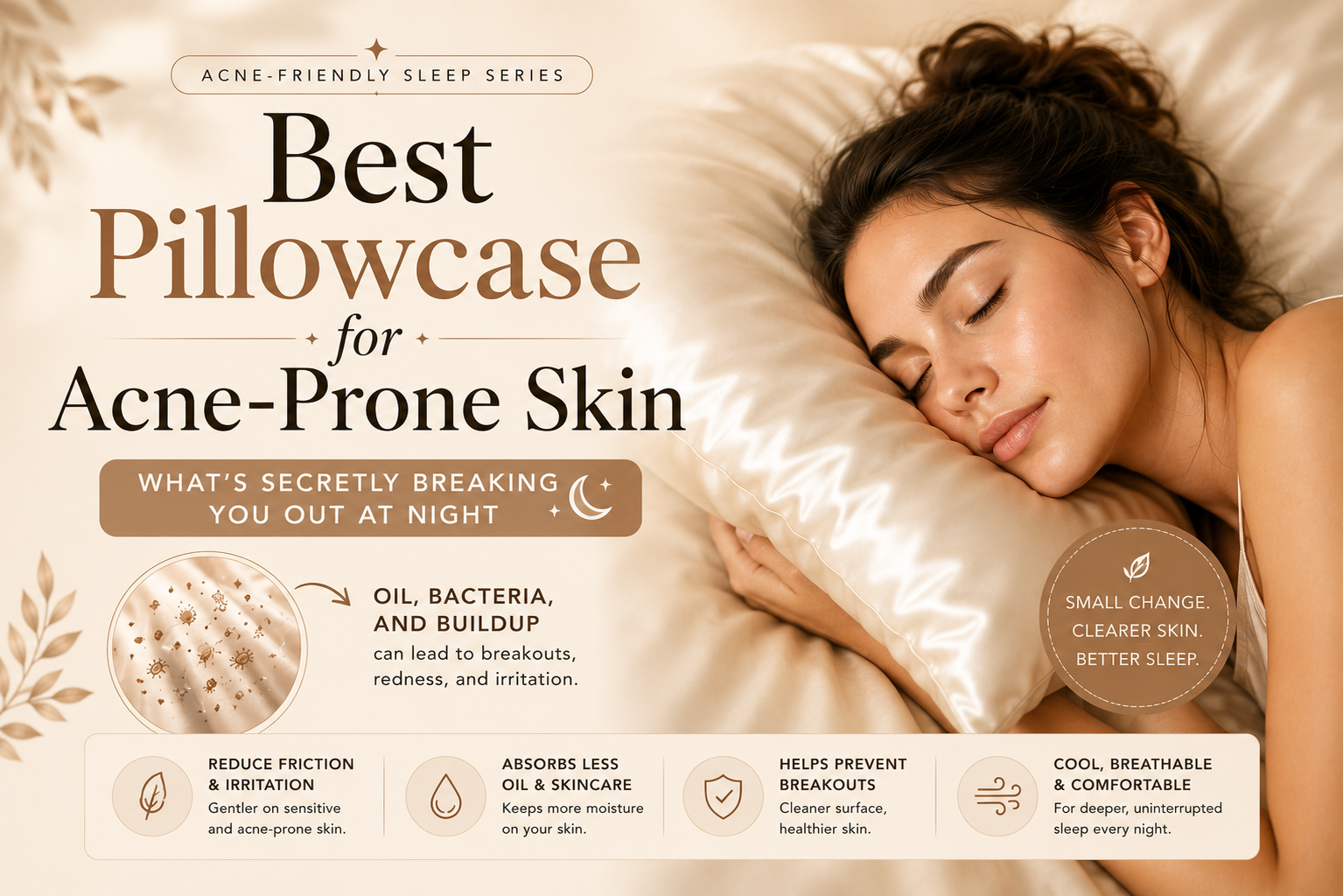
You wash your face every night. You follow your skincare routine. You’re doing everything right — and you’re still waking up with new breakouts.
Here’s something most people never think about: you’re pressing your face against the same surface for 8 hours every single night. Whatever has built up on that fabric — oil, bacteria, dead skin cells, hair product residue — is being pressed directly into your pores while you sleep. If you haven’t thought seriously about the best pillowcase for acne-prone skin, you might be unknowingly sabotaging everything else you’re doing.
This guide covers the three things that actually matter when choosing the best pillowcase for acne-prone skin: how often to change it, why your laundry detergent could be secretly irritating your skin, and the honest breakdown of silk vs. satin vs. cotton — so you can find the best pillowcase for acne that actually fits your life and budget.
Table of Contents
What Your Pillowcase Is Doing to Your Skin Overnight
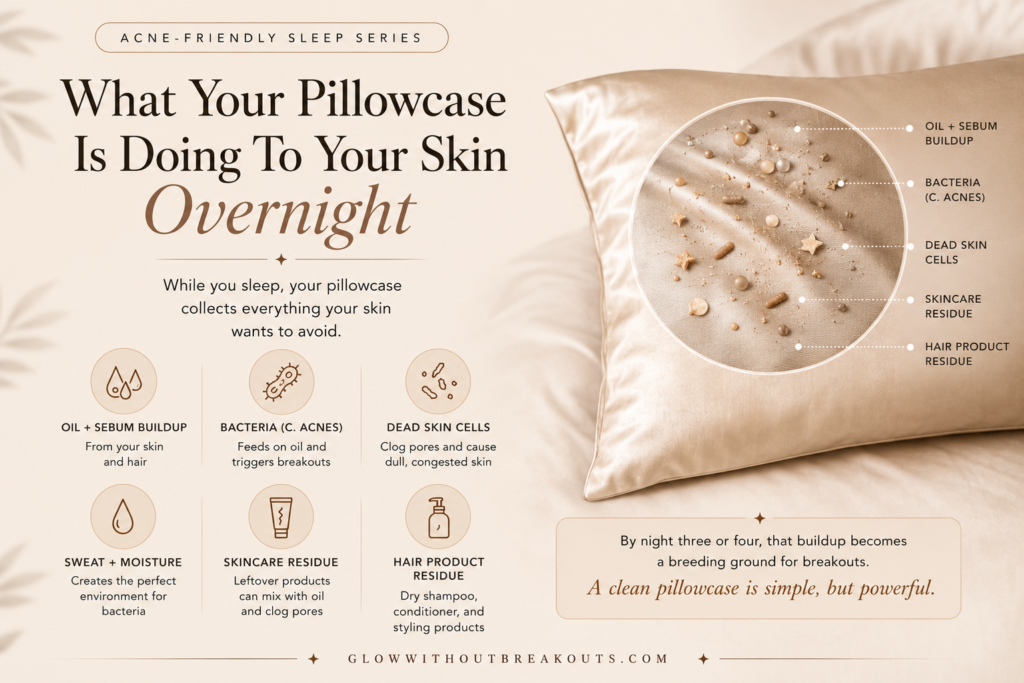
Every night, your best pillowcase for acne collects:
- Sebum (facial oil) from your skin and hair
- Dead skin cells shed during sleep
- Sweat and moisture
- Residue from nighttime skincare products
- Hair product buildup — dry shampoo, conditioner, styling products
- Bacteria, including C. acnes, the strain most associated with breakouts
On night one, this isn’t a problem. By night three or four, that accumulation becomes a breeding ground. The sebum on your best pillowcase for acne feeds C. acnes bacteria, which transfers right back onto your skin and can trigger the inflammatory response that leads to new breakouts. This is exactly why even the best pillowcase for acne needs to be changed regularly — fabric choice alone isn’t enough.
This is exactly why choosing and maintaining the best pillowcase for acne is one of the simplest, most underrated habits you can build into your routine. You’re spending real money on cleansers, treatments, and serums — and your pillow is quietly undoing that investment every night if you’re not staying on top of it. For a full picture of how your nightly routine affects your skin, see our best skincare routine for acne-prone skin.
How Often Should You Change Your Pillowcase for Acne-Prone Skin?
The standard recommendation for most people is once a week. But if you have oily or acne-prone skin, dermatologists consistently push that further.
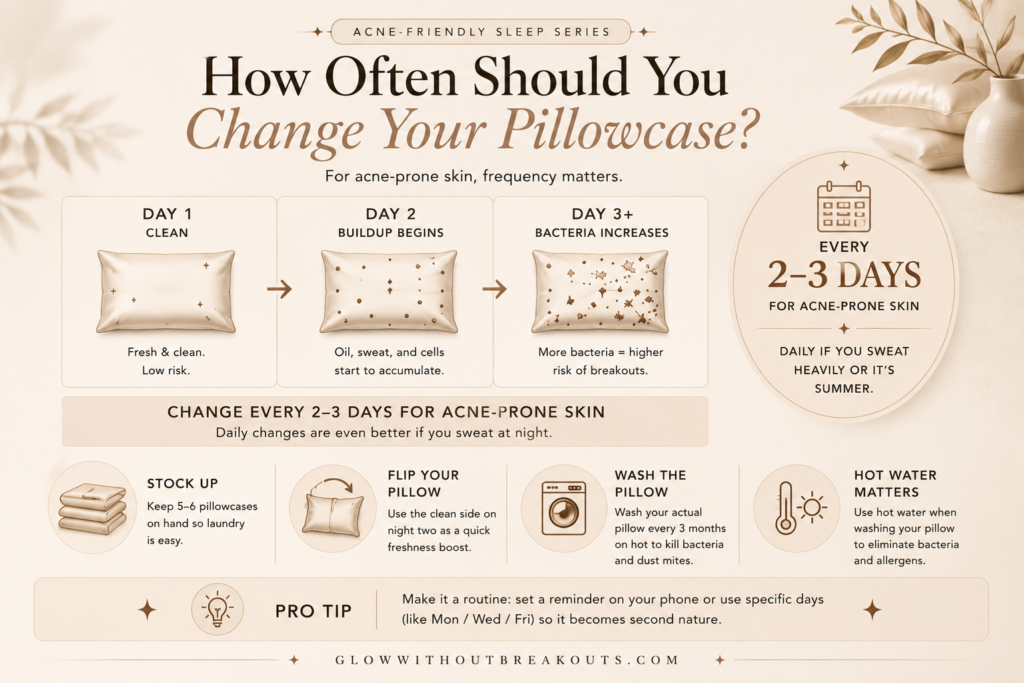
Board-certified dermatologist Dr. Marisa Garshick, of MDCS Dermatology in New York, recommends swapping to a fresh best pillowcase for acne every two to three days for acne-prone skin — because it directly reduces the buildup of acne-causing bacteria, dirt, and oil that clog pores and trigger breakouts. During summer or if you sweat heavily at night, daily swaps are even better.
The American Academy of Dermatology also emphasizes that maintaining a clean sleep environment is a core part of preventing skin irritation and acne flare-ups — a recommendation that most people apply to their skincare products but not their bedding.
Here’s how to make the every-2-3-days cadence actually sustainable:
Stock up on 5–6 of your best pillowcase for acne. You only need to do one laundry load per week — just swap to a fresh one every couple of days and wash them all together at once.
Try the flip trick. On night two, flip your pillow to the clean side. It’s not a replacement for washing, but it buys you an extra night on a fresher surface.
Wash the pillow itself. Most people never do this. Aim to wash the actual pillow every three months using the hot water setting to kill bacteria and dust mites that work their way through the pillowcase over time.
Why Your Laundry Detergent Might Be Breaking You Out
Here’s one that catches most people off guard. You’re diligently swapping to the best pillowcase for acne every few days — but if you’re washing it in the wrong detergent, you’re replacing a dirty surface with a chemically irritating one.
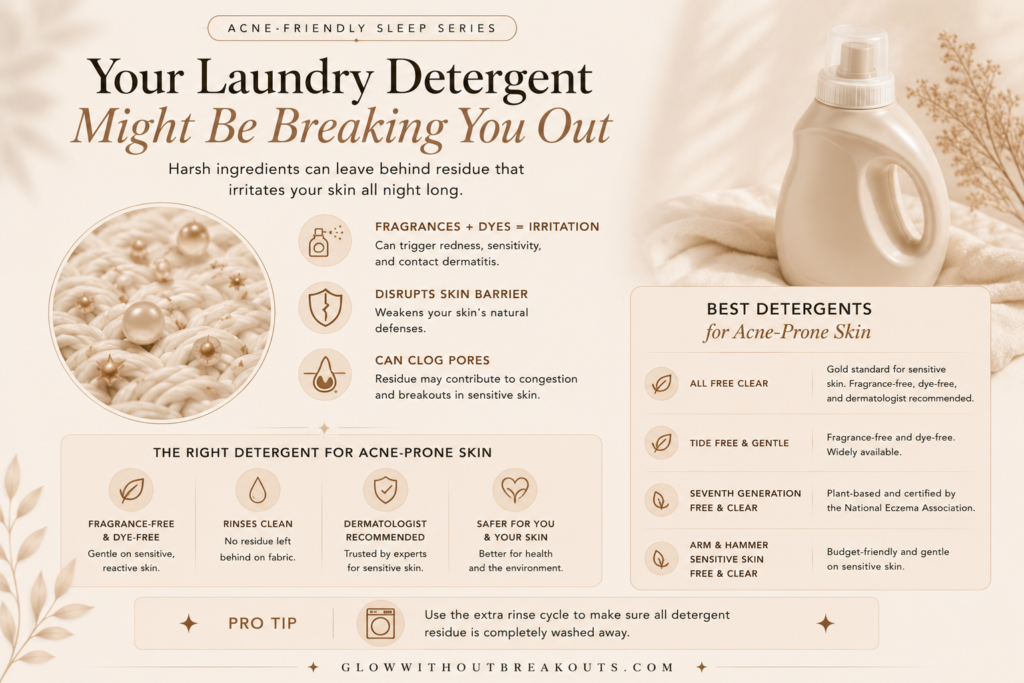
Standard detergents are loaded with fragrances, dyes, optical brighteners, and preservatives. These are designed to make clothes smell good and look bright. But when those residues stay in your best pillowcase for acne and sit against your face for 8 hours a night, they can:
- Disrupt your skin’s acid mantle
- Trigger contact dermatitis
- Cause stinging, redness, and sensitivity
- Contribute to clogged pores in reactive skin
This is especially significant if you already have a compromised skin barrier — fragrance is one of the most common contact allergens, and even trace residue in fabric can be enough to trigger a reaction. (If that sounds familiar, our guide on skin barrier damage and how to fix it is worth a read.)
The Right Detergent for Acne-Prone Skin
All Free Clear is the gold standard recommendation for sensitive and acne-prone skin. It’s the number one detergent brand recommended by dermatologists, allergists, and pediatricians for sensitive skin. Zero fragrances, zero dyes, EPA Safer Choice certified, and it rinses completely clean without leaving irritating residue behind.
Other solid options include:
- Tide Free & Gentle — fragrance-free and dye-free, widely available at most grocery stores
- Seventh Generation Free & Clear — plant-based, certified by the National Eczema Association
- Arm & Hammer Sensitive Skin Free & Clear — budget-friendly and easy to find
What to skip entirely: fabric softeners and dryer sheets, even unscented ones. They leave a coating on fabric that can trap oil and irritants against your skin. Use wool dryer balls instead — they soften fabric without any chemical residue.
Wash temperature: Warm to hot water kills bacteria most effectively. Hot water (around 60°C / 140°F) is especially important if you sweat heavily at night or are dealing with active breakouts.
Best Pillowcase for Acne: Silk vs. Satin vs. Cotton vs. Bamboo
Fabric choice has a real impact on acne-prone skin — and not just because some fabrics feel nicer. Here’s what’s actually happening with each material.
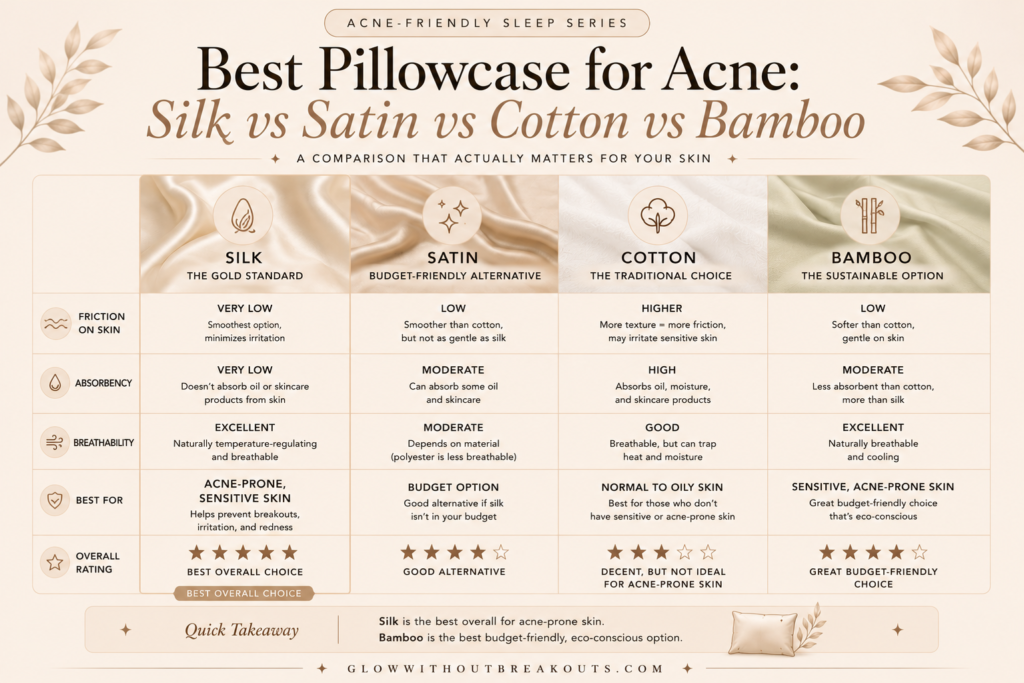
Cotton: The Default That’s Working Against You
Cotton is on most people’s beds because it’s affordable and breathable. But it has two properties that are genuinely problematic if you’re looking for the best pillowcase for acne.
First, cotton is highly absorbent. It soaks up oil, sweat, and bacteria from your face, then holds all of it in the fabric. By night two or three, you’re pressing your face against a concentrated accumulation of everything that was on your skin the night before. Second, cotton has more friction than smoother fabrics. Every time you move during sleep, your skin drags slightly against the fiber. For inflamed or sensitized skin, this repeated mechanical friction aggravates existing breakouts and increases redness.
As board-certified dermatologist Dr. Anna Chacon explains: the friction from cotton on sensitive skin creates more inflammation, worsening acne, eczema, and other skin conditions. Cotton essentially turns into a bacteria petri dish for your face after a few nights of use.
If you’re using cotton, the mitigation strategy is frequent changes — every two to three days — and a fragrance-free detergent. But cotton simply isn’t the best pillowcase for acne if you have alternatives available, and the science is pretty clear on why.
Satin: A Meaningful Upgrade, With One Catch
Satin’s smooth surface is genuinely gentler on skin than cotton, making it a candidate for best pillowcase for acne on a budget. It reduces friction significantly, and because satin is less absorbent, your nighttime serums and moisturizers stay on your face rather than getting soaked up by the fabric. That alone can make a noticeable difference in how well your skincare actually works overnight.
The catch: most satin pillowcases are made from synthetic polyester. Polyester satin is smooth, but it’s not breathable. It traps heat and moisture against your skin, which can clog pores and contribute to breakouts — especially in summer. It also lacks the hypoallergenic properties of natural fibers.
Satin is a better choice than cotton and a decent best pillowcase for acne if silk is out of budget. It’s just not the top option if breathability matters to you.
Silk: Why Dermatologists Actually Recommend It
Pure mulberry silk is what dermatologists consistently point to when asked for the best pillowcase for acne-prone skin, and it holds a clear lead over every other fabric option. The reasons are specific and science-backed.
Reduced friction. Silk’s surface is exceptionally smooth — skin glides across it rather than dragging. A study published in the Journal of Cosmetic Dermatology found that pure silk pillowcases reduced facial irritation in people with acne compared to cotton alternatives. Less friction means less aggravation of existing inflammation.
Less absorbent. Unlike cotton, silk doesn’t aggressively pull moisture or products from your skin. Your retinol, ceramide moisturizer, and niacinamide serum stay where you put them.
Naturally hypoallergenic. Silk naturally resists dust mites, mold, and bacteria — keeping your sleep surface cleaner between washes. This is a meaningful advantage for anyone whose skin reacts to environmental irritants.
Breathable and temperature-regulating. Unlike polyester satin, silk allows air to circulate and regulates temperature. Less trapped heat means less sweat and fewer clogged pores overnight.
According to dermatologist Dr. VanHoose of Water’s Edge Dermatology, silk is the top recommendation for acne patients because it’s made from 100% pure natural fiber, smooth, breathable, and doesn’t harbor bacteria the way cotton does.
What to look for in the best pillowcase for acne: 100% mulberry silk with a momme weight of 19–22. That’s the sweet spot for softness, durability, and everyday skin benefits. Look for OEKO-TEX certification to confirm there are no harmful chemicals in the fabric. Expect to spend $40–$80 for a quality option.
One important distinction: genuine mulberry silk and satin are not the same thing, even though they look similar. Satin is a weave type, not a fiber — it can be made from polyester or other synthetics. Only real silk gives you the full combination of breathability, hypoallergenic properties, and reduced friction.
Bamboo: The Best Value Alternative
Bamboo pillowcases don’t get enough credit. They’re naturally antimicrobial, more breathable than cotton, significantly softer, and considerably more affordable than silk — making bamboo a strong contender for best pillowcase for acne on a budget. Dr. Garshick specifically recommends bamboo as an excellent option for acne-prone skin. If you’re not ready to invest in silk, bamboo is the best pillowcase for acne at an accessible price point.
The Honest Summary
| Fabric | Friction | Absorbency | Breathability | Acne-Prone Rating |
|---|---|---|---|---|
| Cotton | High | High | Good | ⚠️ Only with frequent changes |
| Polyester Satin | Low | Low | Poor | ✓ Better than cotton |
| Bamboo | Low | Medium | Good | ✓✓ Great value option |
| Mulberry Silk | Very low | Very low | Excellent | ✓✓✓ Dermatologist’s top pick |
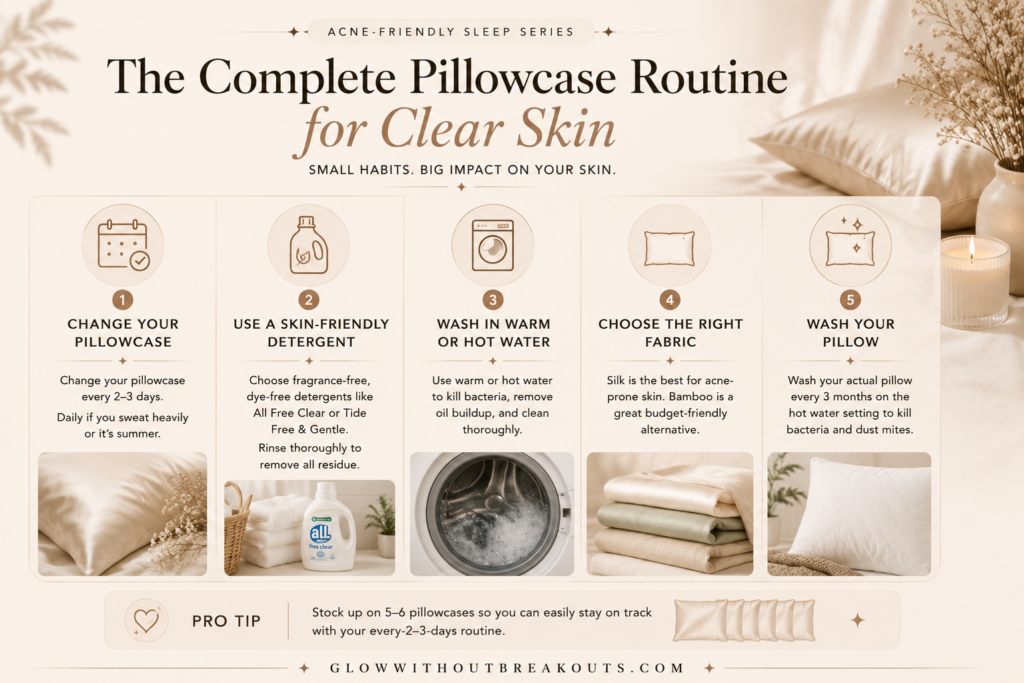
The Complete Best Pillowcase for Acne Routine
Put it all together — here’s the full system:
Change frequency: Swap to your best pillowcase for acne every 2–3 days for oily or acne-prone skin. Daily in summer or if you sweat heavily at night.
Detergent: Fragrance-free and dye-free only. All Free Clear is the dermatologist-recommended default. No fabric softeners or dryer sheets.
Wash temperature: Warm to hot to kill bacteria effectively.
Fabric: The best pillowcase for acne is 100% mulberry silk (19–22 momme) for the best overall results. Bamboo is a more affordable alternative. Avoid synthetic polyester if breathability is a concern.
Habits that compound the benefit:
- Always wash your face before bed — less on your skin means less transferring to your pillow
- Keep your hair clean, especially if you have an oily scalp; scalp oil transfers directly to your pillowcase and then your face
- If you use heavy hair products, consider a silk bonnet so product buildup never reaches your pillowcase
- Wash the actual pillow itself every three months
Does Changing Your Pillowcase Actually Clear Acne?
Here’s the honest answer: the best pillowcase for acne won’t cure acne on its own. Acne is multifactorial — hormones, genetics, skincare products, and stress all play significant roles. Hormonal or cystic acne won’t resolve from switching to the best pillowcase for acne alone.
But here’s what the right best pillowcase for acne and hygiene routine will do: stop your sleep environment from actively working against you. If you’re doing everything right and still breaking out, your bedding is genuinely worth examining as a contributing variable. A contaminated best pillowcase for acne re-exposes your skin to bacteria and friction every single night — quietly undoing the skincare routine you’re working hard to maintain.
Think of it the same way you think about your cleanser. A good cleanser won’t cure acne by itself, but a bad one will definitely make things worse. The same logic applies to your best pillowcase for acne. For a full picture of other habits that prevent breakouts, read our 8 best tips to prevent breakouts and acne.
FAQ
How often should I change my best pillowcase for acne? Every 2–3 days is the dermatologist recommendation when using the best pillowcase for acne-prone skin. The easiest way to make this sustainable is to own 5–6 pillowcases and do one laundry run per week. During hot months or if you sweat heavily, daily changes are ideal.
Is silk or satin better as the best pillowcase for acne? Genuine mulberry silk is the better best pillowcase for acne. Most satin pillowcases are made from synthetic polyester, which traps heat and moisture and lacks silk’s breathability and hypoallergenic benefits. Satin still beats cotton for reducing friction, but real silk is the superior choice for acne-prone skin.
Can my laundry detergent cause breakouts? Yes. Fragrances, dyes, and optical brighteners in standard detergents leave residue on fabric that can irritate acne-prone skin and disrupt your skin barrier. Switch to a fragrance-free, dye-free option like All Free Clear, and skip fabric softeners entirely.
What’s the most important factor — fabric or washing frequency? Both matter, but washing frequency has a more immediate impact. Even the best pillowcase for acne becomes a bacteria reservoir if you go two weeks between washes. If you can only change one thing, change how often you swap your best pillowcase for acne. If you can change two things, upgrade your fabric and your detergent at the same time.
I swapped to the best pillowcase for acne and I’m still breaking out. What gives? Pillowcase hygiene removes one variable — not all of them. Check your cleanser for anything too stripping (our best cleansers for acne-prone skin breaks down exactly what to look for). Hair products are frequently overlooked — they transfer to your pillow and then your face more than most people realize. And if your skin is red, reactive, and breaking out despite a solid routine, our guide to skin barrier damage might explain what’s actually going on.
Can I use fabric softener when washing my best pillowcase for acne? No. Fabric softeners leave a chemical coating on your best pillowcase for acne that can trap oil and residue against your skin. Use wool dryer balls instead for softness without any chemical trade-off.
Dealing with a breakout right now while you wait for your new routine to kick in? Our post on the best ways to make a pimple go away fast covers the science-backed methods that won’t make things worse. And if you’re concerned your skincare is damaging your skin barrier rather than fixing it, start with our over-exfoliation recovery guide.