GlowWithoutBreakouts.com • Honest Reviews for Acne-Prone Skin
13 Products Personally Tested • Updated 2026
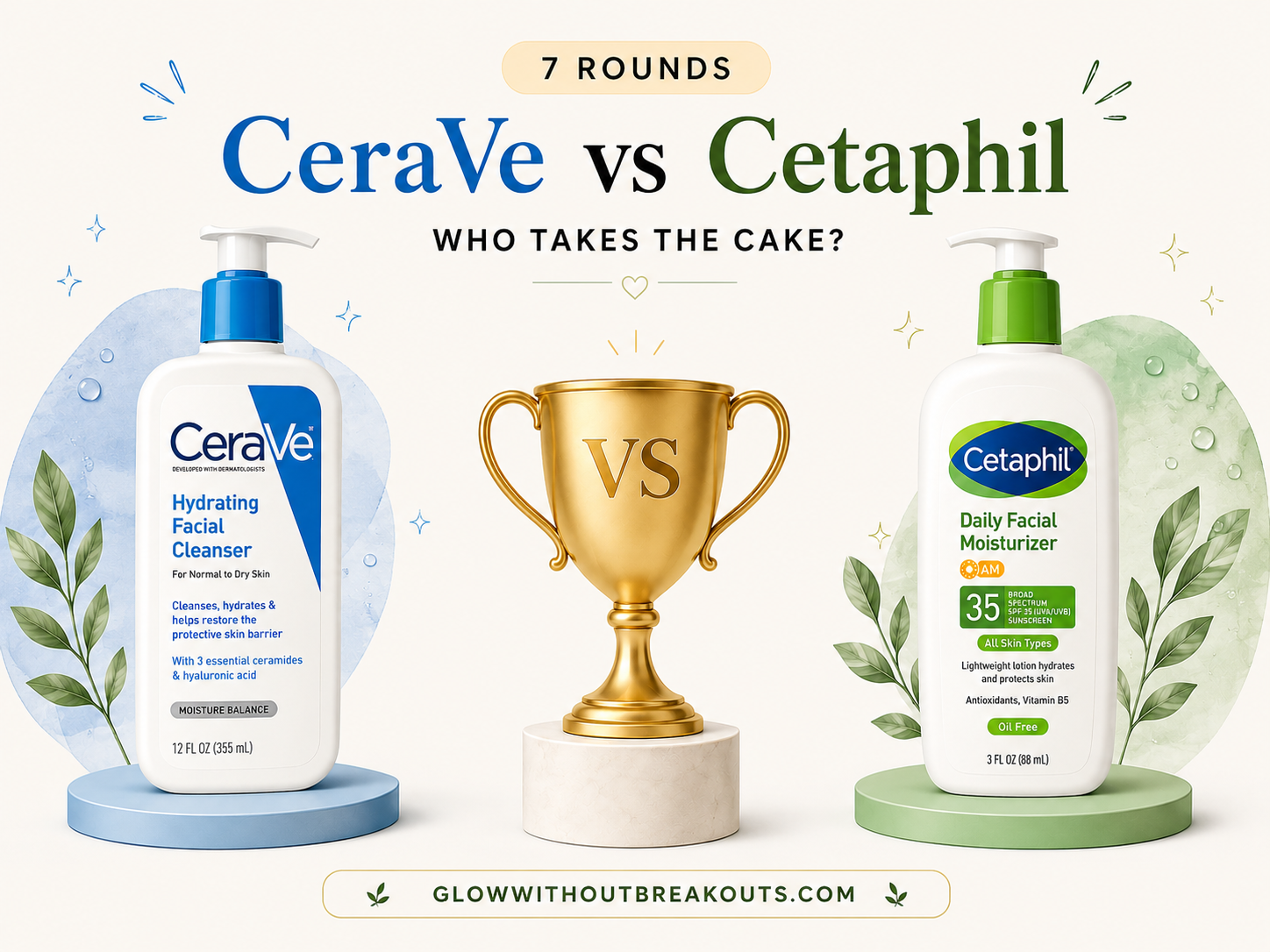
If you’ve ever stood in the drugstore aisle wondering about CeraVe vs Cetaphil- this post is for you. I’ve personally tried 13 products across both lines on my sensitive, acne-prone skin, and I’m breaking it all down across 7 honest rounds-just real experience.
When it comes to CeraVe vs Cetaphil, both brands are dermatologist-recommended, fragrance-free, and affordable. But they are NOT the same. And for acne-prone skin, the differences actually matter.
→ Best Cleansers for Acne-Prone Skin: Tested & Ranked
→ Best Sunscreen for Acne-Prone Skin
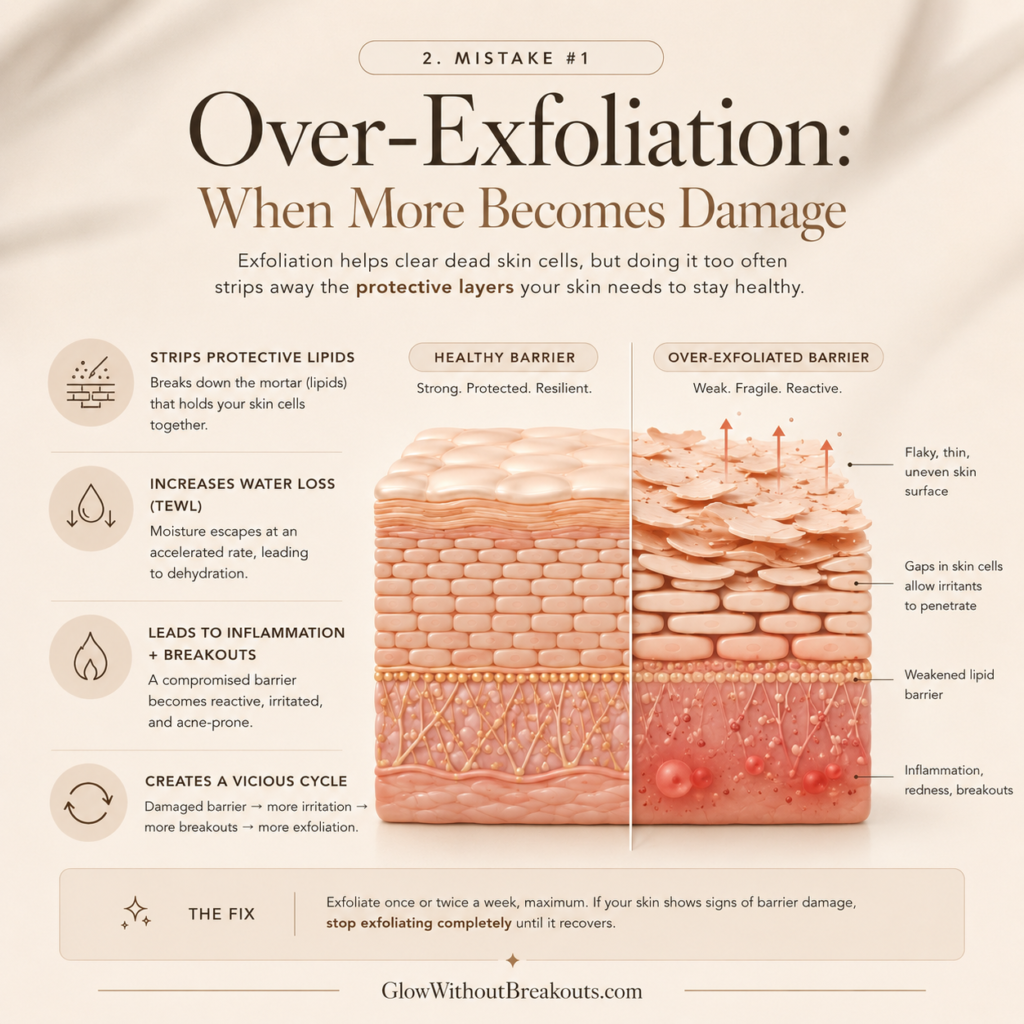
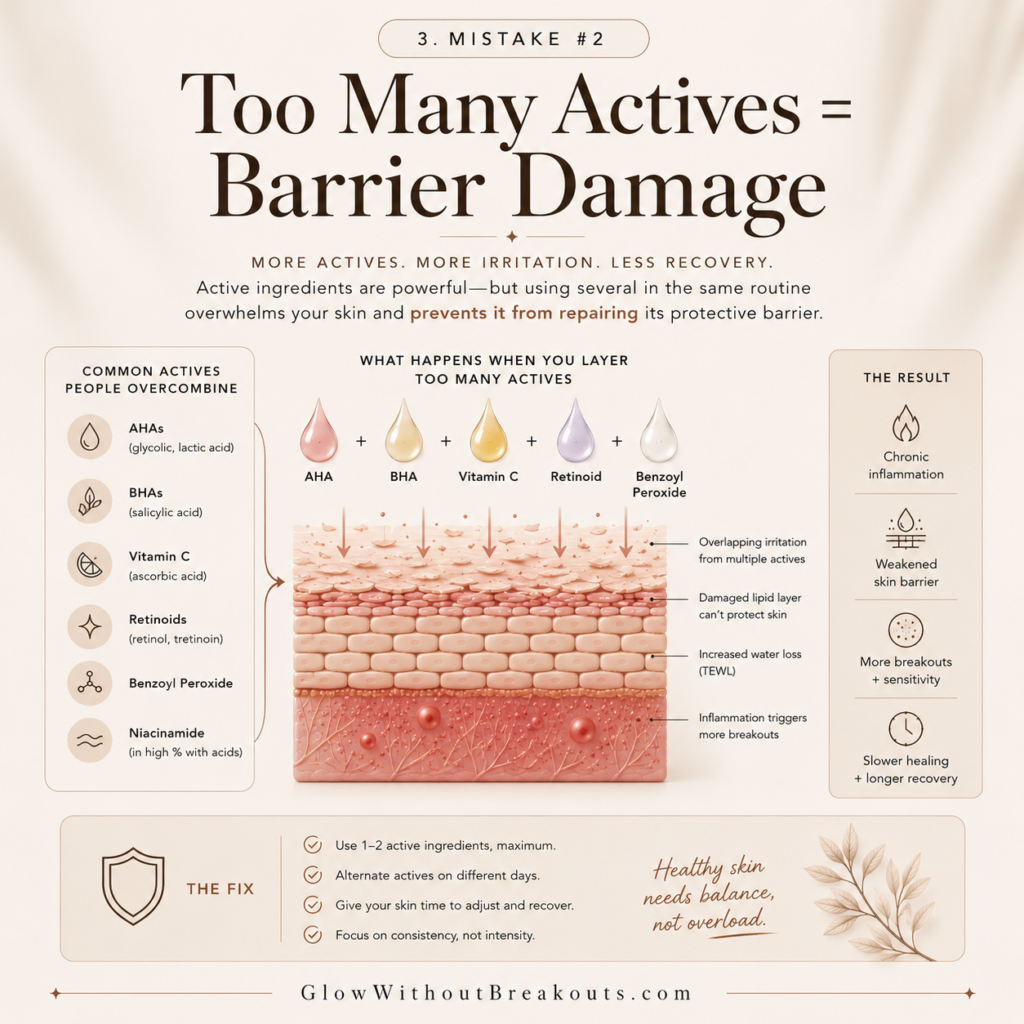
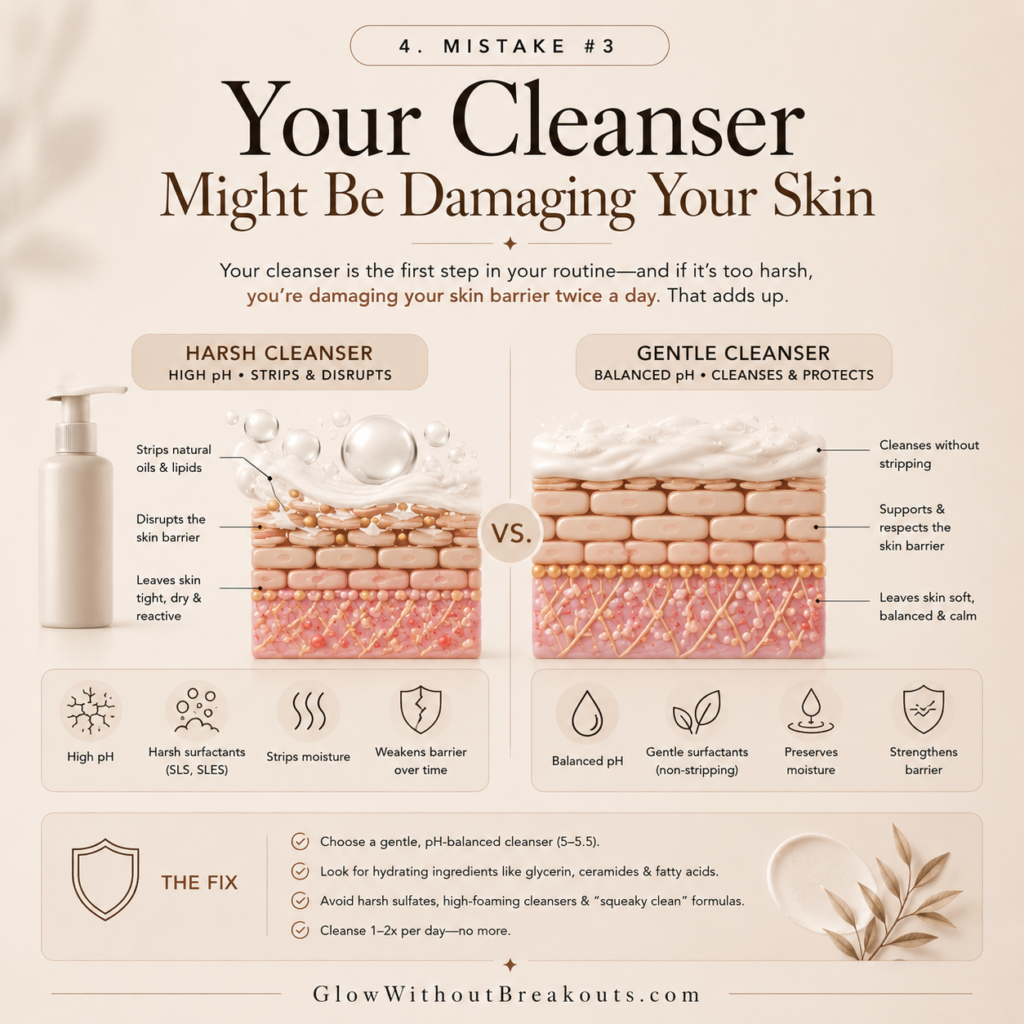
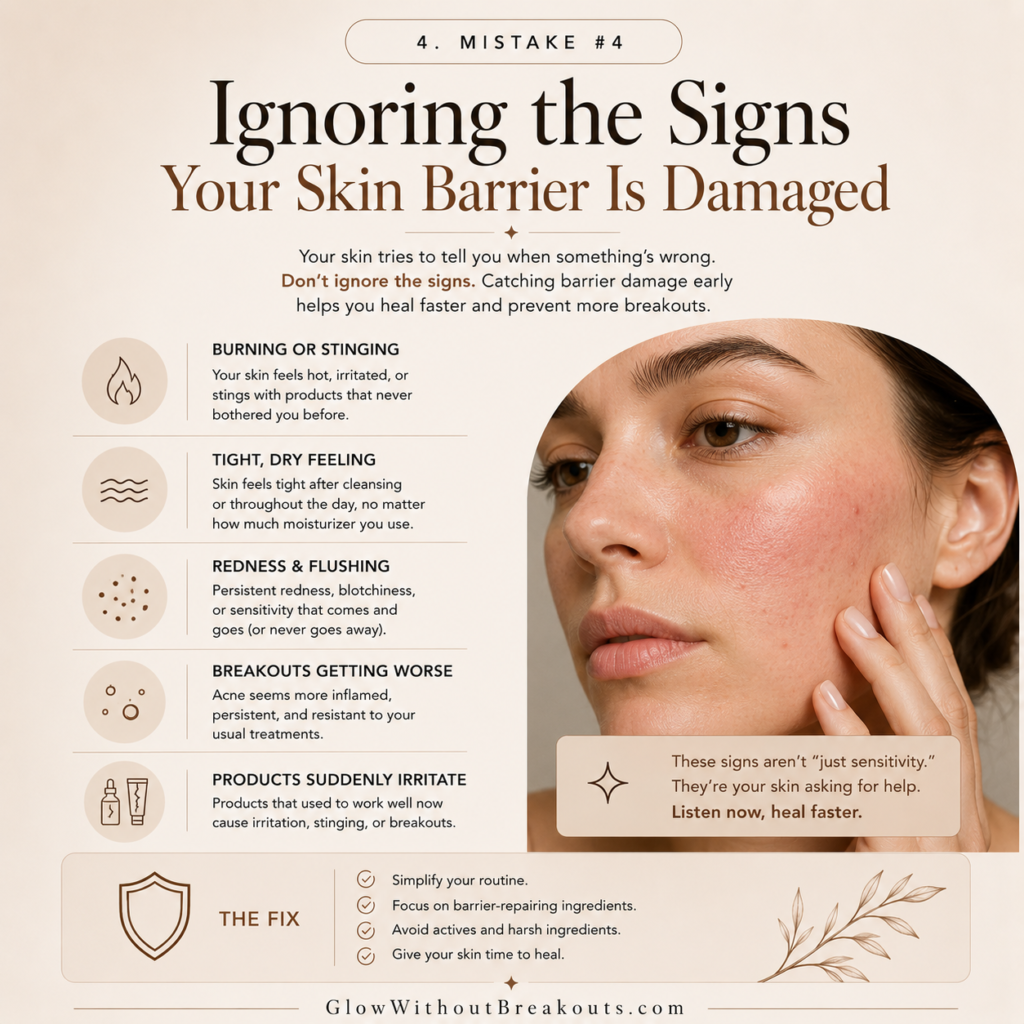
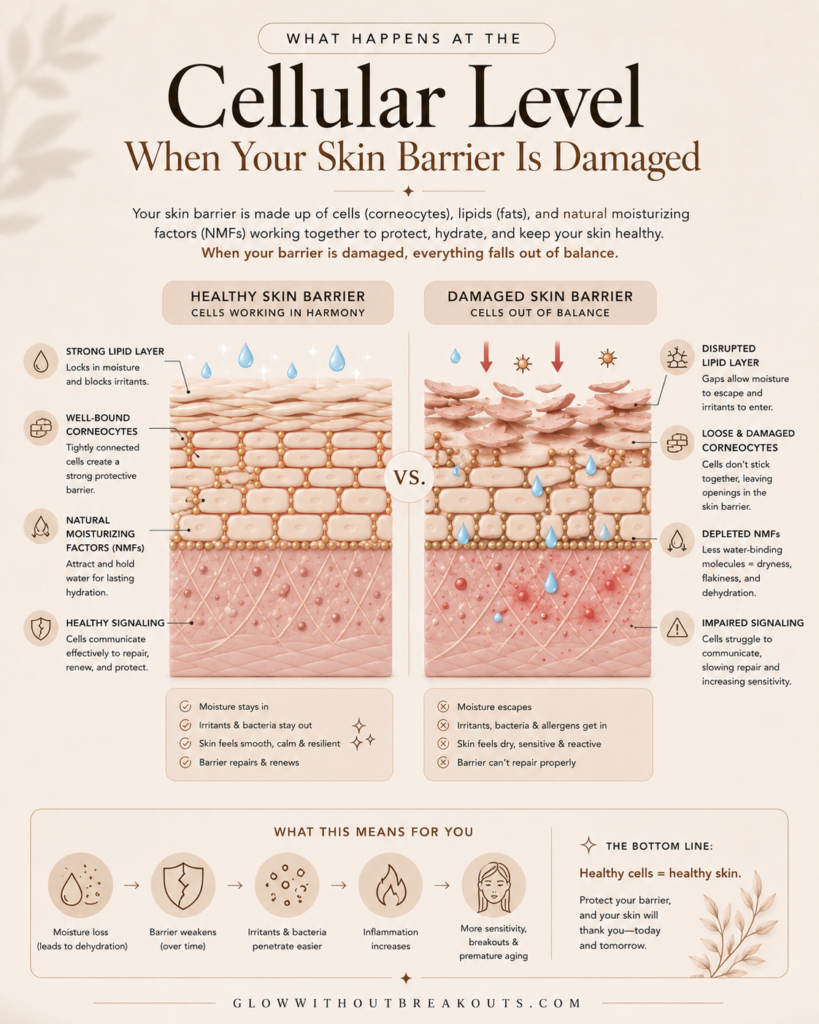
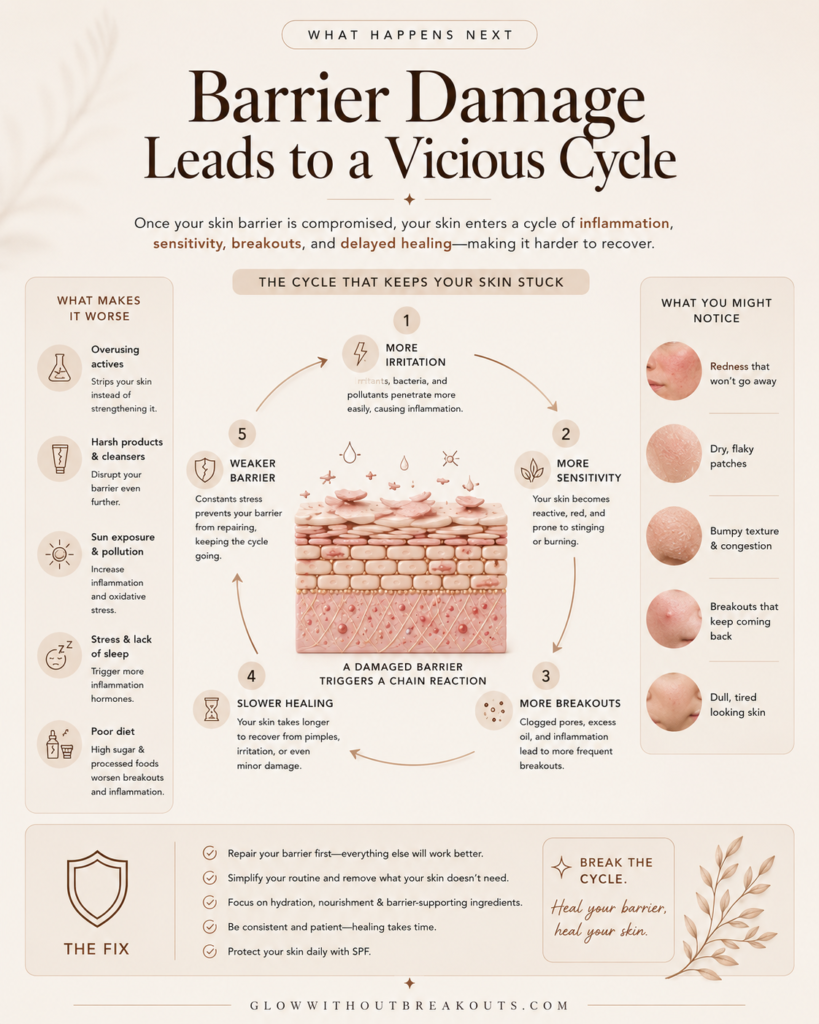
→ 5 Critical Mistakes That Shattered Your Skin Barrier
Table of Contents
CeraVe vs Cetaphil: Quick Brand Overview
CeraVe
Developed with dermatologists, CeraVe is built around three essential ceramides that restore and maintain the skin barrier. Their MVE technology delivers ingredients slowly over time for continuous hydration. Great for barrier repair and active acne treatment.
Learn more about ceramides on CeraVe’s official site
Cetaphil
Cetaphil has been around since 1947 and is the go-to for ultra-sensitive skin. Their newer Gentle Clear line specifically targets acne-prone sensitive skin. Cetaphil’s formulas lean more botanical and soothing — less focused on actives, more focused on comfort.
Explore Cetaphil’s Gentle Clear acne line
⚔️ ROUND 1: CLEANSERS
In the CeraVe vs Cetaphil cleanser battle, the stakes are high. Cleansing is the foundation of any acne routine — get this wrong and nothing else matters. Here is how both brands stack up and what I personally experienced with each one.
CeraVe vs Cetaphil- CeraVe Cleansers
CeraVe Foaming Facial Cleanser ($15.99)
🛒 Shop on Amazon | 🔗 View on CeraVe Official Site
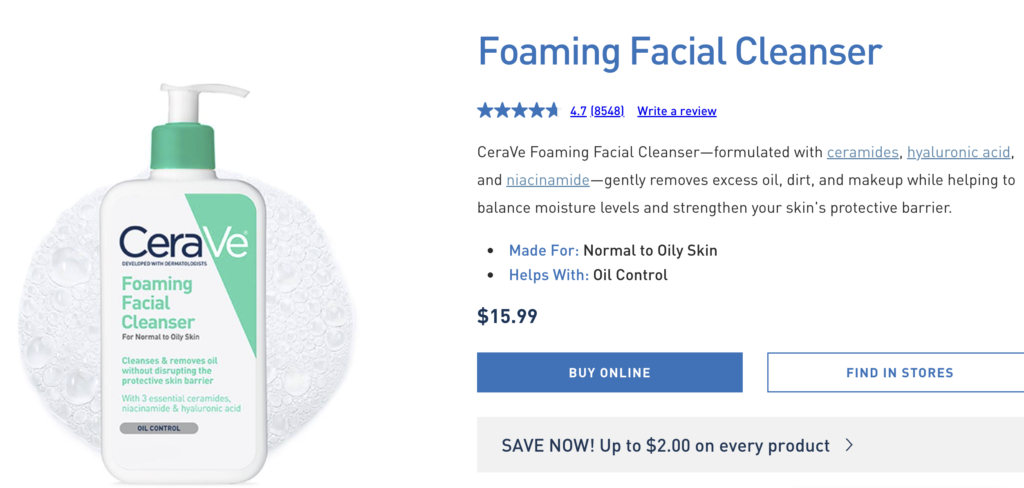
- Made for normal to oily skin
- Contains ceramides, hyaluronic acid, and niacinamide
- Removes excess oil without disrupting the skin barrier
💬 My Review:I used this one for over a year and still go back to it when I’m traveling for the weekend. It really helped clean my skin without overly drying, and it’s a perfect touch to balance skin when paired with the right moisturizer. It’s a great acne-safe face wash especially for combination acne-prone skin — it cleans well but isn’t harsh. A safe staple.
CeraVe Acne Foaming Cream Wash 10% BPO ($19.99)
🛒 Shop on Amazon | 🔗 View on CeraVe Official Site
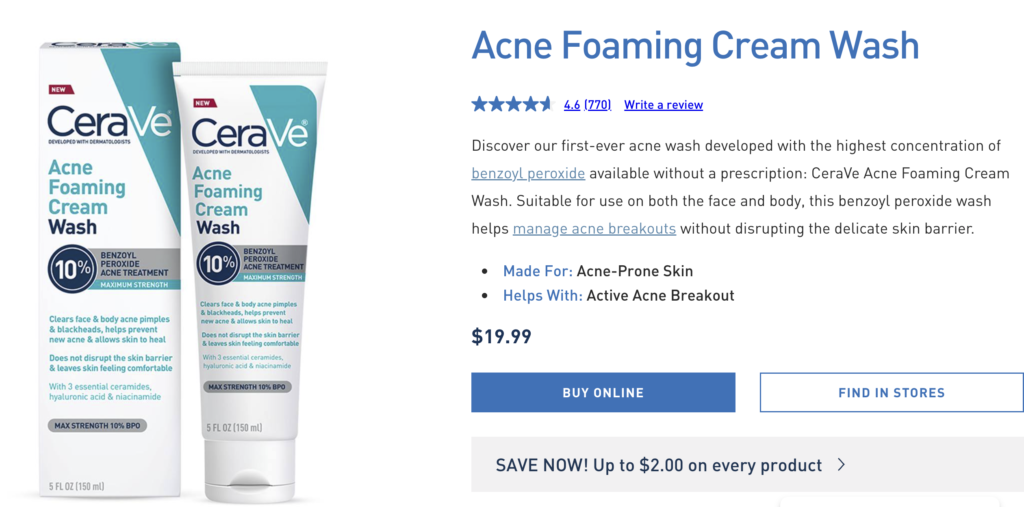
- 10% benzoyl peroxide-highest OTC concentration available
- Clears face and body acne, blackheads, prevents new breakouts
- Still contains ceramides and hyaluronic acid to protect barrier
💬 My Review: This was my favorite for a long time. Once I found it I made sure I never ran out. I would use this daily at night paired with a really good hydrating moisturizer. My skin could handle it even though it is a more stripping face wash, but ONLY because I paired it with really hydrating moisturizers. I have sensitive acne-prone skin and this was a safe go-to that always cleared my skin. I found my skin wasn’t as hydrated as I wanted using it every day, but as someone with frequent breakouts, it left my skin clear, balanced in pigmentation and texture, and comfortable. I’m now at a stage where I can use a less stripping wash, but I still rotate this in about twice a week.
💡 Pro Tip: Start with just a few nights a week and increase slowly. Do not use more than once per 24 hours- night use only, max 1x per day. Always pair with a rich, hydrating moisturizer.
→ Related: Best Ways to Make a Pimple Go Away Fast
CeraVe vs Cetaphil- Cetaphil Cleansers
Cetaphil Daily Facial Cleanser ($13.99)
🛒 Shop on Amazon | 🔗 View on Cetaphil Official Site
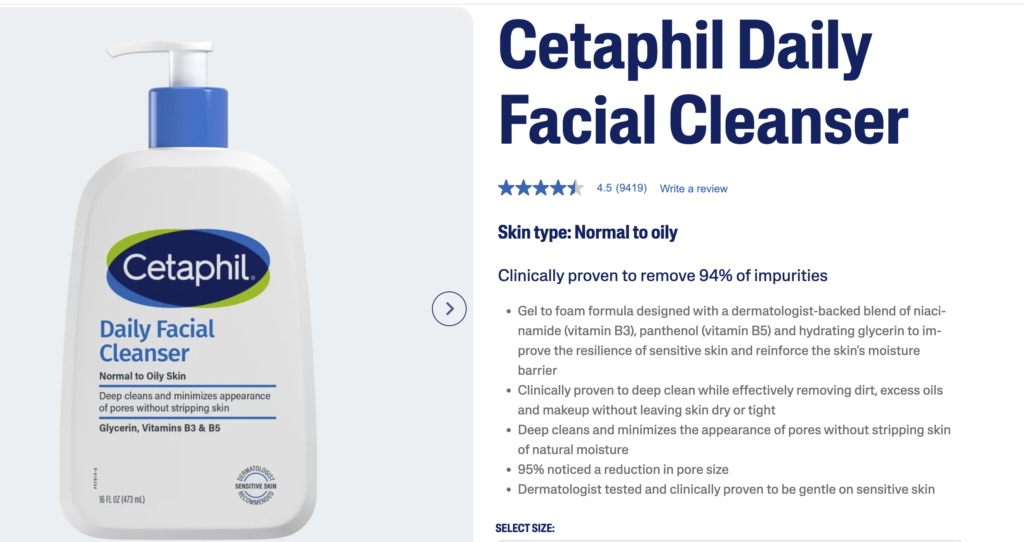
- Gel-to-foam formula with niacinamide, panthenol, and glycerin
- Clinically proven to remove 94% of impurities
- Normal to oily skin, dermatologist tested
💬 My Review: I’ve used this before and it is very non-stripping which is great for the skin barrier. It’s a good option in an acne-prone routine if your skin is also dry and sensitive. It’s not a foamy cleanser so it doesn’t feel like a deep clean to me, and you have to use more product to really clean and lather on the skin. Great choice for sensitive acne-prone skin though.
Cetaphil Gentle Clear Clarifying Acne Cream Cleanser ($12.99)
🛒 Shop on Amazon | 🔗 View on Cetaphil Official Site
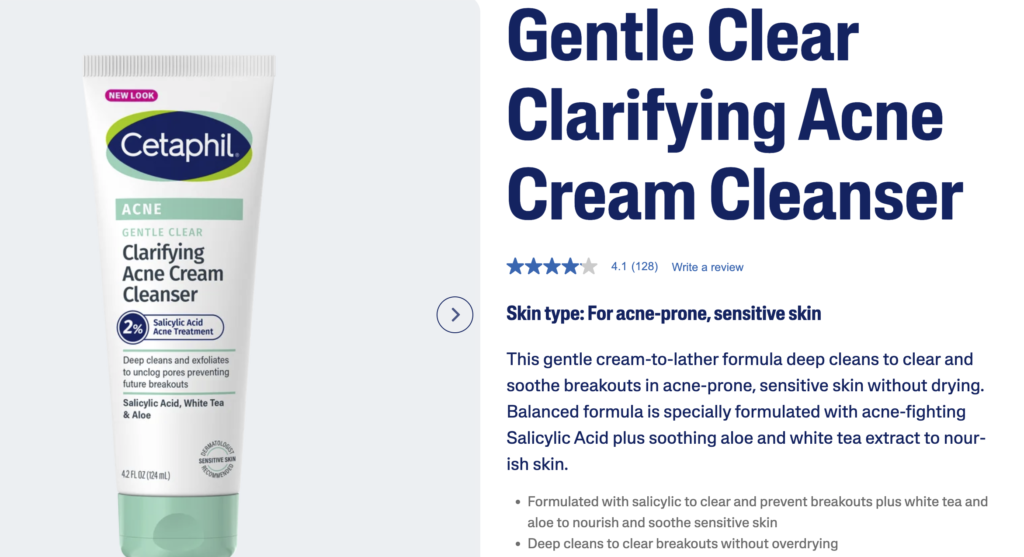
- 2% salicylic acid acne treatment
- Contains soothing aloe and white tea extract
- Cream-to-lather formula, deep cleans without overdrying
💬 My Review: This is a stronger acne wash but still calming thanks to aloe. It leaves the skin feeling clean and refreshed. A good choice for acne-prone skin that wants a real clean but still needs some gentleness.
→ Related: Best Cleansers for Acne-Prone Skin: Tested & Ranked
ROUND 1 VERDICT- CeraVe vs Cetaphil Cleansers: CeraVe wins for active acne fighters — the 10% BPO wash is one of the strongest OTC options available and I can personally vouch for it. Cetaphil wins for ultra-sensitive skin that cannot tolerate strong actives.
⚔️ ROUND 2: MOISTURIZERS
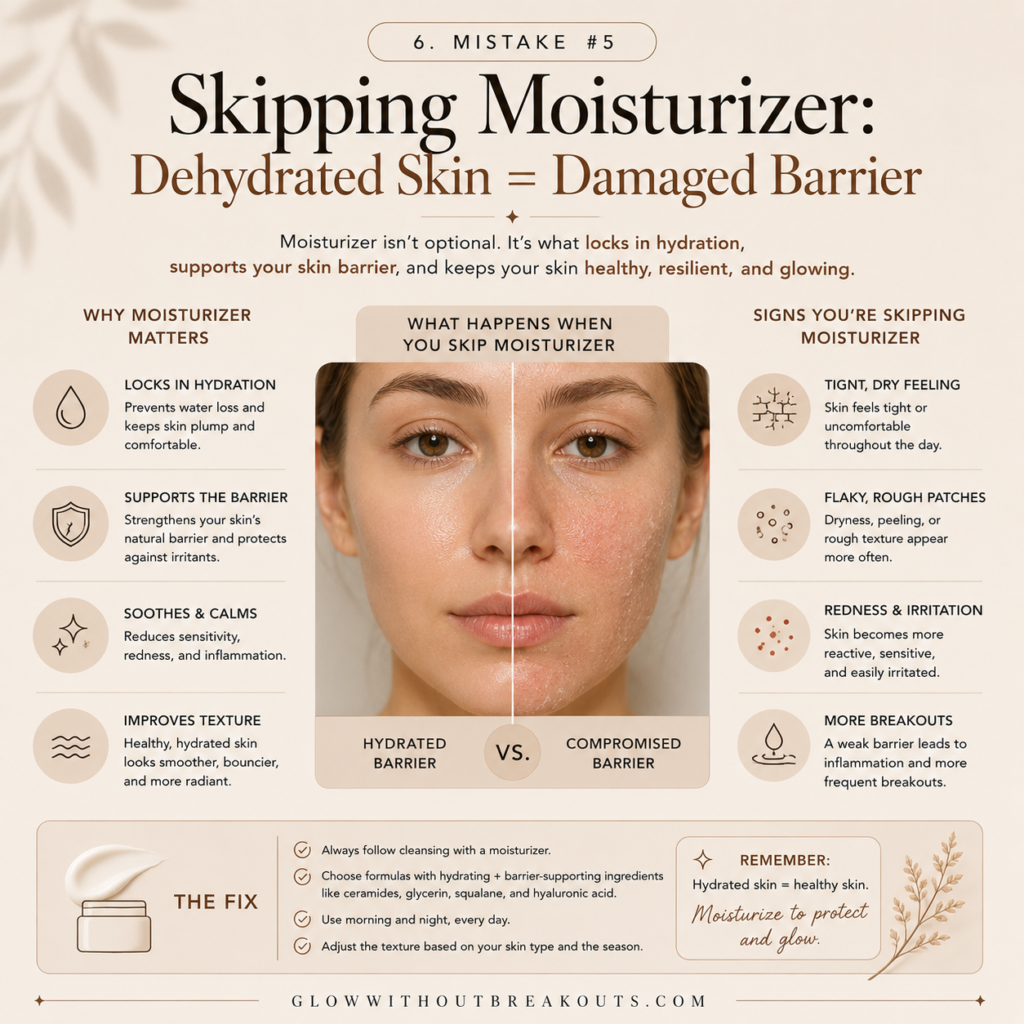
The CeraVe vs Cetaphil moisturizer comparison is where things get really personal. Skipping moisturizer when you have acne is one of the biggest skincare mistakes — dry skin overproduces oil, which leads to MORE breakouts. Here is what each brand offers and what I personally experienced.
CeraVe vs Cetaphil- CeraVe Moisturizers
CeraVe PM Facial Moisturizing Lotion ($19.99)
🛒 Shop on Amazon | 🔗 View on CeraVe Official Site
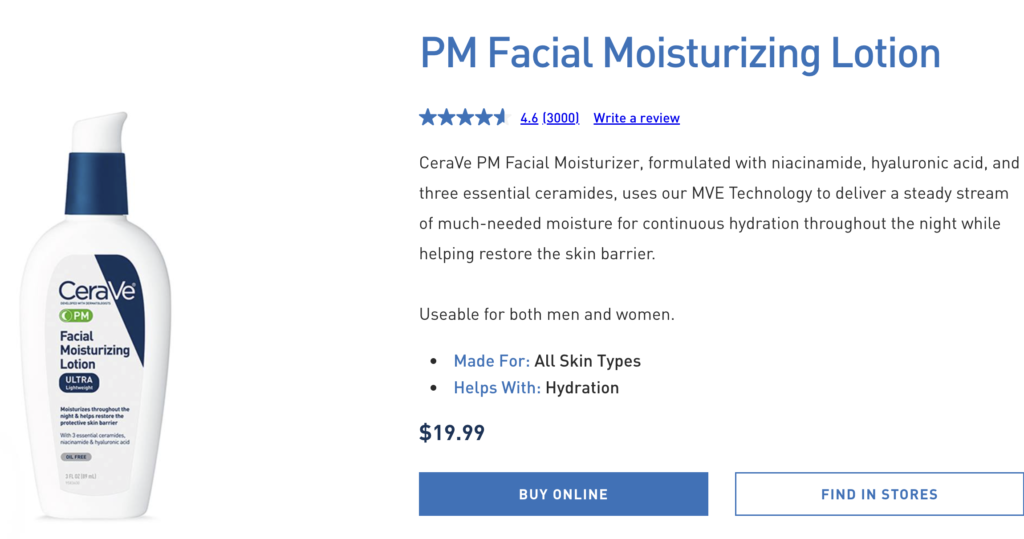
- Niacinamide, hyaluronic acid, and three essential ceramides
- MVE technology for continuous overnight hydration
- Made for all skin types
💬 My Review: This is my favorite acne-safe moisturizer by CeraVe, and honestly one of my favorites overall. Even though it’s labeled PM, you can absolutely use it in the AM too. It’s best before bed because the niacinamide, hyaluronic acid, and ceramides work overnight to calm and protect the skin barrier and prevent acne. When I use this at night and wake up in the morning, my skin feels clean and moisturized but not oily. It’s a must-have.
💡 Pro Tip: Many people pair this with the CeraVe AM SPF moisturizer (PM at night, AM in the morning), but this alone, morning or night, works beautifully for sensitive acne-prone skin.
CeraVe Daily Moisturizing Lotion ($14.99)
🛒 Shop on Amazon | 🔗 View on CeraVe Official Site
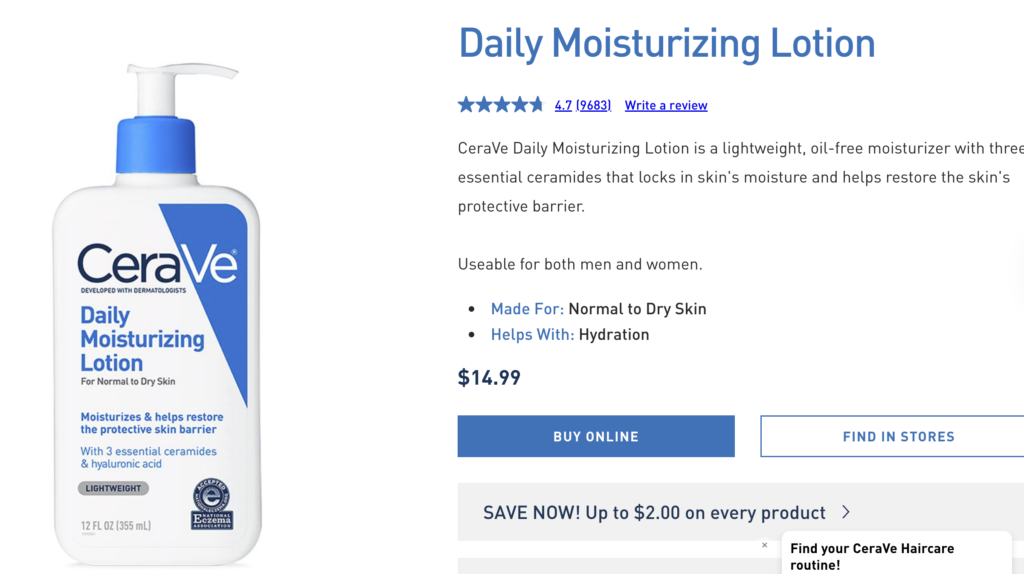
- Lightweight formula with three essential ceramides
- Locks in moisture and helps restore the protective skin barrier
- Normal to dry skin
💬 My Review: I definitely recommend this for people with sensitive acne-prone skin. It will protect your skin barrier, not clog your pores, and can be used AM or PM daily. Note: it is not labeled oil-free, so if you have oily acne-prone skin, you may want to switch to a lighter gel moisturizer instead.
CeraVe AM Facial Moisturizing Lotion SPF 50 ($19.99)
🛒 Shop on Amazon | 🔗 View on CeraVe Official Site
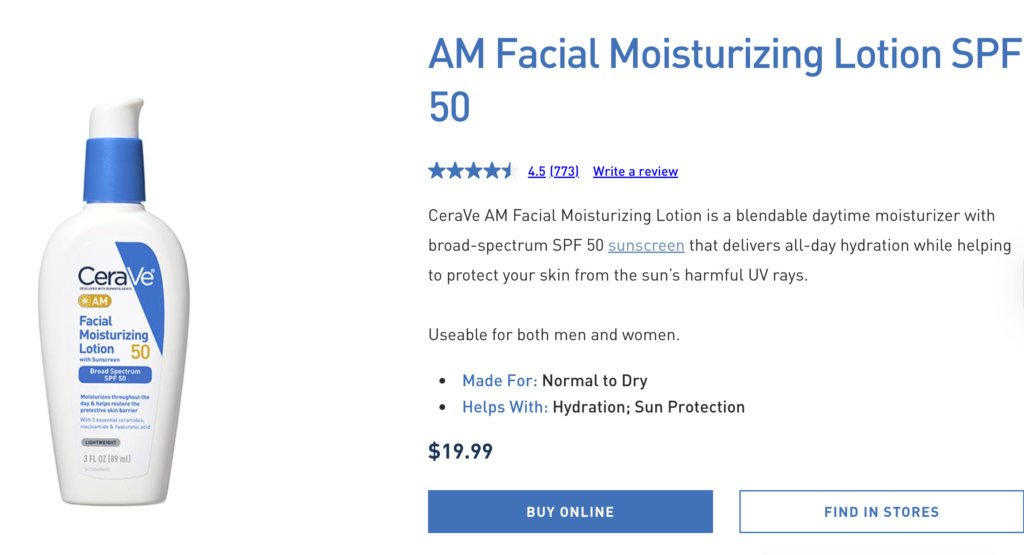
- Broad-spectrum SPF 50 sunscreen + daytime moisturizer in one
- Ceramides, niacinamide, and hyaluronic acid
- Normal to dry skin
💬 My Review: I’ve bought this a few times and did like it. The only thing is that the product separates sometimes- shake it well before use. Overall this is a great product for a moisturizer and sunscreen in one. I recommend it if you like a 2-in-1. Personally I prefer using a separate acne-safe sunscreen with a matte finish over a light layer of moisturizer, but this gives a more hydrated dewy finish which some people will love.
→ Related: Best Sunscreen for Acne-Prone Skin
CeraVe vs Cetaphil- Cetaphil Moisturizers
Cetaphil Gentle Clear Mattifying Acne Moisturizer ($15.99)
🛒 Shop on Amazon | 🔗 View on Cetaphil Official Site
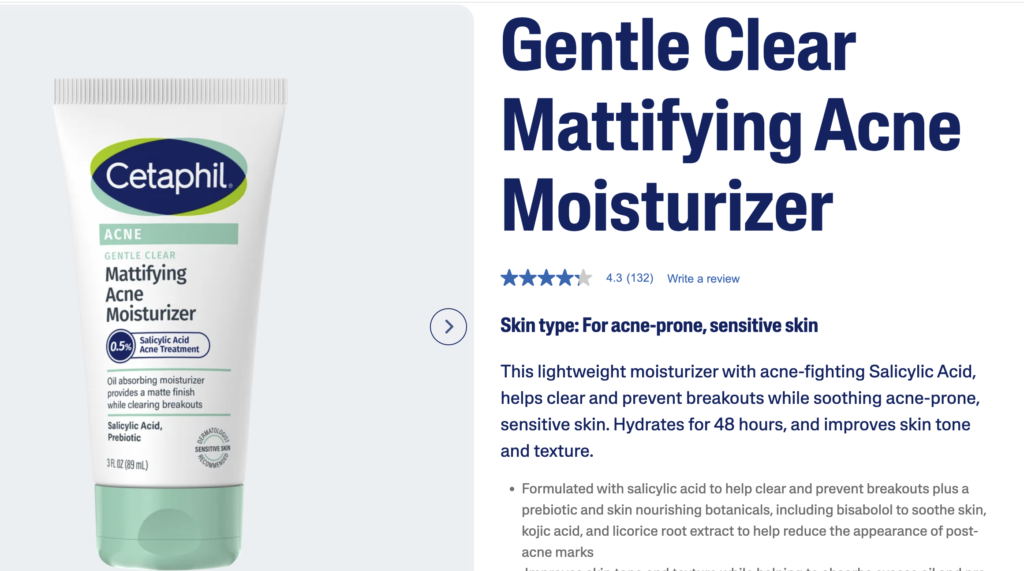
- 0.5% salicylic acid treats and prevents breakouts
- Prebiotic complex and botanicals soothe sensitive skin
- Matte finish, hydrates for 48 hours
💬 My Review: I liked this one- it left my skin feeling comfortable and non-greasy so if you like that matte finish feeling this is a solid choice. It wasn’t hydrating enough for my skin when using a stronger cleanser, but it could be a great combo with a gentler cleanser for acne-prone skin. If you have acne-prone skin that is not sensitive or prone to dryness, this would be a great choice.
ROUND 2 VERDICT- CeraVe vs Cetaphil Moisturizers: CeraVe wins for barrier repair and deep hydration — the PM lotion is my personal favorite. Cetaphil’s Mattifying Moisturizer wins for oily skin types who want a treatment and moisturizer in one step.
⚔️ ROUND 3: ACNE TREATMENTS & SPOT CARE
This is where the CeraVe vs Cetaphil comparison gets really interesting. Both brands have expanded into targeted acne treatments- and I have personal experience with products from both.
CeraVe vs Cetaphil- CeraVe Treatments
CeraVe Acne Control Gel ($20.99)
🛒 Shop on Amazon | 🔗 View on CeraVe Official Site
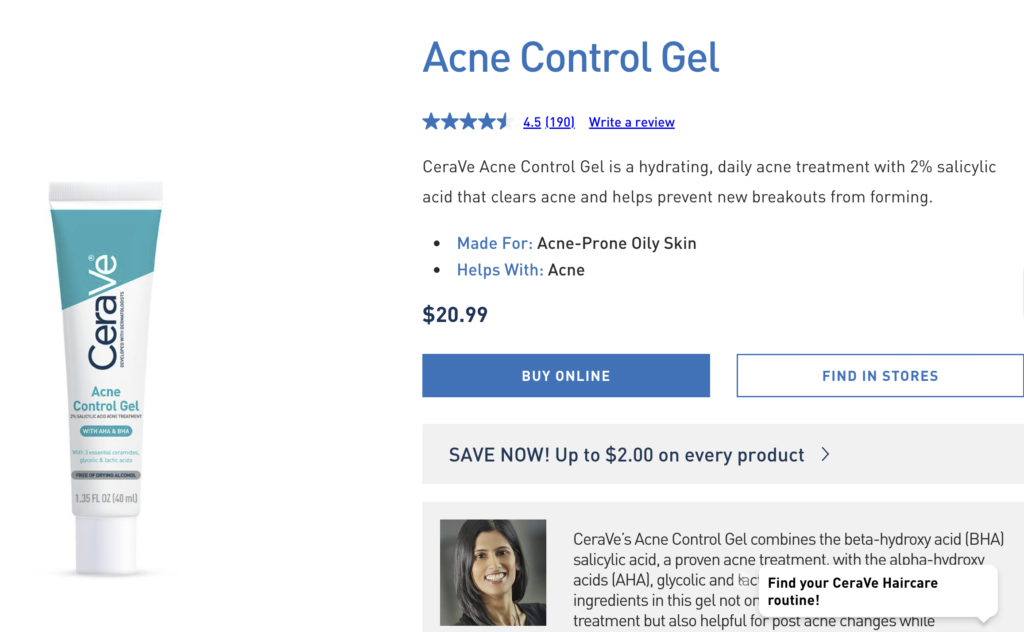
- 2% salicylic acid with AHA and BHA
- Contains ceramides, glycolic and lactic acids
- Alcohol-free, made for acne-prone oily skin
💬 My Review: I really like this one for spot treatment directly on pimples. It works well but you must apply it on clean dry skin — it will not work properly if moisturizer is already on your skin.
💡 Pro Tip: Apply on clean dry skin before any moisturizer. Wait a few minutes to absorb before layering anything on top.
CeraVe Resurfacing Retinol Serum ($21.99)
🛒 Shop on Amazon | 🔗 View on CeraVe Official Site
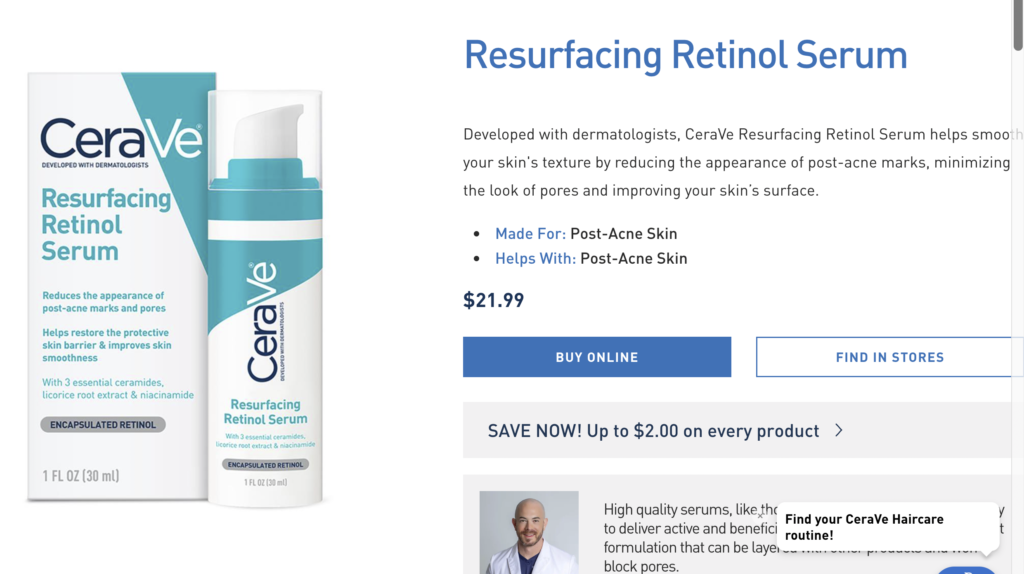
- Encapsulated retinol reduces post-acne marks and pore appearance
- Ceramides, licorice root extract, and niacinamide
- Made for post-acne skin
💬 My Review: I really did not like this product the first time around — but that was my fault. After really giving it a chance and slowly implementing it with the moisturizing sandwich method, this worked great and made my skin very smooth and even after a couple of months. Patience and the right application method are everything with retinol.
💡 Pro Tip: Use the moisturizing sandwich method: thin layer of moisturizer, then retinol, then moisturizer on top. This buffers the retinol and reduces irritation significantly for sensitive skin.
→ For full tips on retinol for acne-prone skin: Over-Exfoliation Recovery: How to Fix Damaged Skin
CeraVe Blemish Barrier Patches
🛒 Shop on Amazon | 🔗 View on CeraVe Official Site
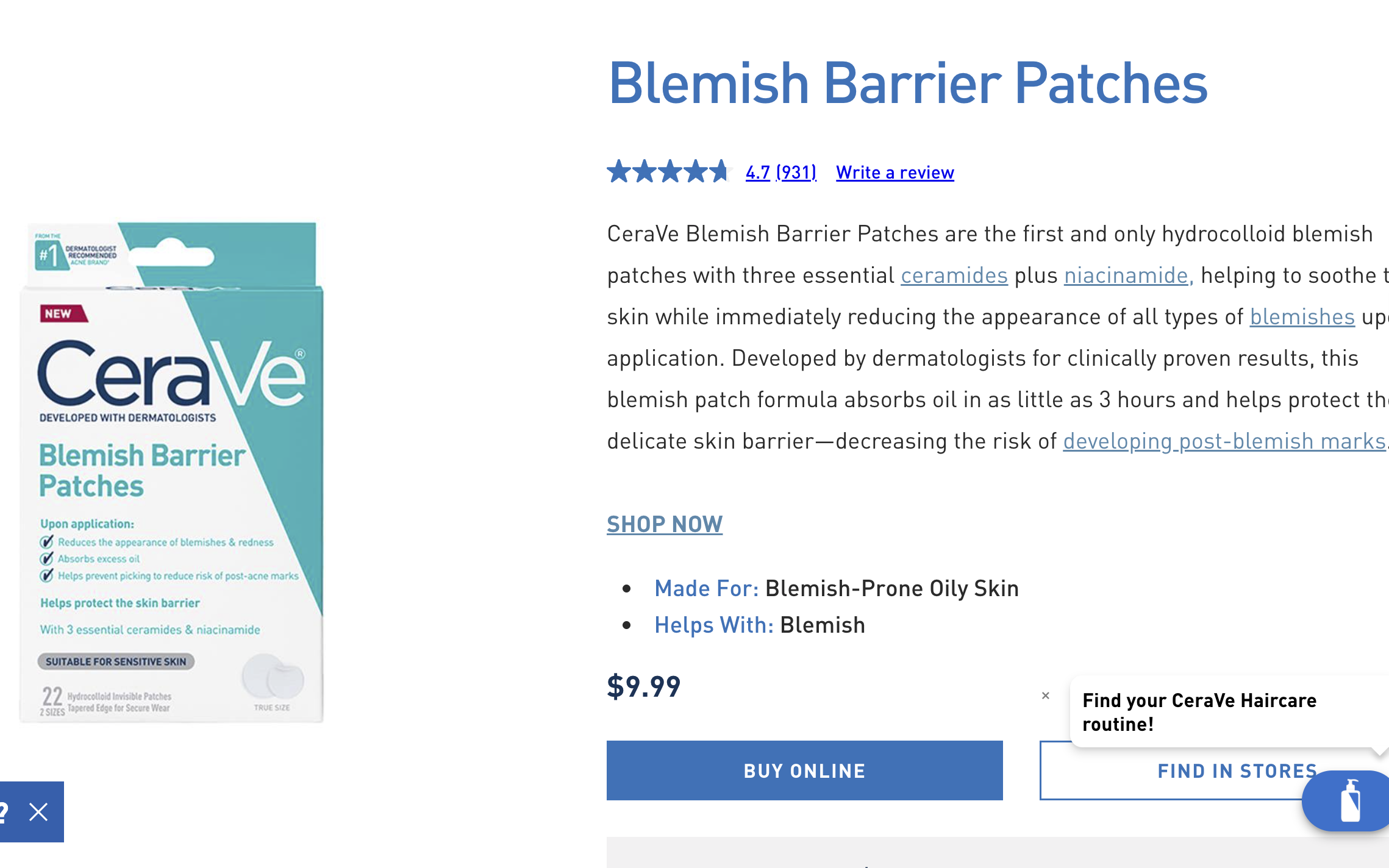
- Hydrocolloid patches that absorb fluid from pimples
- Protect pimples from picking and bacteria
- Available in multiple sizes
💬 My Review: I love these ones. They are not too expensive and get the job done. A solid everyday pimple patch from a brand I already trust for my acne-prone skin.
CeraVe vs Cetaphil- Cetaphil Treatments
Cetaphil Fast Rescue Pimple Patch
🛒 Shop on Amazon | 🔗 View on Cetaphil Official Site
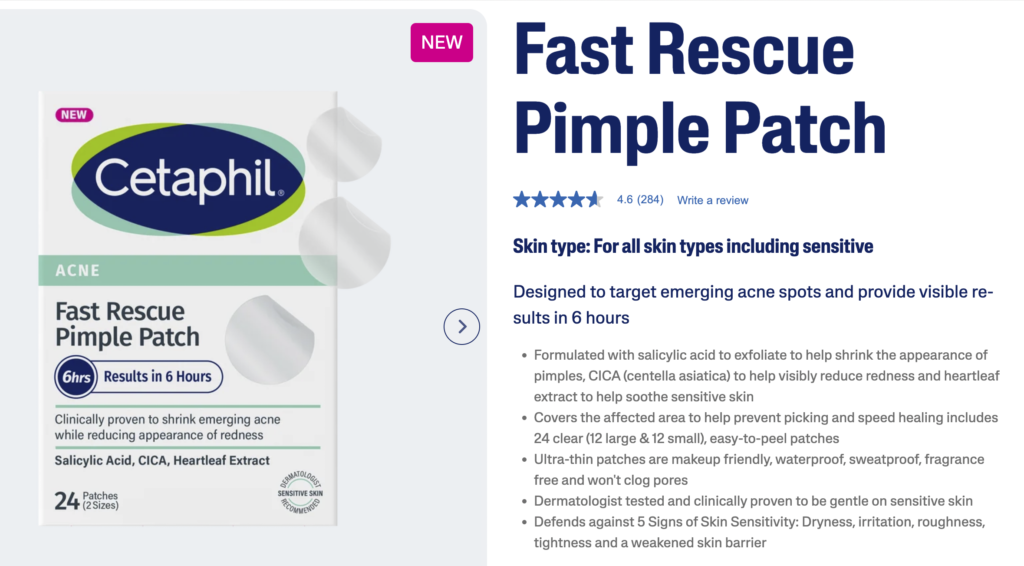
- Salicylic acid, CICA, and heartleaf extract
- Results in 6 hours, 24 patches in two sizes
- Ultra-thin, makeup friendly, waterproof and sweatproof
💬 My Review: These also work well but they don’t really pull out the satisfying gunk. I don’t think they are hydrocolloid. They are cheaper than CeraVe patches by a few dollars though, so if budget is a priority these still do the job.
💡 Pro Tip: If you want that satisfying extraction effect, look for patches labeled hydrocolloid specifically. Non-hydrocolloid patches still protect and calm the pimple but work differently.
Cetaphil Gentle Exfoliating SA Face Lotion ($18.99)
🛒 Shop on Amazon | 🔗 View on Cetaphil Official Site
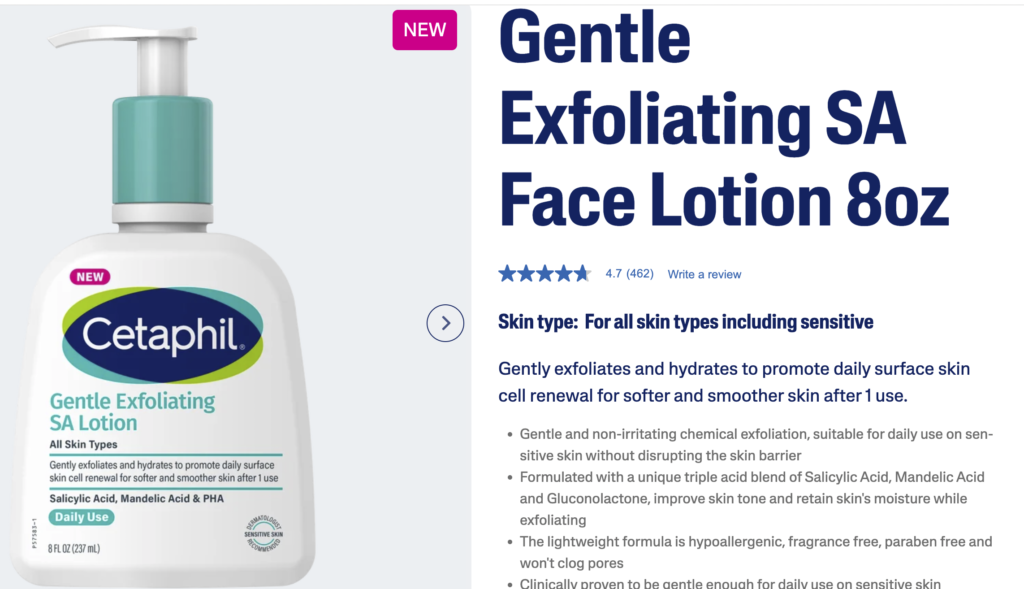
- Triple acid blend: Salicylic Acid, Mandelic Acid, and PHA
- Gentle chemical exfoliation for all skin types including sensitive
- Fragrance-free, paraben-free, non-comedogenic
💬 My Review: I love this one- it is very gentle as described. I use it a couple of times a week under a thin layer of moisturizer because I have sensitive skin. It really helps gently exfoliate and even skin tone.
💡 Pro Tip: Apply a very thin layer on clean dry skin, wait 2 minutes for it to really absorb, then layer with a thin moisturizer on top. If your skin is not sensitive or prone to dryness you can skip the added moisturizer.
→ Related: 5 Critical Mistakes That Shattered Your Skin Barrier
ROUND 3 VERDICT- CeraVe vs Cetaphil Treatments: Tie-depends on your goal. CeraVe wins for active acne treatment and post-acne marks. Cetaphil wins for gentle exfoliation and budget-friendly spot care.
⚔️ ROUND 4: MOST AFFORDABLE
In the CeraVe vs Cetaphil affordability showdown, both brands are drugstore-priced but there are real differences when you break it down per product.
CeraVe vs Cetaphil- CeraVe Price Range
- Foaming Facial Cleanser 16oz: ~$15.99
- Daily Moisturizing Lotion 12oz: ~$14.99
- PM Facial Moisturizing Lotion 3oz: ~$19.99
- Acne Foaming Cream Wash 5oz: ~$19.99
- Acne Control Gel 1.35oz: ~$20.99
- Resurfacing Retinol Serum 1oz: ~$21.99
CeraVe vs Cetaphil- Cetaphil Price Range
- Daily Facial Cleanser 16oz: ~$13.99
- Gentle Clear Mattifying Moisturizer 3oz: ~$15.99
- Gentle Clear Clarifying Cleanser 4.2oz: ~$12.99
- Gentle Exfoliating SA Lotion 8oz: ~$18.99
- Fast Rescue Pimple Patch 24ct: slightly cheaper than CeraVe patches
Compare prices for both brands on Amazon
Find both brands at Target
ROUND 4 VERDICT- CeraVe vs Cetaphil Price: Cetaphil is slightly more affordable on basic cleansers and moisturizers. CeraVe’s treatment products cost a little more but deliver stronger actives. Overall both are very comparable in price for what you get.
⚔️ ROUND 5: BEST FOR SENSITIVE ACNE-PRONE SKIN
When comparing CeraVe vs Cetaphil for sensitive acne-prone skin, this is where the real differences show. Having sensitive AND acne-prone skin is one of the most frustrating combinations. You need products strong enough to fight breakouts but gentle enough not to trigger a reaction.
What Both Brands Get Right
- Both are 100% fragrance-free
- Both are non-comedogenic and dermatologist-tested
- Both are hypoallergenic
- Both are available at every drugstore and major retailer
CeraVe vs Cetaphil- Where They Differ
CeraVe leads with ceramide technology for barrier repair; this is essential if your skin barrier has been damaged by harsh acne treatments over time. If your skin is tight, flaky, or reactive from years of strong products, CeraVe ceramides are your best friend.
Cetaphil leads with soothing botanicals- aloe, white tea, CICA, heartleaf. If your skin is prone to redness, inflammation, or visible irritation, Cetaphil’s gentler formulas tend to calm things down faster.
💬 My Review:In my experience, CeraVe’s PM moisturizer and Daily Moisturizing Lotion are unbeatable for keeping sensitive acne-prone skin comfortable and protected. But when my skin gets really reactive or inflamed I reach for Cetaphil’s gentler options first to calm things down.
→ Related: The Worst Skincare Mistake I Made (And How It Took 7 Years to Fix)
→ Related: 5 Critical Mistakes That Shattered Your Skin Barrier
ROUND 5 VERDICT- CeraVe vs Cetaphil for Sensitive Skin: CeraVe wins for barrier-damaged sensitive skin. Cetaphil wins for reactive, inflamed sensitive skin. If your skin is both, start with Cetaphil to calm things down then add CeraVe ceramide products as your barrier heals.
⚔️ ROUND 6: BEST FOR OILY ACNE-PRONE SKIN
In the CeraVe vs Cetaphil oily skin round, the stakes are real. Oily skin and acne is the most common combination- you need lightweight products that control shine without adding more congestion.
CeraVe vs Cetaphil- CeraVe for Oily Skin
- Foaming Facial Cleanser: removes excess oil effectively without stripping
- Acne Foaming Cream Wash: deep cleans oily skin and treats active acne simultaneously
- Acne Control Gel: 2% SA + AHA/BHA combo controls oil and clears congestion
CeraVe vs Cetaphil- Cetaphil for Oily Skin
- DermaControl Oil Removing Foam Wash: specifically formulated to reduce excess sebum
- Gentle Clear Mattifying Acne Moisturizer: matte finish that controls shine while treating acne
- Daily Facial Cleanser: gentle enough for daily use without over-stripping oily skin
🛒 Shop Cetaphil DermaControl Oil Control line on Amazon
ROUND 6 VERDICT- CeraVe vs Cetaphil for Oily Skin: Cetaphil edges ahead for dedicated oil control with their DermaControl line. That said, CeraVe’s Foaming Cleanser and Acne Control Gel are excellent supporting products for oily acne-prone skin.
⚔️ ROUND 7: BEST FOR BEGINNERS
In the final CeraVe vs Cetaphil round, we answer the ultimate beginner question: which brand should you reach for first? Here are two simple starter routines you can build today.
CeraVe vs Cetaphil- Beginner Routine with CeraVe
- AM: CeraVe Foaming Facial Cleanser + CeraVe AM Facial Moisturizing Lotion SPF 50
- PM: CeraVe Foaming Facial Cleanser + CeraVe PM Facial Moisturizing Lotion
- 2-3x week: CeraVe Acne Foaming Cream Wash (10% BPO) in place of regular cleanser
- As needed: CeraVe Acne Control Gel as spot treatment on clean dry skin
CeraVe vs Cetaphil- Beginner Routine with Cetaphil
- AM: Cetaphil Daily Facial Cleanser + Cetaphil Gentle Clear Mattifying Acne Moisturizer
- PM: Cetaphil Gentle Clear Clarifying Acne Cream Cleanser + Cetaphil Moisturizing Lotion
- 2x week: Cetaphil Gentle Exfoliating SA Face Lotion on clean dry skin
- As needed: Cetaphil Fast Rescue Pimple Patch overnight
→ Related: Best Pillowcase for Acne-Prone Skin
→ Related: 8 Best Tips to Prevent Breakouts and Acne
ROUND 7 VERDICT- CeraVe vs Cetaphil for Beginners: CeraVe wins for beginners. The Foaming Cleanser + PM Lotion combo is one of the most universally recommended starter routines for acne-prone skin. Simple, affordable, and hard to mess up.
✨ Glow Report: Category Winners
The rounds are done, and the results are in. Here’s your personalized breakdown of category winners. Find what applies to your skin and let the results speak for themselves.
💰 Most Affordable
🥇 First Place: Cetaphil Daily Facial Cleanser
Large 16oz bottle under $14 — one of the most affordable gentle cleansers for acne-prone skin. Non-stripping, barrier-safe, and great for daily use.
🥈 Runner Up: CeraVe Foaming Facial Cleanser
Only a dollar or two more and still very affordable for a 16oz bottle. Adds ceramides and niacinamide for extra barrier support.
🔥 Best for Fast Acne Clearing
🥇 First Place: CeraVe Acne Foaming Cream Wash (10% BPO)
Highest OTC benzoyl peroxide concentration available. Personally tested — clears active breakouts fast when paired with a rich hydrating moisturizer. Start slow at 2-3x per week.
🥈 Runner Up: Cetaphil Gentle Clear Clarifying Acne Cream Cleanser
2% salicylic acid with aloe and white tea — a gentler but still effective option for clearing breakouts without the intensity of BPO.
🌸 Best for Sensitive Acne-Prone Skin
🥇 First Place: CeraVe PM Facial Moisturizing Lotion
Niacinamide, ceramides, and hyaluronic acid work overnight to calm, protect, and hydrate without clogging pores. My personal favorite — woke up with clean, comfortable skin every time.
🥈 Runner Up: Cetaphil Gentle Clear Clarifying Acne Cream Cleanser
The aloe and white tea extract make this one of the most soothing acne cleansers for reactive skin. Cleans without stripping or irritating.
✨ Best for Fading Post-Acne Marks
🥇 First Place: CeraVe Resurfacing Retinol Serum
Encapsulated retinol + ceramides + licorice root extract visibly smooths texture and fades marks over time. Use the moisturizer sandwich method for sensitive skin — took a couple of months but results were real.
🥈 Runner Up: Cetaphil Repairing Post-Acne Serum (Bakuchiol)
A retinol alternative using bakuchiol — gentler on skin that can’t tolerate retinol. Great for reducing post-acne marks without the irritation risk.
🛢️ Best for Oily Acne-Prone Skin
🥇 First Place: Cetaphil Gentle Clear Mattifying Acne Moisturizer
Controls shine with a matte finish while actively treating breakouts with 0.5% salicylic acid. Comfortable and non-greasy — great if you hate that heavy moisturizer feel.
🥈 Runner Up: CeraVe Acne Control Gel
2% SA + AHA/BHA combo controls oil and clears congestion. Apply on clean dry skin before moisturizer for best results.
☀️ Best 2-in-1 Moisturizer + SPF
🥇 First Place: CeraVe AM Facial Moisturizing Lotion SPF 50
Hydrating dewy finish with broad-spectrum SPF 50. Shake well before use — it can separate. Perfect for a one-step morning routine with a glowy finish.
🥈 Runner Up: Cetaphil DermaControl Oil Absorbing Moisturizer SPF 30
SPF 30 with a matte finish — better pick if you have oily skin and want shine control built into your SPF moisturizer.
🌿 Best Ultra Gentle & Soothing Cleanser
🥇 First Place: Cetaphil Gentle Clear Clarifying Acne Cream Cleanser
2% salicylic acid balanced with aloe and white tea extract. Strong enough to fight acne but calming enough for reactive skin. Clean and refreshed without tightness.
🥈 Runner Up: Cetaphil Daily Facial Cleanser
The gentlest option on this list. No actives, just a thorough non-stripping cleanse. Best for very reactive skin that needs a break from all actives.
🔰 Best for Beginners
🥇 First Place: CeraVe Foaming Cleanser + CeraVe PM Lotion
One of the most universally recommended starter combos for acne-prone skin. Simple, affordable, and hard to mess up. Used this for over a year and still reach for it when traveling.
🥈 Runner Up: Cetaphil Daily Facial Cleanser + Cetaphil Gentle Clear Mattifying Moisturizer
A great Cetaphil beginner combo — ultra gentle cleanser paired with an acne-treating moisturizer. Good for oily beginners who want a matte finish.
🩹 Best Spot Treatment
🥇 First Place: CeraVe Acne Control Gel
2% SA + AHA/BHA targets pimples directly on clean dry skin. Fast-acting and effective for congested oily skin. Don’t apply over moisturizer — it won’t absorb properly.
🥈 Runner Up: Cetaphil Gentle Clear Triple-Action Acne Serum
0.5% salicylic acid serum shown to improve breakouts in 3 days. Gentler formula — better for sensitive skin that can’t handle higher concentrations.
🩹 Best Pimple Patch
🥇 First Place: CeraVe Pimple Patches
Hydrocolloid patches that actually pull out the gunk overnight. Not the cheapest but they deliver visible results. A trustworthy pick from a brand built for acne-prone skin.
🥈 Runner Up: Cetaphil Fast Rescue Pimple Patch
A few dollars cheaper and still effective at calming and protecting pimples. Not hydrocolloid so won’t pull out gunk, but great for overnight protection and reducing redness.
💆 Best for Dry + Acne-Prone Skin
🥇 First Place: CeraVe Daily Moisturizing Lotion
Three ceramides protect and restore the barrier without clogging pores. Great for dry acne-prone skin AM or PM. Note: not labeled oil-free so switch to a gel if you’re very oily.
🥈 Runner Up: CeraVe PM Facial Moisturizing Lotion
Slightly richer formula with niacinamide and ceramides — great overnight option for dry acne-prone skin that needs extra barrier support while sleeping.
🧖 Best for Gentle Exfoliation
🥇 First Place: Cetaphil Gentle Exfoliating SA Face Lotion
Triple acid blend (Salicylic Acid, Mandelic Acid, PHA) gently exfoliates all skin types including sensitive. Use 2x a week on clean dry skin, wait 2 minutes, then layer a thin moisturizer.
🥈 Runner Up: CeraVe Acne Control Gel
While primarily a spot treatment, the AHA/BHA combo makes it a solid gentle exfoliating option for oily acne-prone skin used as an all-over treatment a few nights a week.
Where to Buy CeraVe vs Cetaphil Products
CeraVe on Amazon
Cetaphil on Amazon
CeraVe at Target
Cetaphil at Target
CeraVe at Walmart
Cetaphil at Walmart
CeraVe Official Website
Cetaphil Official Website
More From GlowWithoutBreakouts
→ Best Cleansers for Acne-Prone Skin: Tested & Ranked
→ Best Sunscreen for Acne-Prone Skin
→ Over-Exfoliation Recovery: How to Fix Damaged Skin
→ 5 Critical Mistakes That Shattered Your Skin Barrier
→ Best Ways to Make a Pimple Go Away Fast
→ 8 Best Tips to Prevent Breakouts and Acne
→ Does Stress Really Cause Acne?
→ Best Pillowcase for Acne-Prone Skin
→ Best Oil Cleansers for Acne-Prone Skin
→ The Worst Skincare Mistake I Made
Disclaimer: This post contains affiliate links. If you purchase through these links, I may earn a small commission at no extra cost to you. All opinions are 100% my own and based on personal experience and honest research. This is not medical advice — please consult a dermatologist for persistent acne concerns.