Author: d.skye.stevenson@gmail.com

  • Does Stress Really Cause Acne? Here’s What the Science Says (And What I Learned From My Own Skin)

    Does Stress Really Cause Acne? Here’s What the Science Says (And What I Learned From My Own Skin)

    Introduction: My Journey with Stress-Induced Acne

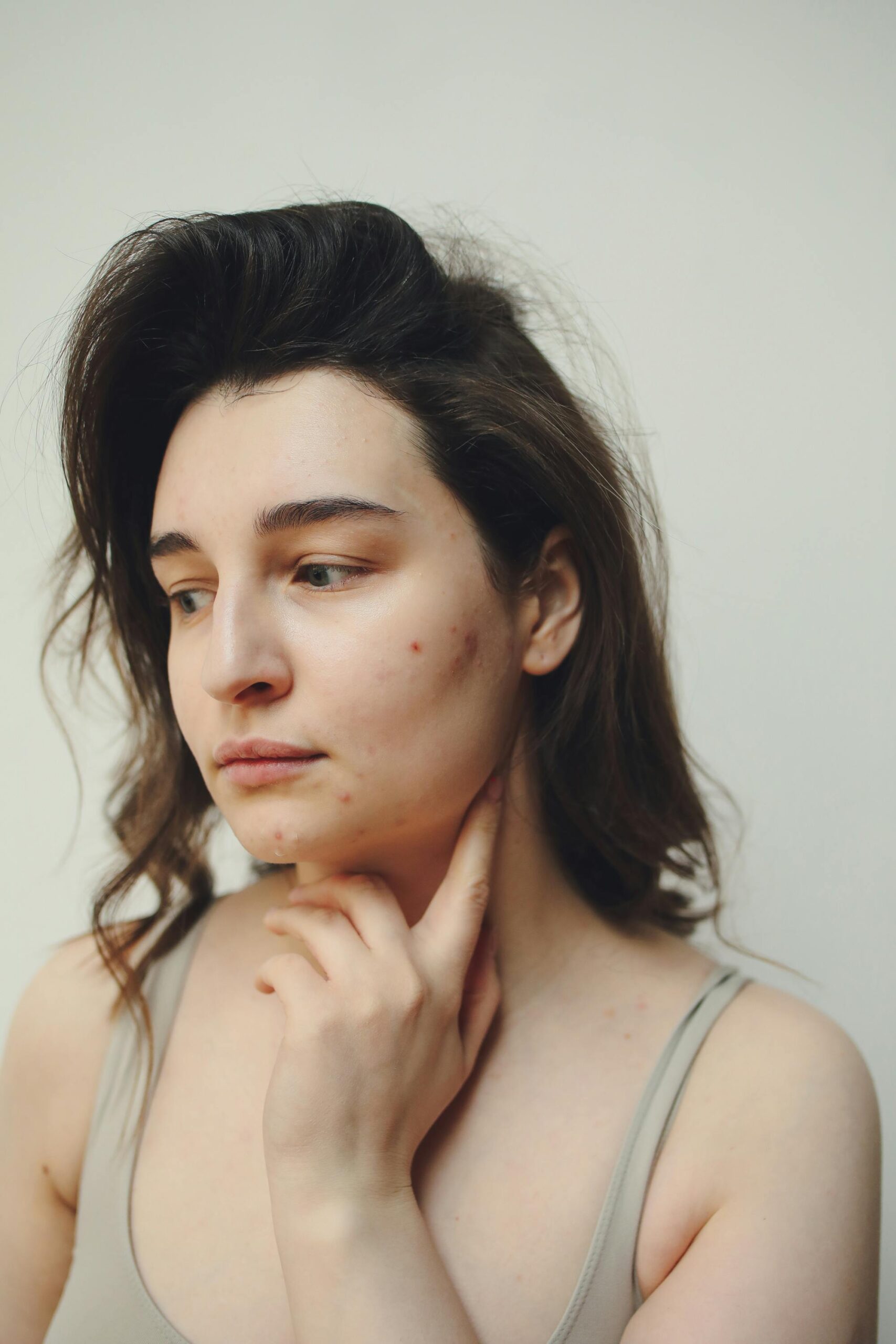
    I’ve spent three years obsessing over every variable that might trigger my acne: the products I use, the food I eat, the weather. But nothing has been as consistent as the connection between stress and stress-induced acne.

    Two weeks before a big deadline at work? Cystic acne on my jawline. Mid-semester during college? Angry clusters along my chin. A stressful family situation? Deep, painful breakouts that seemed to appear overnight.

    But here’s what I’ve learned: Yes, stress does cause acne. But not in the way you might think.

    This isn’t just about “oh, stress makes you break out.” The relationship between stress and acne is biological and hormonal, and surprisingly well documented by dermatologists. More importantly, understanding why it happens has helped me manage my acne better than any expensive serum ever could.


    The Science: How Stress Actually Triggers Acne

    It All Starts With Cortisol (The Stress Hormone)

    When you experience stress—whether it’s work pressure, relationship issues, financial worry, or even lack of sleep—your body releases a hormone called cortisol.

    Cortisol is your body’s natural “fight or flight” response. It’s supposed to help you deal with immediate danger. But in our modern world, we’re chronically stressed, which means we’re constantly releasing cortisol.

    Here’s where your skin comes in.

    Cortisol has a direct effect on your sebaceous glands (the glands that produce oil in your skin). When cortisol levels spike, your skin produces more sebum (oil). If you have acne-prone skin—which means your skin is already prone to clogged pores—excess oil is basically fuel for the bacteria that cause stress-induced acne.

    But that’s only the beginning.

    Stress Triggers Inflammation at the Cellular Level

    Beyond oil production, cortisol creates inflammation throughout your body. On your face, this inflammation can:

    • Weaken your skin barrier: The protective outer layer of your skin becomes compromised, making you more susceptible to bacteria and irritants.
    • Increase bacterial growth: The bacterium Cutibacterium acnes (formerly Propionibacterium acnes) thrives in oily, inflamed environments.
    • Impair your immune response: Ironically, while cortisol triggers inflammation, it also suppresses your immune system’s ability to fight bacteria effectively.

    This creates a perfect storm for stress-induced acne.

    The Gut-Brain-Skin Axis (Yes, It’s Real)

    Here’s something I didn’t know until I started researching: stress doesn’t just affect your skin directly—it affects your gut, which in turn affects your skin.

    When you’re stressed, your nervous system activates the “fight or flight” response, diverting blood flow away from your digestive system. This can:

    • Disrupt your gut microbiome: The balance of healthy bacteria in your gut gets thrown off.
    • Increase intestinal permeability: Your gut lining becomes more permeable (sometimes called “leaky gut”), allowing bacterial compounds to enter your bloodstream.
    • Trigger systemic inflammation: This inflammation can manifest as acne, especially deep stress-induced acne.

    I didn’t realize this was happening to me until I noticed that during high-stress periods, my digestive issues always preceded my worst stress-induced acne flares by about 3-5 days.

    Stress Disrupts Your Sleep (Which Makes Everything Worse)

    Here’s the vicious cycle I experienced firsthand:

    Stress keeps you up at night—your mind races, anxiety peaks, and sleep suffers. Poor sleep increases cortisol levels, leading to more oil production and inflammation, which worsens stress-induced acne. This then causes more stress, and the cycle repeats.

    During my most stressful periods, I was sleeping 5-6 hours a night. My skin reflected that immediately. The stress-induced acne would appear within 2-3 days of consistently poor sleep.

    Why Stress Causes Cystic Acne (Not Just Regular Breakouts)

    Not all acne is created equal. Cystic acne—those deep, painful bumps that feel like they’re under the surface—is typically caused by:

    • Severe inflammation deep in the skin
    • Hormonal fluctuations
    • Spikes in cortisol due to stress

    The reason stress triggers cystic acne specifically is because of where the inflammation occurs. When cortisol and stress hormones activate, they create deep, systemic inflammation—not just surface-level inflammation. This is exactly where stress-induced acne forms.

    What I Actually Experienced: A Real Timeline

    I want to be honest about my own stress-acne connection because it has helped me recognize the pattern.

    • Fall 2021: The Semester from Hell
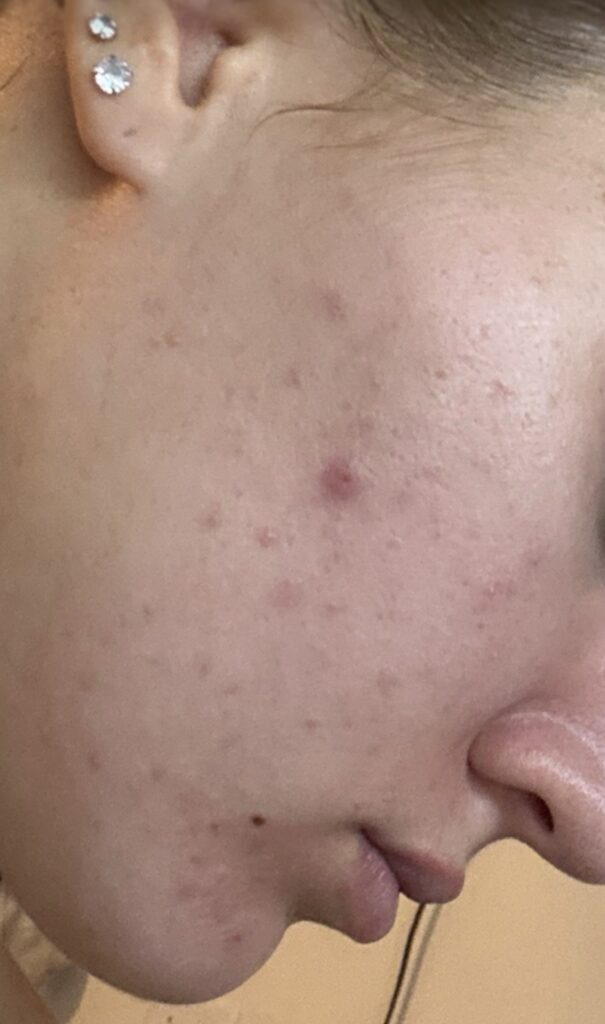
      I was taking 18 credits, working 15 hours a week, and dealing with family stress. Over several weeks, I had 4 deep cystic bumps on my jawline and chin due to stress-induced acne.
    • Winter 2022: The Calm Period
      With reduced stress and better sleep, my stress-induced acne almost completely disappeared.
    • Spring 2022: Work Deadline Stress
      Under a 3-week project deadline, sleep dropped back to 6 hours per night, and stress-induced acne returned within 5 days.
    • Summer 2022: Testing My Theory
      I tracked stress levels and sleep, finding a clear correlation: when my stress reached 7+ for consecutive days and sleep dropped below 7 hours, stress-induced acne showed up.

    What Actually Helped (Beyond Just “Reduce Stress”)

    Saying “just reduce stress” is useless advice. We can’t always control our stress levels. But once I understood the mechanism, I could target specific interventions.

    1. Sleep Became Non-Negotiable
      I committed to 7-8 hours of sleep, even during stressful periods. High-quality sleep became my most powerful acne-fighting tool.
    2. Effective Stress Management Practices
      I incorporated activities that genuinely worked for me, such as non-negotiable 30-minute walks and guided yoga for stress
    3. Gut Health Support
      I added probiotics, increased fiber intake, and stayed hydrated, which helped stabilize my digestion during stress and reduced stress-induced acne severity.
    4. Strategic Skincare
      No product can cure stress-induced acne, but supportive skincare can help during high-stress times. Want more information on skincare routines? Read The Step-by-Step Skincare Routine Guide

    The Reality: You Can’t Product Your Way Out of Stress Acne

    Accepting this was hard for me. I used to think that finding the right product would solve everything. I learned instead to prioritize sleep and manage stress.

    When Stress-Induced Acne Might Indicate Something Else

    If you’re experiencing severe, persistent stress-induced acne that doesn’t improve even with better sleep and stress management, it might be worth talking to a dermatologist about possible hormonal causes or other underlying issues.

    The Takeaway

    Yes, stress causes acne—specifically the deep, inflammatory cystic type that’s hardest to treat. Understanding why it happens—cortisol, inflammation, gut disruption, sleep loss—gave me the power to address the condition effectively.

    If you’re dealing with stress-induced acne, consider tracking your patterns, prioritizing sleep, discovering stress management techniques that work for you, and using skincare strategically. Your skin may not become acne-free, but it can become manageable, and that’s worth something.
  • Best Sunscreen for Acne-Prone Skin: Non-Comedogenic Options That Won’t Cause Breakouts

    Best Sunscreen for Acne-Prone Skin: Non-Comedogenic Options That Won’t Cause Breakouts

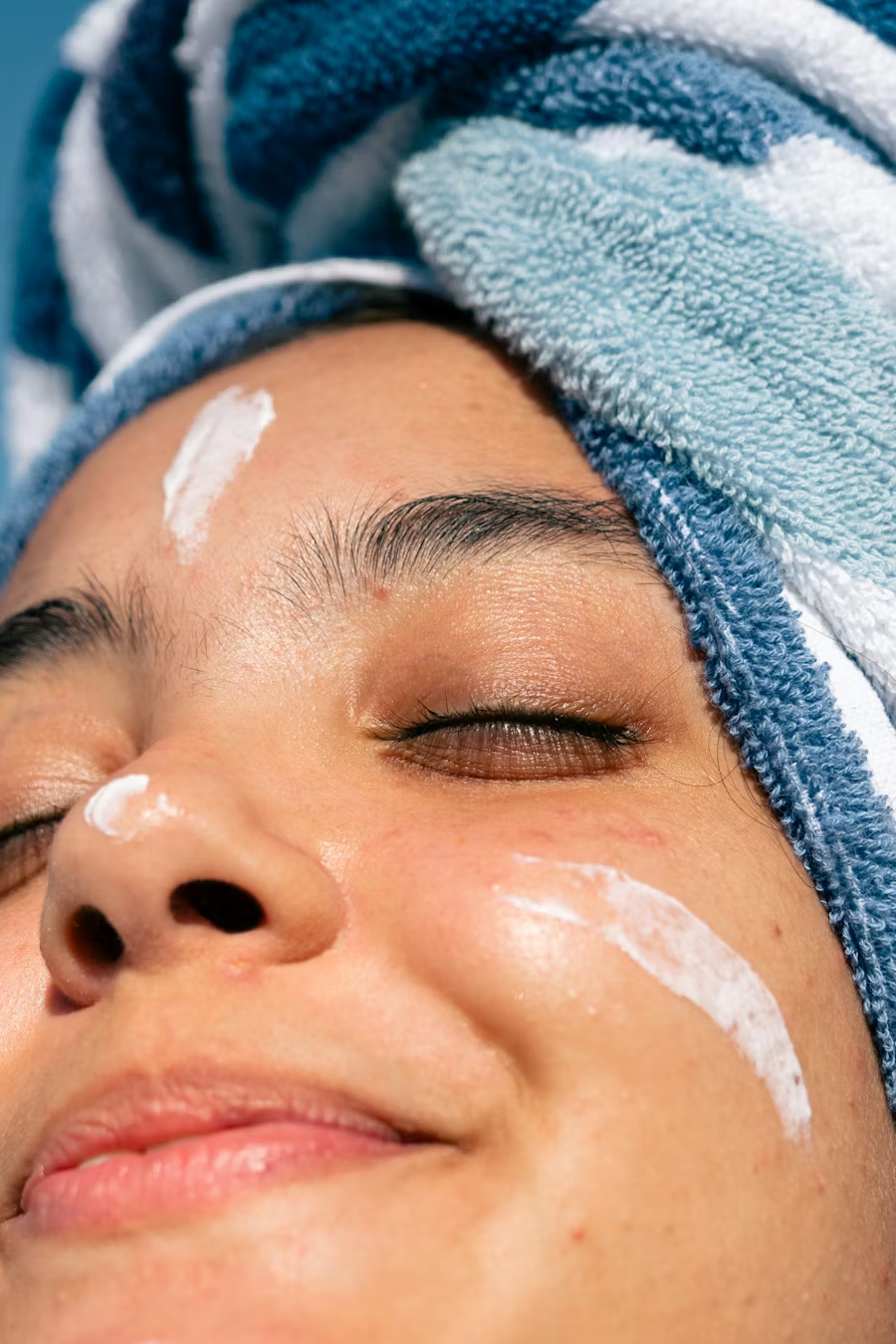
    Having sunscreen in your daily skin routine is a MUST. There ARE non-comedogenic sunscreens that work beautifully for acne-prone skin, you just need to know which ones. In this guide, I’m sharing the 4 best sunscreens I’ve personally tested, plus what makes a sunscreen “acne-friendly” so you can choose confidently.

    Sunscreen For Acne-Prone Skin:Why This is Non-Negotiable

    Here’s what nobody tells you about acne and sun exposure:

    UV rays make acne scars darker. When you have post-acne hyperpigmentation (those dark marks left behind), sun exposure makes them MORE visible. The UV rays trigger your skin to produce more melanin in those already-damaged areas, making scars look deeper and darker.

    Sun damage worsens inflammation. If you’re currently dealing with active acne, UV exposure can increase inflammation and actually trigger more breakouts.

    Hyperpigmentation becomes permanent without protection. As I’m sure my readers know, acne-prone skin is already sensitive. Without sunscreen, those temporary dark marks can become permanent discoloration that takes years to fade.

    The bottom line? Skipping sunscreen to avoid breakouts is like skipping antibiotics to avoid side effects. You’re creating a bigger problem to avoid a smaller one.

    The solution is finding the RIGHT sunscreen that protects your skin without triggering new breakouts.

    Sunscreen For Acne-Prone Skin: What Makes a Sunscreen “Acne-Friendly”? (The Science)

    Not all sunscreens are created equal, especially for acne-prone skin. Here’s what to look for:

    Non-Comedogenic Rating

    This is the most important factor when shopping for a sunscreen for acne-prone skin. “Non-comedogenic” means the formula has been tested and proven NOT to clog pores. Look for this label on the packaging, as this is a must if you are prone to acne.

    Oil-Free Formula

    Acne thrives in oily environments. Sunscreens with heavy oils (like coconut oil) or creamy textures can trap bacteria and sebum on your skin. Choose oil-free or gel-based formulas when shopping for a sunscreen for acne-prone skin.

    Matte or Semi-Matte Finish

    Sunscreens with a matte finish feel lighter on skin and don’t look shiny. They’re also less likely to trap heat and bacteria, which means fewer breakouts. Avoid sunscreens that leave a dewy, greasy sheen.

    Minimal Ingredients

    The fewer ingredients, the lower your risk of irritation. Fragrance, essential oils, and unnecessary additives can all trigger breakouts. Look for simple, straightforward formulas when shopping for a sunscreen for acne-prone skin.

    No Added Fragrance

    Fragrance is a common acne trigger. Even “natural” fragrance can irritate acne-prone skin. Choose a fragrance-free sunscreen for acne-prone skin.

    Sunscreen For Acne-Prone Skin:Top 4 Best Products

    #1: La Roche-Posay Anthelios Matte Fluid SPF 60

    Price: $35-40 | Finish: Matte

    This is my personal favorite sunscreen for acne-prone skin, and honestly, it’s a game-changer.

    The first time I applied this, I was shocked by how lightweight and matte it felt on my skin. It literally feels like you’re wearing a blurring matte primer for makeup on your face, not sunscreen. This product delivers zero shine, no greasiness, and no heavy feeling. Just a smooth, invisible layer of protection. And the best part- the matte feel stays all day. Most sunscreens tend to make my skin feel oily and melt off my face in a greasy mess in a couple of hours. This sunscreen? It truly won’t disappoint.

    What makes it a special sunscreen for acne-prone skin:

    -Dermatologist-tested specifically for acne and sensitive skin

    -Non-comedogenic rating, so it won’t clog pores

    -Lightweight formula absorbs in seconds.

    -Truly matte finish that doesn’t trap heat or bacteria

    -Fragrance-free, so no irritation

    I’ve been using this for 8 months now, and I haven’t had any breakouts caused by it. My hyperpigmentation has also visibly improved because I’m finally protecting my skin consistently.

    The only downside? It’s pricey. But if budget isn’t an issue, this is worth every penny.

    Best for: Anyone with acne-prone skin who wants the best matte finish available.

    2: Hero Cosmetics Force Shield Sunscreen SPF 50

    Price: $25-30 | Finish: Matte

    Hero Cosmetics is a brand built specifically for acne-prone skin, and it shows in their sunscreen formula.

    Force Shield is designed with acne sufferers in mind. It’s lightweight, matte, and doesn’t feel like you’re wearing anything at all. The texture is silky and absorbs quickly, which means it won’t sit on top of your skin and trap bacteria.

    What makes it a special sunscreen for acne-prone skin:

    -Specifically formulated for acne-prone skin (the brand’s whole mission)

    -Matte finish that controls shine without feeling cakey

    -Lightweight gel texture absorbs in seconds.

    -Non-comedogenic and dermatologist-tested

    -Mid-range price between budget and luxury options

    I’ve used this for 4 months, and it’s my second favorite after La Roche-Posay. The main difference is the finish. Hero Cosmetics is slightly less matte than La Roche-Posay, but it’s more affordable.

    Best for: People who want quality acne-focused skincare at a reasonable price.

    #3 CeraVe Face Lotion SPF 50

    Price: $15-18 | Finish: Lightweight

    CeraVe is the budget-friendly option that actually delivers.

    This was my first serious attempt at an acne-friendly sunscreen, and it surprised me. For the price, the quality is impressive. It’s lightweight, absorbs quickly, and doesn’t leave any residue on your skin.

    What makes it a good sunscreen for acne-prone skin:

    -Ceramides + hyaluronic acid hydrate without heaviness

    -Fragrance-free formula

    -Non-comedogenic, so safe for breakout-prone skin

    -Affordable, so you won’t skip reapplication

    -Widely available at most drugstores

    The texture is more of a lotion than a gel, so it’s not matte like other sunscreens, but it’s still lightweight and doesn’t feel greasy. For someone with moderately oily skin, this is perfect.

    I’ve used this for 2 months, and my skin was overall clear for this time.

    Best for: Budget-conscious people with acne-prone skin who want hydration + protection.

    #4: EltaMD UV Clear SPF 46

    Price: $35-40 | Finish: Lightweight (slightly dewy)*

    Full transparency: I haven’t personally tested this one, but it’s consistently rated the #1 dermatologist-recommended sunscreen for acne-prone skin, so it deserves a spot on this list.

    EltaMD is the dermatologist’s favorite for a reason. It’s a mineral sunscreen (which is rarer in the acne-friendly space), but it’s formulated to be lightweight instead of thick and pasty.

    What makes it a great sunscreen for acne-prone skin:

    -Mineral formula uses zinc oxide and titanium dioxide to reflect UV rays.

    -Less likely to irritate very sensitive or active acne

    -Non-comedogenic and hypoallergenic

    -Dermatologist recommended for acne-prone skin.

    -Available in a tinted version if you want light coverage

    If you have very sensitive, active acne or have reacted poorly to chemical sunscreens, this is worth trying.

    Best for: People with sensitive, active acne who prefer mineral sunscreen.

    Sunscreen For Acne-Prone Skin:What NOT to Use:

    Not all sunscreens are created equal. Here are the ones that caused me problems:

    Any sunscreen with coconut oil: Coconut oil is comedogenic (pore-clogging). Even though it’s natural, it’s not your friend if you have acne. Avoid any formula listing coconut oil in the first 5 ingredients.

    Heavy, creamy sunscreen lotions: if a sunscreen feels thick and creamy when you apply it, it’s probably too heavy for acne skin. Acne-prone skin needs lightweight, fast-absorbing formulas.

    Sunscreens with fragrance: Fragrance irritates acne. Even natural fragrance. Choose fragrance-free options only.

    How to Apply Sunscreen Without Triggering Breakouts

    Even the best sunscreen won’t work if you apply it wrong. Here’s the proper technique:

    Step 1: Start with clean, dry skin. Apply sunscreen to freshly cleansed skin. If your skin is damp, the sunscreen won’t bond properly.

    Step 2: Use enough product. You need a quarter-size amount for your entire face. Most people use way too little and compromise their protection. Don’t skimp.

    Step 3: Apply after your full skincare routine The order matters: Cleanser → Toner (if you use one) → Moisturizer → Sunscreen → Makeup

    Sunscreen should be the last step before makeup because it needs to sit on top of your skin to create a protective barrier.

    Step 4: Wait 15 minutes before applying makeup. Let the sunscreen fully set before layering anything else on top. This prevents pilling and ensures it bonds to your skin properly.

    Step 5: Reapply every 2 hours. If you’re outdoors, reapply sunscreen every 2 hours. For everyday use indoors, once in the morning is usually sufficient (though some dermatologists recommend reapplication mid-day even indoors).

    Frequently Asked Questions

    Q:Does sunscreen cause acne?

    A: No, the wrong sunscreen causes acne. Most commercial sunscreens are formulated for general skin, not acne-prone skin. They’re often too heavy, too oily, or contain ingredients that trigger breakouts. But non-comedogenic, lightweight sunscreen for acne-prone skin absolutely does NOT cause acne.

    Q: Can I wear matte sunscreen if I have oily skin?

    A: YES. Matte sunscreen is actually ideal for oily skin. It controls shine without adding extra oil. Look for “matte finish” or “oil-free” labels specifically.

    Q: What SPF should I use?

    A: SPF 30 is the minimum recommended by dermatologists. SPF 50 offers slightly more protection and is worth the upgrade. Anything above SPF 50 offers minimal additional protection, so you don’t need to go higher.

    Q: Can I use sunscreen under makeup?

    A: Absolutely. In fact, you should. Apply sunscreen, wait 15 minutes for it to set, then apply your primer and makeup as normal. Many makeup primers and foundations now include SPF, but it’s not enough on its own—you still need a dedicated sunscreen underneath.

    Q: Do I need sunscreen indoors?

    A: This is debated among dermatologists. UVA rays can penetrate windows, but the exposure is minimal compared to outdoor sun. If you spend most of your day indoors, you can skip it. But if you sit near windows or go outside at all, wear it.

    Q: Can I use the same sunscreen year-round?

    A: Yes, absolutely. Pick one that works for your skin and stick with it. Consistency is more important than switching products seasonally.

    What’s Your Experience?

    I want to know: What sunscreen works best for YOUR acne-prone skin? Have you tried any of these? Did they work, or did they cause breakouts?

    Drop a comment below—I would love to hear what’s working for you. Your experience might help someone else find their perfect sunscreen.

    And if you haven’t found an acne-friendly sunscreen yet, start with one of these four. Your skin is worth the investment.

    Best Oil Cleansers For Acne-Prone Skin

    Best Cleansers For Acne-Prone Skin: Tested and Ranked

    Best Skincare Routine: Step by Step Guide

  • BEST OIL CLEANSERS FOR ACNE-PRONE SKIN: REMOVE SEBACEOUS FILAMENTS & BLACKHEADS (2026)

    BEST OIL CLEANSERS FOR ACNE-PRONE SKIN: REMOVE SEBACEOUS FILAMENTS & BLACKHEADS (2026)

    I wasn’t expecting oil cleansing to work this fast. As someone with acne-prone skin, I’ve gotten very used to the notion that clearing your skin takes time. Realistically, trying new products for your skin is a commitment that takes weeks-even months, to see a difference. So believe me when I say that I was absolutely shocked at how great oil cleansing worked for my skin.

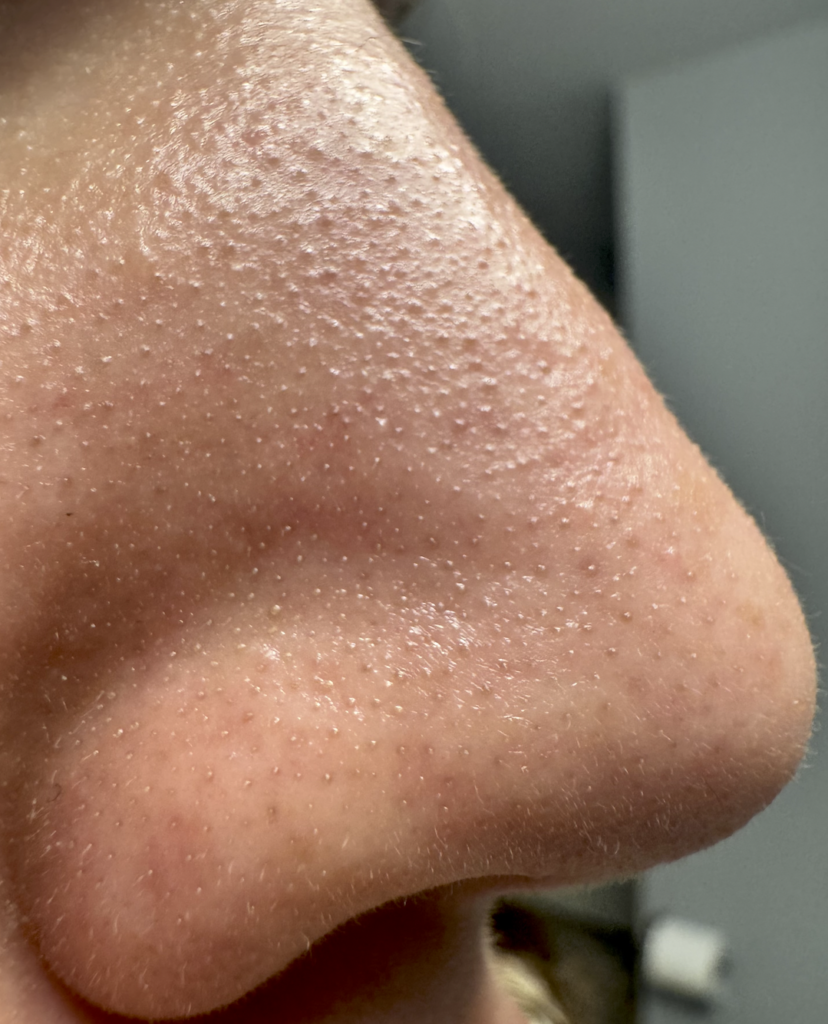
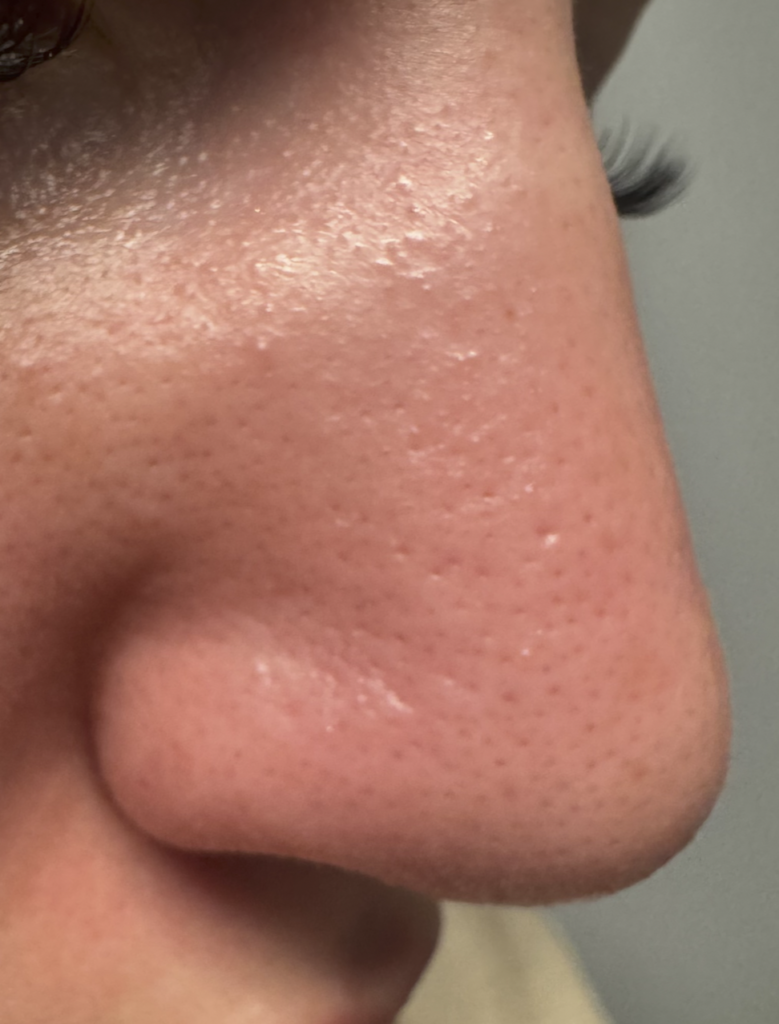
    My nose right before an oil cleansing session
    My nose immediately after 3 minutes of oil cleansing

    INTRODUCTION

    I used to think those dark spots on my nose were blackheads.

    I was wrong.

    For years, I scrubbed my nose with harsh exfoliants and used peel-off pore strips, thinking that I had deep blackheads on my nose and chin. One day, on my deep dive into skincare research, I discovered that those dark dots aren’t blackheads. They’re sebaceous filaments, and turns out every person has them. But mine? They were WAY more prominent and noticeable than anyone I knew. I needed a solution.

    Then I discovered oil cleansing, and everything changed.

    After my first oil cleanse, I felt hard little plugs of oil come loose on my fingertips. Immediately after, my nose looked smoother than it ever had. The congested oil was unclogged so easily without any rough extractions or squeezing, and my skin barrier was still intact.

    The results were nonetheless jaw-dropping.

    I’ve tested these products on myself and even my husband (who has normal skin). And if oil cleansing works on his nose, it’ll work on anyone’s.


    What are Sebaceous Filaments?

    Sebaceous filaments are tiny tubes in your skin that deliver oil to the surface through your pores. They naturally contain oil: that’s their job. The problem starts when dead skin cells pile up inside these tubes, trapping the oil and preventing it from flowing smoothly. When that oil gets stuck, it oxidizes (turns dark) and looks like a huge clogged pore on your nose. Oil cleansing removes the dead skin buildup so the oil can flow freely again, making your skin look smoother.

    The catch: Sebaceous filaments will always be there. BUT the bumpy texture and dark dots that cause that unwanted “clogged blackhead appearance” don’t have to be. The answer? Oil cleansing, oil cleansing, and.. oil cleansing.

    Why Oil Cleaning Works and Delivers Instant Results

    The Science: Oil dissolves oil; it’s that simple.

    When you massage an oil cleanser onto your nose, the cleanser pulls out buildup you can literally feel on your fingertips.

    Water-based cleansers can’t do this. They can’t dissolve oil effectively.

    What Happens During Your First Oil Cleanse:

    Minutes 1-2 (Massage): You feel little hard bumps coming loose—these are oil plugs (solidified sebum + dead skin cells). It’s incredibly satisfying. You’re literally feeling years of congestion finally dissolve.

    Minute 2-3 (Emulsify): You add water, the oil turns milky-white, and rinses cleanly. Your pores feel open.

    Right after rinsing, your nose feels smooth. Not bumpy. Not congested. Not rough. The tiny “plugs” on your nose are still there, but the difference is that all of the oil and dead skin buildup that was trapped IN those plugs is removed: THIS is what makes that noticeable difference you want.

    Why This Matters for Acne-Prone Skin:

    Oil cleansing is gentle. You’re not:

    • Stripping your skin (no rebound oil production)
    • Irritating it (no defensive breakouts)
    • Damaging your barrier (skin stays healthy)

    This is why results happen so fast.


    Which Oil-Cleanser Should You Get?

    #1: ANUA Heartleaf Pore Control Cleansing Oil— BEST OVERALL

    Price: $18-22

    Why I Love It:

    This is my holy grail. I love how the product is a lightweight cleansing oil, fast-acting, and delivers instant visible results. You also don’t need to use much product to see results.

    After my first deep cleanse (3 minutes), my nose felt smooth, and those dark dots looked significantly reduced. By the end of week 1, using it 3–4 times, my nose was noticeably more even in tone and texture. By week 2, the sebaceous filaments on my nose appeared smaller in size because they were no longer being stretched by buildup and congestion.

    Why It Works So Fast:

    Anua uses heartleaf extract (a Korean plant ingredient with natural antimicrobial + pore-minimizing properties). Combined with the lightweight oil, it dissolves sebum faster than other cleansers I’ve tested.

    The Satisfying Feel

    When you massage it in, you can feel those oil plugs loosening. Your fingertips feel the congestion coming loose. It’s so satisfying.

    Safe for Acne-Prone Skin

    I was worried oil would trigger breakouts. Instead, my skin got clearer because:

    • Clean pores = fewer breakouts
    • No irritation = no rebound oil production
    • Healthy barrier = happier skin

    My Routine:

    • Maintenance: 3x per week for 1 minute (nose + chin)
    • Deep cleanse: 1x every 2 weeks for 2 minutes (entire face)
    • *Pro tip*- I personally wash my face with a gentle foaming cleanser right after each oil cleanse. You don’t have to do this step, but I recommend it for acne-prone skin.

    The Only Downside:

    Around $20. But one bottle lasts 2-3 months, so it’s about $7-10/month. Worth it.

    Who Should Buy: Anyone with prominent sebaceous filaments who wants fast results.


    #2: Beplain Mung Bean Oil Cleanser — Runner Up ⭐⭐⭐⭐

    Price: $8-12

    This cleansing oil is perfect for a weekly deep cleanse. When I massage this for 2 minutes, the oil feels heavier but dissolves deep buildup. The results are real, just slightly less dramatic than Anua.”

    I noticed visible results instantly after one use of deep cleansing with this oil for 3-4 minutes. The results were slightly less dramatic than Anua’s cleansing oil results, but still a very effective product for sebaceous filaments.

    Downsides:

    Personally, I don’t like the feeling of this cleansing oil as much as others because it’s more dense of an oil, which gives it a very heavy feeling. It also took a little longer for immediate results when massaging onto my skin, whereas Anua’s cleansing oil was very fast-working.


    #3: La Roche-Posay Gentle Foaming Cleansing Oil-Safe Choice⭐⭐⭐

    Price: $12-15

    Honest Take:

    It’s a good product, but not as effective as Anua or Mung Bean for sebaceous filaments.

    Results Are Subtle

    After 3-4 weeks, I noticed some improvement. But it was subtle compared to Anua and the Mung Bean cleansing oil’s dramatic results.

    Why the Lower Rating:

    It’s average for oil cleansing. It cleanses well and doesn’t break me out, but it lacks the pore-minimizing effect.


    #4: Kose Softymo Deep Cleansing Oil – Have You Tested This?

    Price: $8-12

    Here’s the Deal:

    I haven’t personally tested this yet, but it’s the #1 bestselling budget oil cleanser with thousands of 5-star reviews raving about fast results.

    What People Love:

    • Ultra-affordable
    • Lightweight texture (similar to Anua)
    • Fast-acting (results in 1-2 weeks based on reviews)
    • Non-comedogenic
    • Great emulsification

    I Want Your Feedback:

    Have you tested Kose Softymo? Drop a comment and tell me:

    • How long until you saw results?
    • Did it work on your sebaceous filaments?
    • Did it cause any breakouts?
    • Would you repurchase?

    I’m building a community section here based on real testimonials. Speed Comparison” section

    Pick based on your patience level.

    Pick Based on Your Patience Level.

    Impatient? Go Anua. Budget-conscious? Try Mung Bean first.

    How Fast Do Results Appear?

    • Anua: Immediate smoothness (1-2 min in), visible results (1 week)
    • Mung Bean: Immediate smoothness (3-4 min in), visible results (2–3 weeks)
    • La Roche-Posay: Gradual improvement (3–4 weeks)
    • Kose Softymo: [Pending your feedback]

    My Oil Cleansing Routine

    Maintenance (3x Per Week, 1-2 Minutes):

    1. Make sure face and skin are completely dry *this is crucial*
    2. Rub Anua between your hands.
    3. Apply to nose, chin, T-zone
    4. Massage gently for 1-2 minutes (feel those oil plugs!)
    5. Add water, emulsify (turns milky)
    6. Massage for 30 more seconds
    7. Rinse with lukewarm water.
    8. Follow with Foaming Cleanser
    9. Pat dry, apply moisturizer + treatments.

    Deep Cleanse (Every 2 Weeks, 4 Minutes)

    Why This Works:

    Maintenance keeps pores clear. Deep cleanse resets. The balance = consistently clear skin without over-cleansing.


    FAQ

    Q: Will oil make my acne worse?

    A: No. If you use the right lightweight oil and emulsify properly, oil cleansing actually improves acne by removing congestion and keeping your skin barrier healthy.


    Q: How long until I see results?

    A: Instantly. You’ll feel your skin texture improve after the first cleanse. Visual results (smaller pores, less visible sebaceous filaments):


    Q: How often should I oil cleanse?

    A: 2-3x per week for acne-prone skin. Daily oil cleansing is too much and can be irritating. On other days, use a water-based cleanser.


    Q: What are those bumps I feel while massaging?

    A: Oil plugs—solidified sebum + dead skin cells. This is a good sign. You’re literally feeling the congestion dissolve.


    Q: Can I oil cleanse if I wear makeup?

    A: Yes. Oil cleansing is actually better at removing makeup than water-based cleansers. Just make sure you double cleanse afterward.


    Q: What if I have active breakouts?

    A: introduce oil cleansing on target areas only for sebaceous filaments 1-2x per week and avoid active breakout areas.


    Final Verdict

    Best Overall Results:
    → Anua Heartleaf ($20, fast results, maintenance cleanse)

    Best Budget Option:
    → Mung Bean ($10, deep cleanse, luxe feel)

    Best Gentle/Safe:
    → La Roche-Posay ($15, dermatologist-approved)

    Most Popular Budget Pick:
    → Kose Softymo ($10, pending your feedback)


    Ready to Start?

    Ready to test this? Pick one oil cleanser and commit to 3 weeks. Your smooth skin is waiting—and yes, the results really are that fast.

    Drop a comment: Have you tried oil cleansing? I’m especially looking for feedback on Kose Softymo to help other readers decide. What were your results?

    Check out my [Best Skincare Routine for Acne-Prone Skin] guide for a complete routine to pair with oil cleansing.

    Related Posts:

    Best Cleansers For Acne-Tested and Ranked

    How To Make Pimples Go Away Fast

    Best Sunscreen for Acne-Prone Skin

  • Best Cleansers For Acne-Prone Skin Tested & Ranked. Compare 6 Popular Cleansers for Acne+ Find What’s Right For You

    Best Cleansers For Acne-Prone Skin Tested & Ranked. Compare 6 Popular Cleansers for Acne+ Find What’s Right For You


    Introduction:

    Acne-prone skin needs a cleanser that does two things:

    1. Actually removes oil and debris without stripping
    2. Doesn’t irritate or cause more breakouts

    Most drugstore cleansers fail at #1. Most “gentle” cleansers fail at #2.

    Over 3 months of testing, I narrowed down the best cleansers for acne-prone skin by testing them on myself. Let’s take a look at my real and honest reviews:


    QUICK COMPARISON TABLE

    CleanserRatingPriceBest ForKey Feature
    Paula’s Choice RESIST Perfectly Balanced Foaming Cleanser⭐⭐⭐⭐⭐ (5/5)$28–32Best overall2% SA + hydrating formula
    CeraVe Foaming Cleanser⭐⭐⭐⭐⭐ (5/5)$8–10Best budgetNiacinamide + Ceramides
    Mung Bean Cleanser⭐⭐⭐⭐⭐ (5/5)$8–12Sensitive skinPowder-to-cream, minimal ingredients
    La Roche-Posay Toleriane Purifying Foaming Cleanser⭐⭐⭐⭐ (4/5)$12–15Sensitive + acne-proneThermal spring water + gentle
    Cetaphil Gentle Skin Cleanser⭐⭐⭐ (3/5)$5–8Extremely reactive skin onlyToo gentle, doesn’t clean effectively
    Byoma Blemish Acne Clearing Cleanser⭐⭐ (2/5)$10–12NOT RECOMMENDEDToo harsh, caused cystic breakouts

    #1 BEST OVERALL: Paula’s Choice RESIST Perfectly Balanced Foaming Cleanser

    Rating: ⭐⭐⭐⭐⭐ (5/5)
    Price: $28–32
    Key stats: 2% Salicylic Acid, pH-balanced, fragrance-free

    Why it wins:

    Paula’s Choice RESIST is the only cleanser I tested that actually cleans AND respects your skin barrier.

    Most BHA cleansers dry you out. This one doesn’t. That’s because Paula’s Choice formulated it with:

    • 2% Salicylic Acid (effective for acne without overkill)
    • Hydrating surfactants (removes oil without stripping)
    • Panthenol + Allantoin (calms and heals)
    • pH-balanced (doesn’t disrupt skin barrier)

    What I noticed after 3 months of use:

    ✅ Removes oil and light makeup without harsh scrubbing
    ✅ No drying or tight feeling (unlike Neutrogena or Stridex)
    ✅ Calms redness from active breakouts
    ✅ Doesn’t cause irritation even when layered with other actives (retinol, vitamin C)
    ✅ Lasts a long time (small amount goes a long way)

    ❌ Expensive ($28–32 per bottle)
    ❌ Takes 2–3 weeks to see full benefits (BHA needs time)
    ❌ Not ideal if you’re broke (but worth the splurge)

    Ingredient breakdown:

    IngredientPurposeWhy it matters
    Salicylic Acid (2%)Chemical exfoliantUnclogs pores without physical scrubbing
    Potassium Cocoyl GlycinateGentle surfactantRemoves oil without stripping
    PanthenolHumectant + healerSoothes irritation, locks in moisture
    AllantoinSkin protectantCalms redness, promotes healing
    GlycerinHumectantKeeps skin hydrated while cleansing

    How to use:

    1. Wet face with lukewarm water
    2. Pump 1–2 times into palm (goes a long way)
    3. Massage gently for 30–45 seconds
    4. Rinse thoroughly with water
    5. Pat dry (don’t rub)
    6. Follow with toner/essence, serum, moisturizer

    Pro tip: Use in the morning only if you’re new to BHA. Once your skin adapts (2–3 weeks), use twice daily.

    Who should buy:

    ✅ Acne-prone skin that’s not super sensitive
    ✅ Combo/oily skin
    ✅ People using prescription actives (tretinoin, adapalene)
    ✅ Anyone willing to invest in quality

    Who should skip:

    ❌ Extremely sensitive/reactive skin (use #3 or #4 instead)
    ❌ Budget-conscious shoppers (use #2 instead)
    ❌ People with very dry skin (might need extra hydration)


    #2 BEST BUDGET OPTION: CeraVe Foaming Cleanser

    Rating: ⭐⭐⭐⭐⭐ (5/5)
    Price: $8–10
    Key stats: Niacinamide, 3 Ceramides, Hyaluronic Acid

    Why it’s a winner:

    CeraVe Foaming is the best “bang for buck” cleanser for acne-prone skin. It’s not fancy, but it works.

    The formula focuses on balance: removes oil effectively without destroying your skin barrier.

    What I noticed:

    ✅ Removes oil and sunscreen without feeling tight
    ✅ Affordable ($8–10 per bottle)
    ✅ Dermatologist-approved (Niacinamide + Ceramides)
    ✅ No fragrance or irritating ingredients
    ✅ Works with all acne medications (tretinoin, benzoyl peroxide, etc.)

    ❌ No active ingredients (won’t treat acne on its own)
    ❌ Takes longer to rinse (slightly foamy formula)
    ❌ Doesn’t have the “clean” feeling of a BHA cleanser

    Ingredient breakdown:

    IngredientPurposeWhy it matters
    Niacinamide (4%)Regulates sebumHelps with oily skin + reduces inflammation
    Ceramides (3 types)Skin barrier repairPrevents moisture loss, strengthens protection
    Hyaluronic AcidHumectantKeeps skin hydrated while cleansing
    Cetyl AlcoholEmollientSoftens and conditions (NOT drying)

    How to use:

    1. Wet face with water
    2. Pump 1–2 times into palm
    3. Massage for 30 seconds
    4. Rinse thoroughly (this one foams, so rinse well)
    5. Pat dry

    Pro tip: Use twice daily. Morning and night. It’s gentle enough for daily use.

    Who should buy:

    ✅ Budget-conscious shoppers
    ✅ Beginners to skincare
    ✅ People using strong actives (needs a gentle cleanser)
    ✅ Combo/oily acne-prone skin
    ✅ Anyone who wants simplicity

    Who should skip:

    ❌ People who want a BHA cleanser (it doesn’t have actives)
    ❌ Extremely sensitive skin (use #3 instead)


    #3 BEST FOR SENSITIVE/REACTIVE SKIN: Beplain Mung Bean Cleanser

    Rating: ⭐⭐⭐⭐⭐ (5/5)
    Price: $8–12
    Key stats: Powder-to-cream formula, Mung bean extract, Rice flour, Activated charcoal

    Why it’s special:

    The Mung Bean Cleanser is the gentlest option on this list—and still effective.

    It’s a powder that transforms into a creamy paste when you mix it with water. This gives you control over consistency and allows the gentle ingredients to work without harsh surfactants.

    What I noticed:

    ✅ Removes oil gently (no stripping)
    ✅ Zero irritation (even on compromised skin barriers)
    ✅ Calms redness immediately (Mung bean is anti-inflammatory)
    ✅ Minimal ingredients (no fragrance, no sulfates, no alcohol)
    ✅ Lasts forever (small amount per use)

    ❌ Powder formula is inconvenient for travel
    ❌ Takes longer to use (mixing step)
    ❌ No active ingredients (gentle but not treating)

    Ingredient breakdown:

    IngredientPurposeWhy it matters
    Mung Bean ExtractAnti-inflammatoryCalms redness, reduces irritation
    Rice FlourGentle exfoliantRemoves dead skin without harsh chemicals
    Activated CharcoalAbsorbs oilDoesn’t dry out—just removes excess sebum
    Kaolin ClayPore cleansingLifts debris without stripping

    How to use:

    1. Pour ½ teaspoon into palm
    2. Add a few drops of water
    3. Mix into paste
    4. Apply to damp face, massage gently
    5. Rinse thoroughly with warm water
    6. Pat dry

    Pro tip: Mix it thicker if you want more exfoliation, thinner if you want a creamy cleanse.

    Who should buy:

    ✅ Sensitive or reactive acne-prone skin
    ✅ People with compromised skin barriers (over-cleansed, damaged)
    ✅ Anyone recovering from harsh treatments
    ✅ Those who prefer minimal ingredients

    Who should skip:

    ❌ People who want convenience (powder is annoying)
    ❌ Anyone wanting a BHA/AHA cleanser
    ❌ Travel-heavy people


    #4 BEST FOR SENSITIVE + ACNE-PRONE: La Roche-Posay Toleriane Purifying Foaming Cleanser

    Rating: ⭐⭐⭐⭐ (4/5)
    Price: $12–15
    Key stats: Thermal spring water, Niacinamide, Ceramides, no fragrance

    Why it’s solid:

    La Roche-Posay sits in the sweet spot between gentle and effective.

    It’s not a BHA cleanser, but the Thermal Spring Water (La Roche-Posay’s signature ingredient) provides antioxidant protection and calming properties that make it especially good for acne-prone, sensitive skin.

    What I noticed:

    ✅ Cleans without stripping (similar to CeraVe, but slightly better for sensitive skin)
    ✅ Thermal water is genuinely soothing (reduces redness)
    ✅ Dermatologist-approved formula
    ✅ No fragrance (important for reactive skin)
    ✅ Works well as a gentle second cleanser in double-cleanse routines

    ❌ More expensive than CeraVe (but not as pricey as Paula’s Choice)
    ❌ No active ingredients (purely cleansing + soothing)
    ❌ Takes longer to find (not in every drugstore)

    Ingredient breakdown:

    IngredientPurposeWhy it matters
    Thermal Spring WaterAntioxidant + soothingReduces inflammation, calms redness
    NiacinamideSebum regulationBalances oily skin without irritation
    CeramidesBarrier repairPrevents moisture loss
    Sodium Hydroxide (pH buffer)pH balanceMaintains skin’s natural pH

    How to use:

    1. Wet face with water
    2. Pump 1–2 times into palm
    3. Massage for 30–45 seconds
    4. Rinse thoroughly with warm water
    5. Pat dry

    Pro tip: Use as a second cleanser after an oil cleanser for sensitive skin (double cleanse method).

    Who should buy:

    ✅ Sensitive + acne-prone skin (the combo)
    ✅ People recovering from harsh treatments
    ✅ Anyone using strong prescription actives (tretinoin, azelaic acid)
    ✅ Those with inflammation-prone skin

    Who should skip:

    ❌ Budget shoppers (go with CeraVe #2)
    ❌ People wanting BHA treatment (it doesn’t have actives)


    Rating: ⭐⭐⭐ (3/5)
    Price: $5–8
    Key stats: Ultra-gentle, dermatologist classic, fragrance-free

    Why it’s disappointing:

    Cetaphil is the dermatologist-recommended classic for a reason—it’s incredibly gentle. But for acne-prone skin specifically, it doesn’t do its job.

    What I noticed:

    ✅ Ultra-gentle (won’t irritate even extremely reactive skin)
    ✅ Affordable ($5–8)
    ✅ Doesn’t strip (good for very dry skin)

    ❌ Doesn’t actually clean (leaves an oily residue)
    ❌ Doesn’t remove makeup or sunscreen effectively
    ❌ No active ingredients (purely a rinse-off product)
    ❌ Leaves skin feeling filmy (not that “clean” feeling)

    The honest take:

    Cetaphil works great IF you have extremely dry, sensitive skin with no acne. But if you’re using this blog, you have acne-prone skin, which means you need a cleanser that actually removes sebum and debris.

    Cetaphil just doesn’t do that. It’s like washing your face with a cream—it feels nice but doesn’t clean.

    Who should buy:

    ✅ Only if you have extremely reactive skin AND are using prescription actives (tretinoin, etc.)
    ✅ People with very dry, non-acne-prone skin

    Who should skip:

    ❌ Anyone with acne-prone skin (use #2, #3, or #4 instead)
    ❌ Combo/oily skin
    ❌ People who want actual cleansing


    Rating: ⭐⭐ (2/5)
    Price: $10–12
    Key stats: 2% Salicylic Acid, Zinc, Azelaic Acid (3 actives in one cleanser)

    Why I don’t recommend it:

    Byoma tried to do too much in one cleanser.

    Combining 2% SA + Azelaic Acid + Zinc is overkill for a cleanser (which only sits on skin for 30 seconds).

    What happened:

    • Day 1–3: Seemed fine, skin felt clean
    • Day 4: Woke up with multiple cystic breakouts (the worst kind)
    • Day 5–7: Increased redness, irritation, more breakouts
    • By Day 7: Stopped using it

    The formula is too harsh for a leave-on product and too harsh for a rinse-off cleanser. It’s designed to be strong, but it’s just irritating.

    What I noticed:

    ❌ Caused cystic breakouts (major red flag)
    ❌ Too many actives combined (overkill)
    ❌ Stripping and drying
    ❌ Irritation increased with continued use

    Who should skip:

    ❌ Everyone with acne-prone skin (not worth the risk)
    ❌ Sensitive skin
    ❌ Combination skin

    If you want a BHA cleanser, use Paula’s Choice (#1) instead.


    WHICH CLEANSER SHOULD YOU CHOOSE?

    Decision tree:

    Is your skin extremely sensitive/reactive?

    • YES → #3 (Mung Bean) or #4 (La Roche-Posay)
    • NO → Continue

    Do you want to treat acne with your cleanser?

    • YES → #1 (Paula’s Choice RESIST with 2% SA)
    • NO → Continue

    What’s your budget?

    • Under $10 → #2 (CeraVe)
    • $10–15 → #4 (La Roche-Posay)
    • $25+ → #1 (Paula’s Choice)

    CLEANSER RANKINGS BY SKIN TYPE

    Oily/Acne-Prone Skin:

    1. Paula’s Choice RESIST (best overall)
    2. CeraVe Foaming (budget pick)
    3. Mung Bean (if sensitive)

    Combination Skin:

    1. Paula’s Choice RESIST
    2. CeraVe Foaming
    3. La Roche-Posay Toleriane

    Sensitive + Acne-Prone:

    1. Mung Bean Cleanser
    2. La Roche-Posay Toleriane
    3. CeraVe Foaming (if Mung Bean is inconvenient)

    Dry + Acne-Prone:

    1. La Roche-Posay Toleriane
    2. Mung Bean Cleanser
    3. CeraVe Foaming

    Very Reactive/Compromised Barrier:

    1. Mung Bean Cleanser
    2. La Roche-Posay Toleriane
    3. Cetaphil (if you need something ultra-gentle)

    FOAMING VS. GEL VS. CREAM CLEANSERS: WHAT’S THE DIFFERENCE?

    Foaming Cleansers

    • Texture: Foams up when rubbed on skin
    • Best for: Oily and combo skin
    • Why: More effective at removing oil
    • Examples: Paula’s Choice, CeraVe, La Roche-Posay
    • Downside: Can feel stripping if over-formulated

    Gel Cleansers

    • Texture: Light, translucent gel
    • Best for: Combo and oily skin
    • Why: Refreshing feel, good cleansing
    • Examples: Most K-beauty cleansers
    • Downside: Can dry out sensitive skin

    Cream Cleansers

    • Texture: Rich, creamy consistency
    • Best for: Dry and sensitive skin
    • Why: Hydrating while cleansing
    • Examples: Cetaphil, CeraVe Hydrating Cleanser
    • Downside: Might not remove oil effectively

    Powder Cleansers

    • Texture: Dry powder that mixes with water
    • Best for: Sensitive and acne-prone skin
    • Why: Gentle, customizable, minimal actives
    • Examples: Mung Bean Cleanser
    • Downside: Inconvenient, takes longer to use

    For acne-prone skin: Foaming or gel are better because they remove sebum more effectively.


    ACTIVE INGREDIENTS IN CLEANSERS: EXPLAINED

    Salycic Acid (BHA)

    What it does: Unclogs pores, reduces excess oil

    Strength: 0.5%–2% in cleansers

    Best for: Oily, acne-prone skin

    Examples: Paula’s Choice RESIST, Stridex Wipes, Neutrogena Oil-Free Acne Wash

    Note: Works best in leave-on products (toners, serums) but OK in cleansers

    Azelaic Acid

    What it does: Antibacterial, anti-inflammatory, treats rosacea + acne

    Strength: 10%–20% (typical products)

    Best for: Rosacea, acne, hyperpigmentation

    Note: Rare in cleansers (too strong for rinse-off formula)

    Warning: Don’t combine with other actives in cleansers (see Byoma issue)

    Benzoyl Peroxide

    What it does: Kills acne bacteria, reduces inflammation

    Strength: 2.5%–10%

    Best for: Acne with bacteria (whiteheads, pustules)

    Note: Uncommon in cleansers (usually in spot treatments)

    Warning: Can bleach fabrics and hair

    Glycolic Acid (AHA)

    What it does: Exfoliates surface dead skin cells

    Strength: 4%–8% in cleansers

    Best for: Dull skin, congestion

    Note: Less common in cleansers than BHA

    Warning: Can be drying; not ideal for sensitive skin

    Pro tip: Don’t use a BHA cleanser + BHA toner on the same day. One is enough.

    FAQ: CLEANSER QUESTIONS ANSWERED

    Q: Can I use a cleanser with Salicylic Acid if I’m using tretinoin?

    A: Yes, but carefully. Paula’s Choice RESIST is specifically designed for this (gentle + effective). Start with 1–2x per week and work up. Your skin might need a break period. Listen to your skin—if it’s red or tight, dial back.

    Q: How long does it take to see results from a BHA cleanser?

    A: 2–3 weeks minimum. Your skin needs time to adjust. Some people see results in 5–7 days; others take a month. If you’re not seeing improvement after 4 weeks, it might not be the right cleanser.

    Q: Can I use a BHA cleanser if I have severe cystic acne?

    A: BHA cleaners help with comedonal acne (blackheads, whiteheads), but cystic acne usually needs prescription treatment (antibiotics, accutane, spironolactone). Use a gentle cleanser (#3 or #4) and see a dermatologist.

    Q: What if my cleanser is making my skin worse?

    A: Stop immediately. Your skin barrier might be compromised. Use the Mung Bean Cleanser (#3) for 2 weeks to recover. Then slowly reintroduce other products.

    Q: Can I use a physical exfoliant if I’m using a BHA cleanser?

    A: No. BHA is chemical exfoliation. Adding physical scrubbing = over-exfoliation. Stick with one method.


    THE BOTTOM LINE

    CleanserBest forPriceWhy
    Paula’s Choice RESISTBest overall$28–32Treats acne + hydrates
    CeraVe FoamingBest budget$8–10Affordable + effective
    Mung BeanBest for sensitive$8–12Ultra-gentle
    La Roche-PosayBest for combo$12–15Balanced formula
    CetaphilSkip for acne$5–8Doesn’t clean effectively
    ByomaNOT recommended$10–12Too harsh, caused breakouts

    Start here:

    1. If budget isn’t an issue: Paula’s Choice RESIST (#1)
    2. If you’re on a budget: CeraVe Foaming (#2)
    3. If your skin is sensitive: Mung Bean Cleanser (#3)

    NEXT STEPS

    Now that you have the right cleanser, here’s what to do next:

    1. Cleanse 2x daily (morning and night)
    2. Wait 2–3 weeks before judging results
    3. Layer actives properly (don’t mix multiple exfoliants)
    4. Follow with moisturizer (always, even if you’re oily)
    5. Wear SPF (sunscreen prevents breakouts and hyperpigmentation)

    Questions? Drop them in the comments below! 👇

  • Best Skincare Routine for Acne-Prone Skin (Step-by-Step Guide)

    Best Skincare Routine for Acne-Prone Skin (Step-by-Step Guide)

    Finding the right skincare routine for acne-prone skin can feel overwhelming, especially with so many products claiming to “clear skin fast.” The truth is, most skin improves with a simple, consistent routine using gentle, non-comedogenic products.

    In this guide, I’ll break down an easy skincare routine for acne-prone skin using affordable and trusted brands like CeraVe, La Roche-Posay, The Ordinary, and Medicube—perfect for beginners.


    Step 1 of Skincare Routine for Acne-Prone Skin: Cleansing Oil (Night Routine – Optional but Powerful)

    A cleansing oil is used first at night to remove sunscreen, makeup, and excess oil that can clog pores. This step helps prevent breakouts by ensuring your skin is fully clean before your second cleanse.

    • La Roche-Posay Lipikar Cleansing Oil
      Gentle, barrier-friendly, and great for sensitive acne-prone skin.
    • Haruharu Wonder Black Rice Cleansing Oil
      Lightweight Korean cleansing oil that removes buildup without stripping skin.

    ✔ Use only at night
    ✔ Apply on dry skin, massage, then rinse before cleanser


    Step 2 of Skincare Routine for Acne-Prone Skin: Gentle Cleanser (AM + PM)

    A gentle cleanser is the foundation of any acne-safe routine. The goal is to clean the skin without stripping it or causing irritation.

    ✔ Use morning and night (or night only if double cleansing)


    Step 3 of Skincare Routine for Acne-Prone Skin: Moisturizer (Don’t Skip This)

    Even acne-prone skin needs moisture. Skipping moisturizer can worsen acne by damaging your skin barrier. I made this mistake for years because a dermatologist told me I needed to “dry out” my acne with cleansers and topical spot treatments. I 1,000% recommend that you moisturize your face twice a day, especially if you are using a stripping acne cleanser. Read more about why barrier protection is so important, and what happened to my skin when I was skipping moisturizer here: Skin Barrier Repair and the Biggest Skincare Mistake I Made

    ✔ Use morning and night


    Step 4 of Skincare Routine for Acne-Prone Skin: Sunscreen (Daily Must-Have)

    Sunscreen is one of the most important skincare steps, especially for acne-prone skin. It prevents dark spots, protects healing skin, and reduces irritation.

    ✔ Apply every morning as the last step


    Step 5 of Skincare Routine for Acne-Prone Skin: Treatment Products (Optional – Start Slowly)

    Treatment products help target acne, oil, and texture—but should be introduced slowly to avoid irritation.

    ✔ Use 2–3 times per week depending on skin tolerance


    Simple Skincare Routine for Acne-Prone Skin Summary

    Morning:

    1. Cleanser
    2. Moisturizer
    3. Sunscreen

    Night:

    1. Cleansing oil (optional but recommended)
    2. Gentle cleanser
    3. Moisturizer
    4. Treatment product (optional)

    Final Thoughts

    The best skincare routine for acne-prone skin is simple, consistent, and focused on supporting your skin barrier. You don’t need a complicated 10-step routine—just the right products used correctly over time.

    Brands like CeraVe, La Roche-Posay, The Ordinary, and Medicube are great starting points because they offer affordable, effective options that work well for sensitive and acne-prone skin types.

    Best Cleansers For Acne-Prone Skin: 6 Cleansers Tested and Ranked

    Best Sunscreen For Acne Prone Skin

    How to Make a Pimple Go Away Fast