Tag: product review

  • Salicylic Acid vs Benzoyl Peroxide: The #1 Honest Acne Guide

    Salicylic Acid vs Benzoyl Peroxide: The #1 Honest Acne Guide


    GlowWithoutBreakouts.com • Acne Treatment • Updated 2026

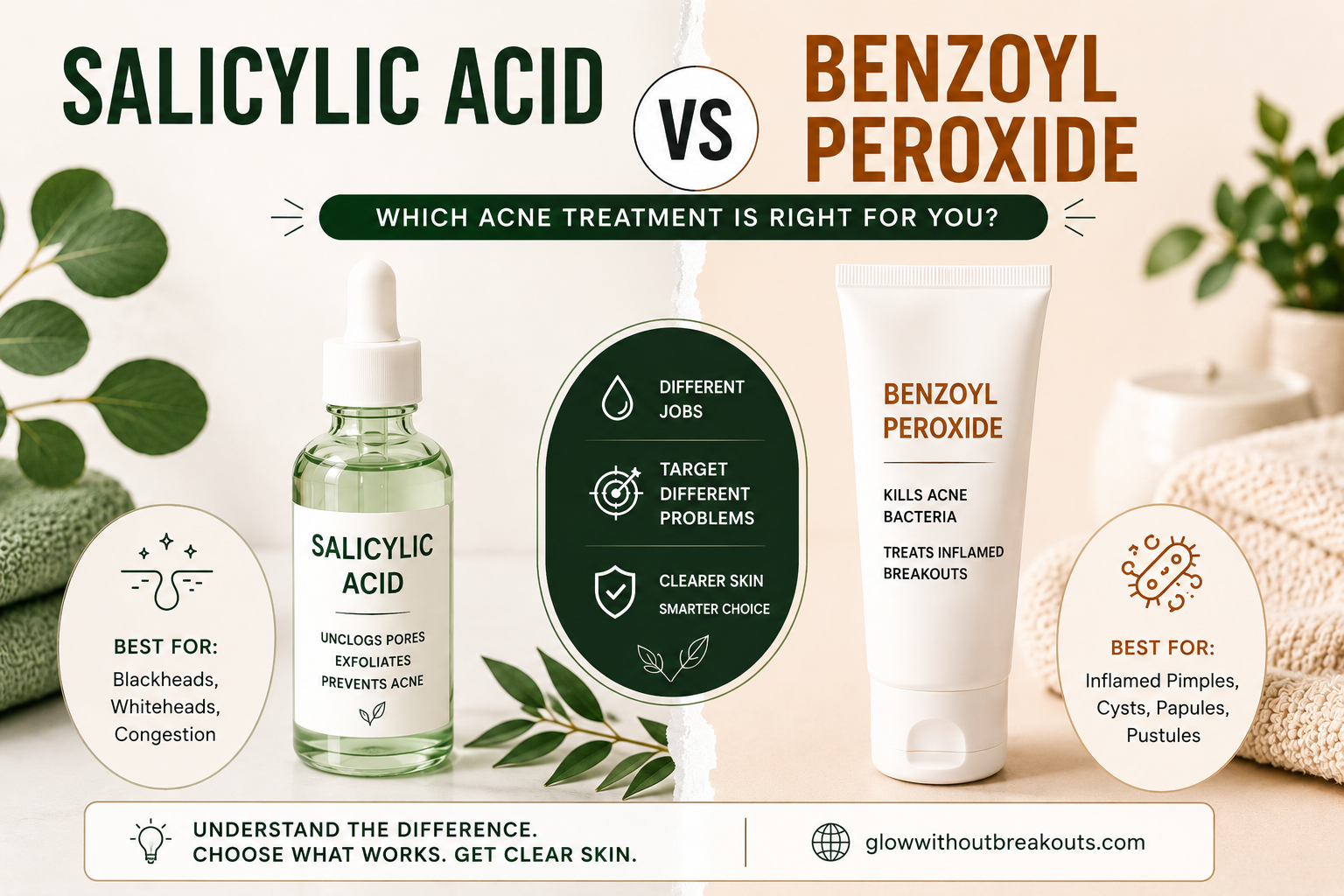
    If you have ever stood in the skincare aisle staring at two different acne products and had absolutely no idea which one to pick, you are not alone. Salicylic acid vs benzoyl peroxide is one of the most common questions I get from readers, and honestly, it confused me for years too. I used both on my own acne-prone skin without really understanding what each one was doing, which meant I was either using the wrong one for my skin type or accidentally using both at the same time and wondering why my skin was so irritated.

    This guide breaks down everything you need to know about salicylic acid vs benzoyl peroxide: how they work differently, which one is right for your skin type and acne type, and how to use them together without destroying your barrier. By the end you will know exactly which one belongs in your routine and how to use it correctly.

    GWB Skin Quiz

    Not sure what skin type you have?

    Take the free quiz before choosing between salicylic acid vs benzoyl peroxide.

    Take the GWB Skin Quiz →

    What Is Salicylic Acid and How Does It Fight Acne?
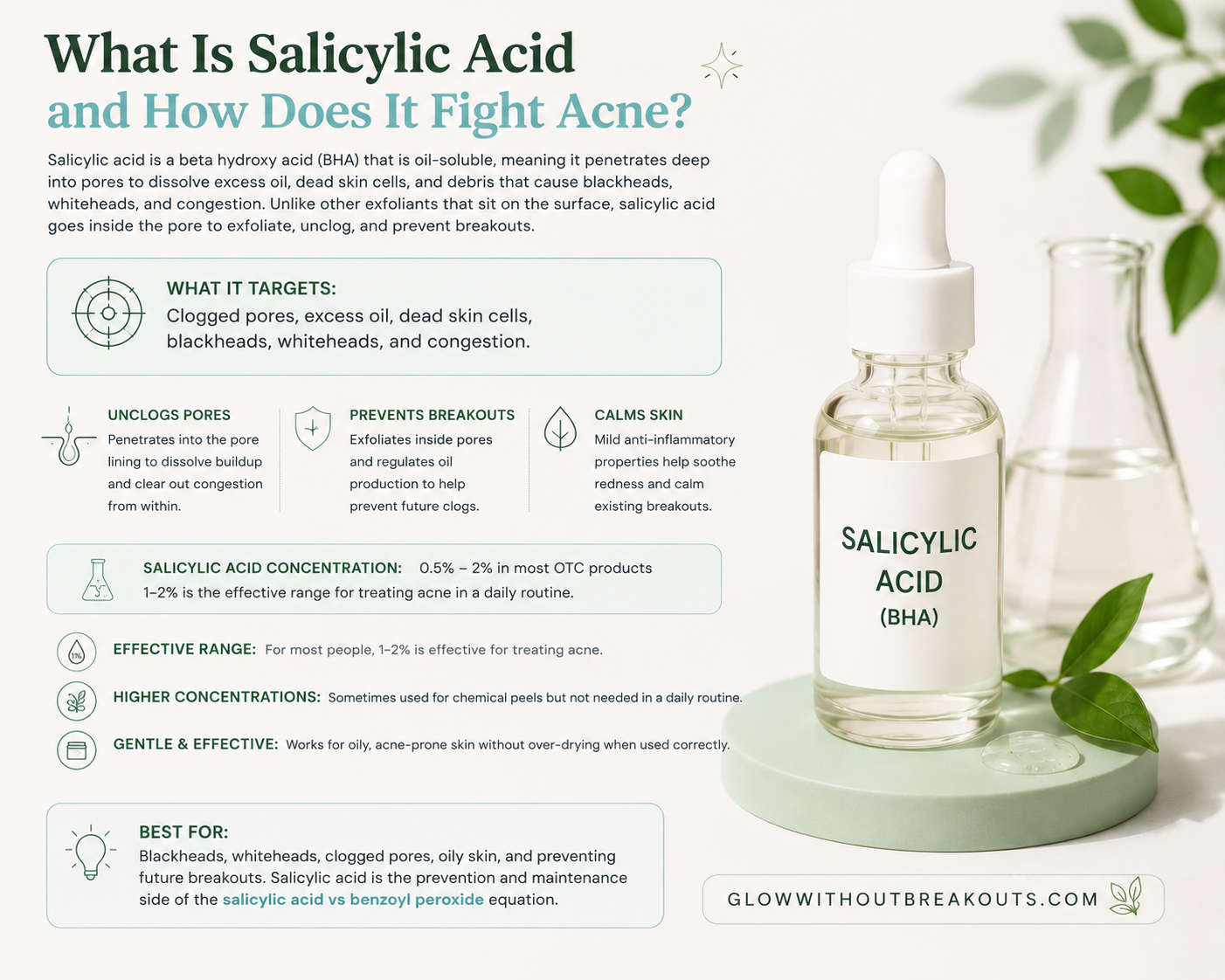
    Salicylic acid infographic explaining how salicylic acid works to fight acne by unclogging pores and exfoliating inside the pore for acne-prone skin.

    Salicylic acid is a beta hydroxy acid, or BHA, which means it is oil-soluble. That is the key detail that makes salicylic acid so effective for acne-prone skin specifically. Because it dissolves in oil, it can actually penetrate into your pores and clear out the sebum, dead skin cells, and debris that cause blackheads, whiteheads, and congestion. Most other exfoliants sit on the surface of the skin. Salicylic acid goes inside the pore.

    When you are comparing salicylic acid vs benzoyl peroxide, the first major difference is what each one targets. Salicylic acid targets clogged pores. It exfoliates within the pore lining, breaks down buildup that causes congestion, and prevents new clogs from forming. It also has mild anti-inflammatory properties, which can help calm existing breakouts, but its main job is prevention and clearing congestion rather than killing bacteria.

    Salicylic acid is available in concentrations ranging from 0.5% to 2% in over-the-counter products. For most people, 1-2% is the effective range for treating acne. Higher concentrations are sometimes used for chemical peels but are not needed in a daily routine.

    For a gentle daily cleanser with SA, the Good Molecules Acne Foaming Cleanser | Good Molecules Official Site is one of the most affordable and well-formulated options available. It has 2% SA with alcohol-free witch hazel and aloe, making it effective without stripping. The CeraVe Acne Control Gel | CeraVe Official Site is a great leave-on option with 2% SA alongside AHA and BHA, while the Paula’s Choice BHA Skin Perfecting 2% Liquid | Paula’s Choice Official Site is the cult favorite leave-on SA treatment that has been clearing pores for years. For an overnight treatment, the Good Molecules Overnight Exfoliating Treatment combines AHA and BHA to resurface and renew skin while you sleep.

    💡 Best for: Blackheads, whiteheads, clogged pores, oily skin, and preventing future breakouts. Salicylic acid is the prevention and maintenance side of the salicylic acid vs benzoyl peroxide equation.

    Related reading

    Best Cleansers for Acne-Prone Skin: Tested & Ranked

    Read the post →

    What Is Benzoyl Peroxide and How Does It Fight Acne?
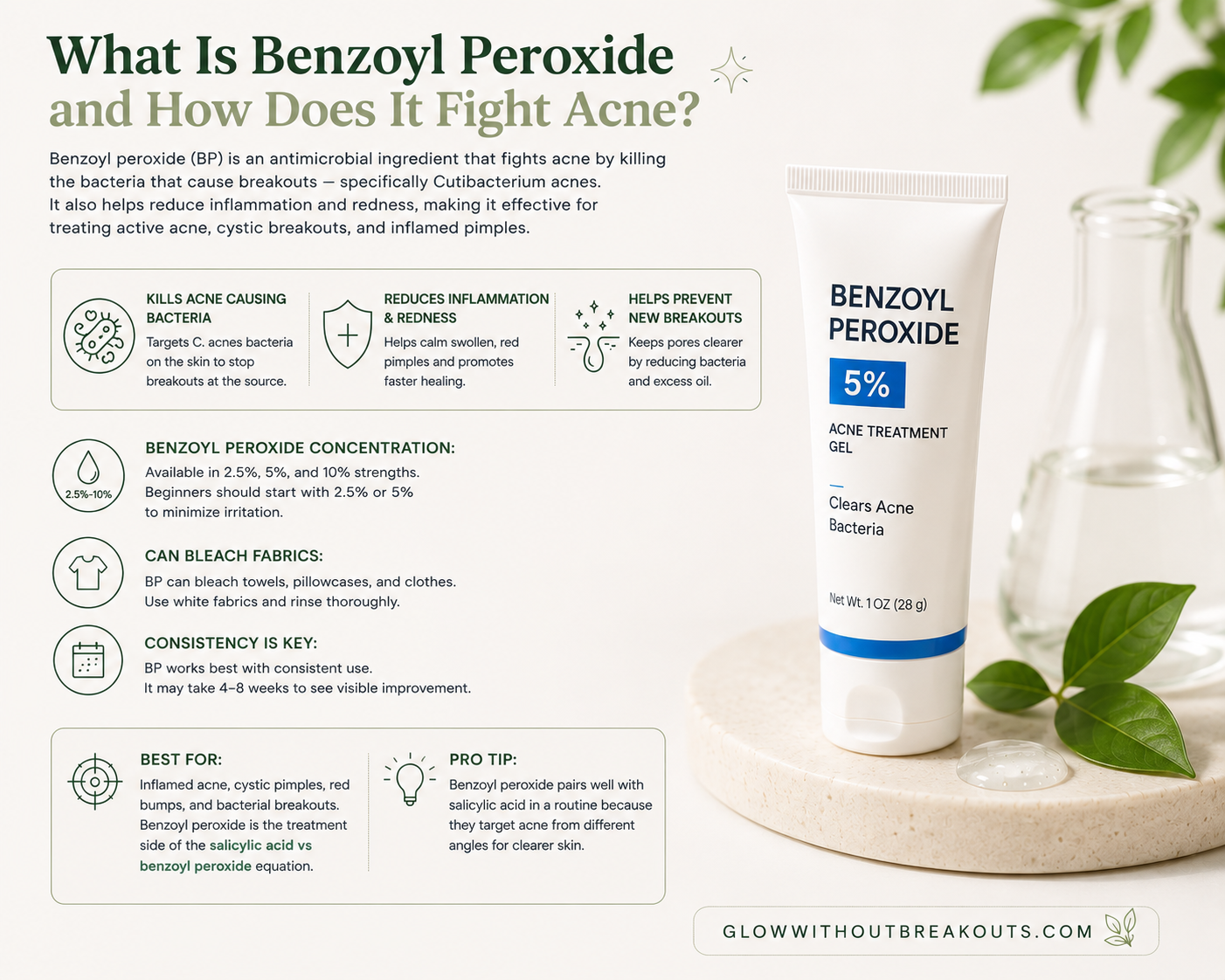
    Benzoyl peroxide infographic explaining how benzoyl peroxide kills acne-causing bacteria to treat inflammatory acne and active breakouts.

    Benzoyl peroxide works completely differently from salicylic acid. Where salicylic acid clears pores, benzoyl peroxide kills bacteria. Specifically it kills Cutibacterium acnes, the bacteria most responsible for inflammatory acne, by introducing oxygen into the pore environment. C. acnes is anaerobic, meaning it cannot survive in oxygen. Benzoyl peroxide floods the pore with oxygen and the bacteria die. It also helps remove dead skin cells and excess oil from the surface of the skin, but bacterial killing is its primary superpower.

    In the salicylic acid vs benzoyl peroxide comparison, benzoyl peroxide is the heavier hitter for active, inflamed breakouts. If salicylic acid is your everyday prevention tool, benzoyl peroxide is your emergency response. It works faster on active pimples, reduces redness and swelling, and can visibly shrink a pimple within 24-48 hours of use. I have personally used both, and the difference in speed of action is noticeable: benzoyl peroxide gets to work faster on a painful cyst or inflamed pimple than salicylic acid does.

    Benzoyl peroxide is available in concentrations of 2.5%, 5%, and 10% over the counter. Contrary to what most people assume, higher is not always better. Studies show that 2.5% benzoyl peroxide is nearly as effective as 10% for treating acne but causes significantly less irritation and dryness.

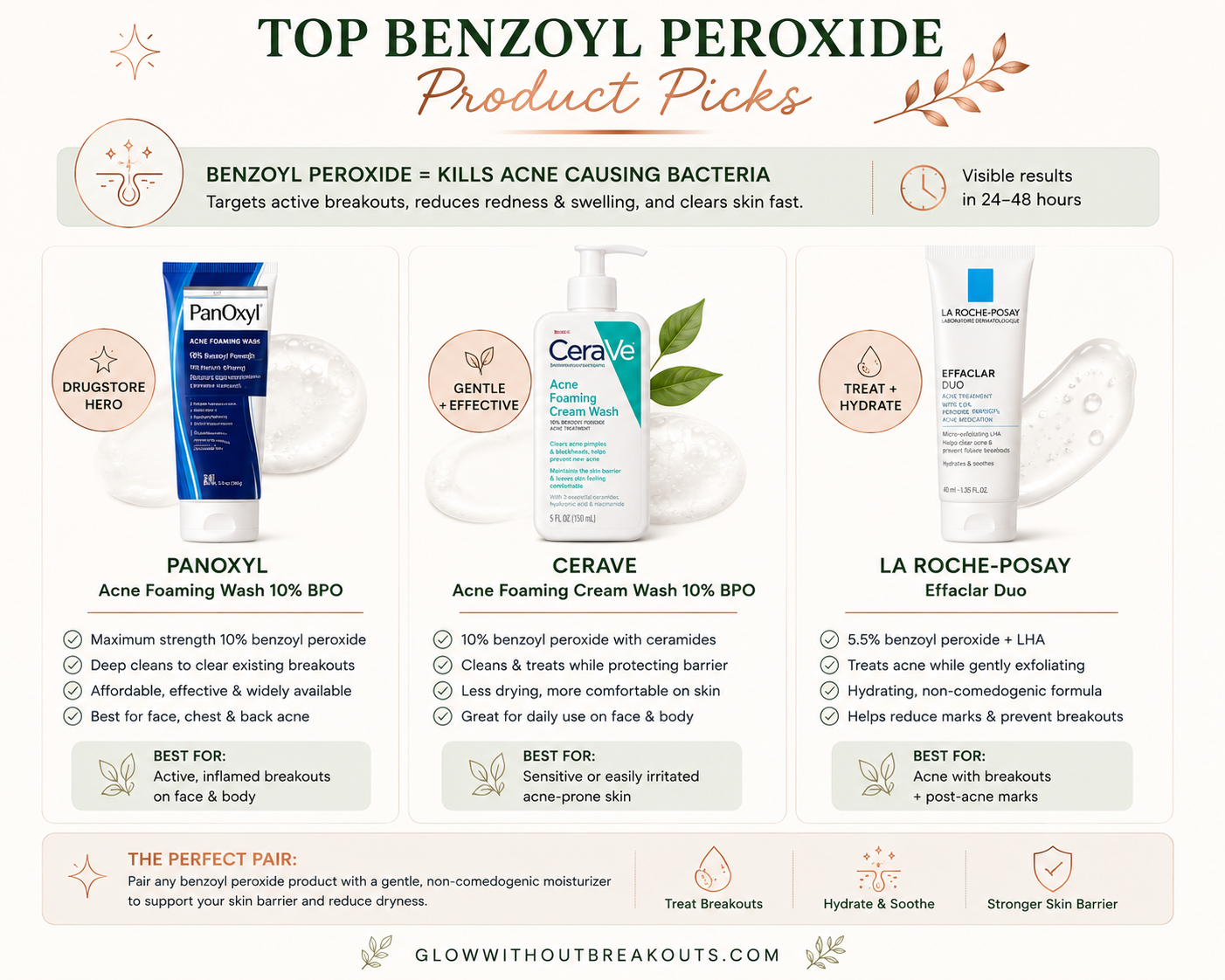
    The PanOxyl Acne Foaming Wash 10% BPO | PanOxyl Official Site is the drugstore hero for benzoyl peroxide — affordable, widely available, and genuinely effective for active inflammatory acne. The CeraVe Acne Foaming Cream Wash 10% BPO | CeraVe Official Site is a slightly gentler formulation with ceramides built in to protect your barrier while the BPO works. If you want something that combines treatment with hydration, the La Roche-Posay Effaclar Duo | La Roche-Posay Official Site uses benzoyl peroxide alongside lipo-hydroxy acid in a moisturizing formula that is gentler on the skin barrier than most standalone BPO products.

    💡 Best for: Inflamed pimples, cysts, papules, and pustules. Benzoyl peroxide is the active treatment side of the salicylic acid vs benzoyl peroxide equation — best for killing bacteria and clearing existing breakouts fast.


    Salicylic Acid vs Benzoyl Peroxide: Head to Head

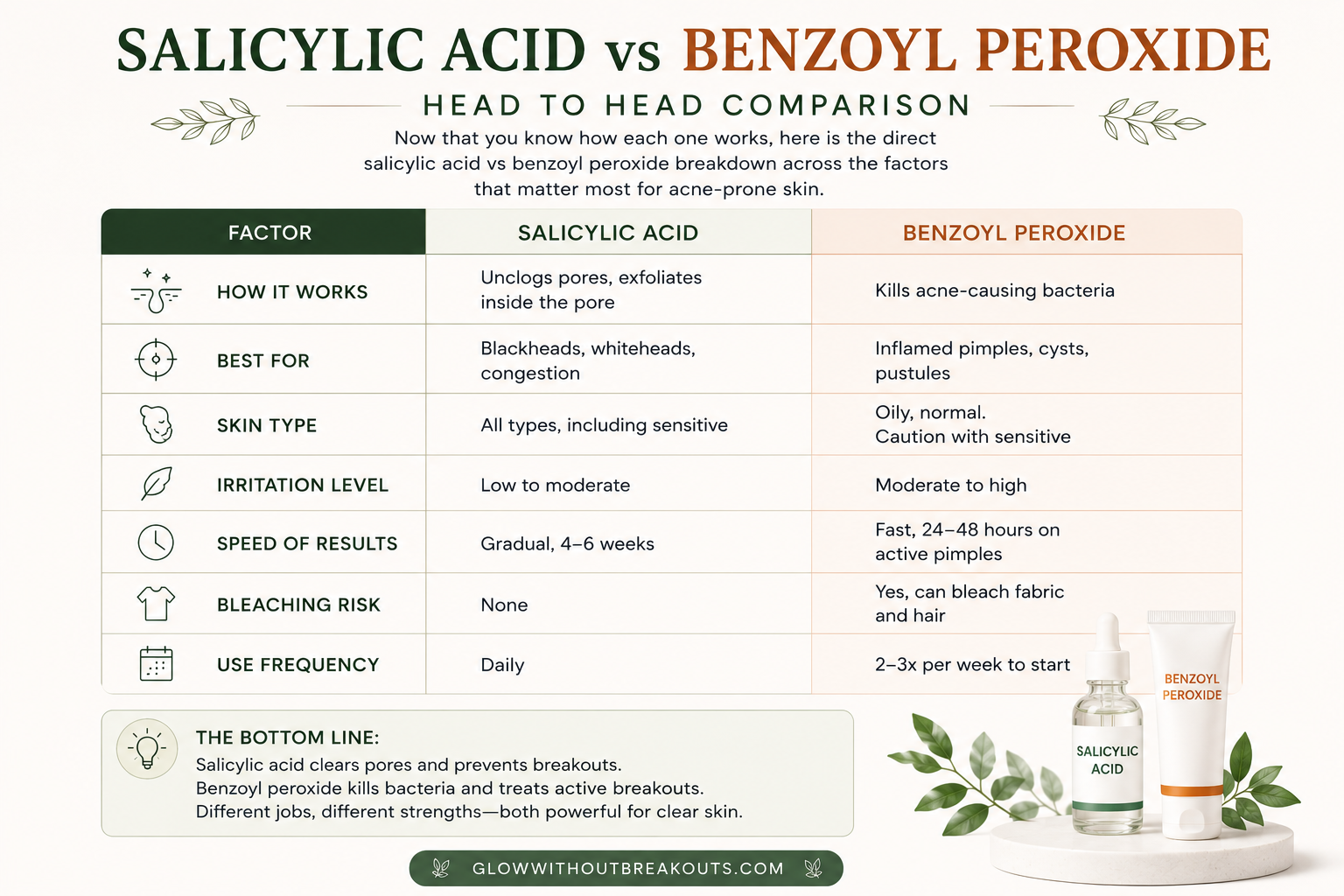
    Now that you know how each one works, here is the direct salicylic acid vs benzoyl peroxide breakdown across the factors that matter most for acne-prone skin.

    Salicylic Acid vs Benzoyl Peroxide: Quick Comparison
    Salicylic Acid
    Benzoyl Peroxide
    How it works
    Unclogs pores, exfoliates inside the pore
    Kills acne-causing bacteria
    Best for
    Blackheads, whiteheads, congestion
    Inflamed pimples, cysts, pustules
    Skin type
    All types, including sensitive
    Oily, normal. Caution with sensitive
    Irritation level
    Low to moderate
    Moderate to high
    Speed of results
    Gradual, 4-6 weeks
    Fast, 24-48 hours on active pimples
    Bleaching risk
    None
    Yes, can bleach fabric and hair
    Use frequency
    Daily
    2-3x per week to start
    Salicylic acid vs benzoyl peroxide comparison chart showing differences in how they work, best acne types, skin types, irritation level, speed of results and use frequency.

    Salicylic Acid vs Benzoyl Peroxide: Which One Is Right for You?
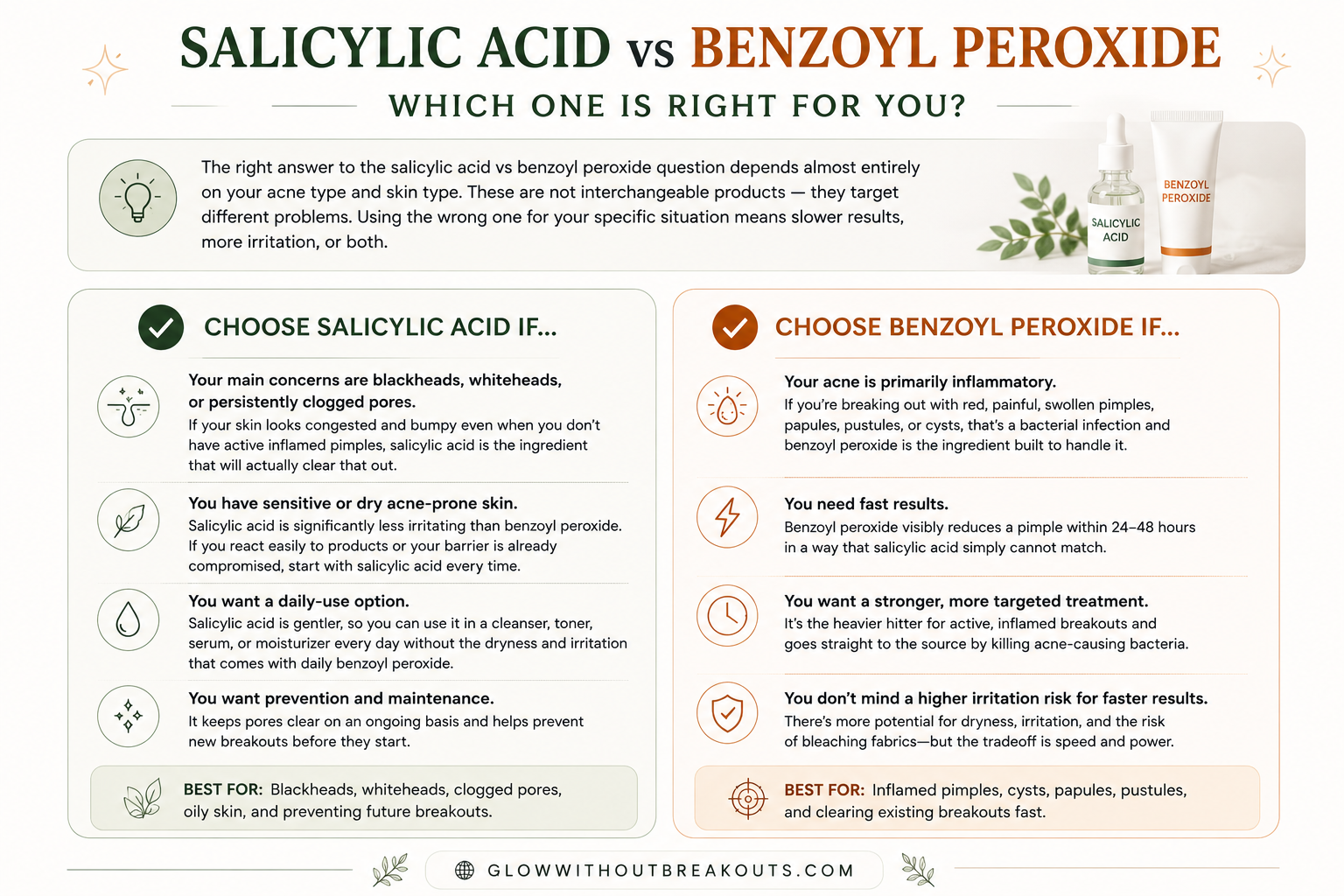
    Salicylic acid vs benzoyl peroxide which is right for you guide showing how to choose the right acne treatment based on your skin type and acne type.

    The right answer to the salicylic acid vs benzoyl peroxide question depends almost entirely on your acne type and skin type. These are not interchangeable products — they target different problems. Using the wrong one for your specific situation means slower results, more irritation, or both.

    Choose Salicylic Acid If…

    Salicylic acid wins the salicylic acid vs benzoyl peroxide debate for you if your main acne concerns are blackheads, whiteheads, or persistently clogged pores. If your skin looks congested and bumpy even when you do not have active inflamed pimples, salicylic acid is the ingredient that will actually clear that out. It is also the better choice if you have sensitive or dry acne-prone skin because it is significantly less irritating than benzoyl peroxide. If you react easily to products or your barrier is already compromised, start with salicylic acid every time.

    Salicylic acid is also the better daily-use option in the salicylic acid vs benzoyl peroxide comparison. Because it is gentler, you can use it in a cleanser, a toner, a serum, or a moisturizer every single day without the dryness and irritation that comes with daily benzoyl peroxide use. It keeps pores clear on an ongoing basis rather than just treating active breakouts.

    Related reading

    Stop Guessing: 3 Routines Based on Your Acne Skin Type

    Read the post →

    Choose Benzoyl Peroxide If…

    Benzoyl peroxide wins the salicylic acid vs benzoyl peroxide debate for you if your acne is primarily inflammatory: red, painful, swollen pimples, papules, pustules, or cysts. If you are breaking out with the kind of pimples that hurt when you touch them, that is a bacterial infection and benzoyl peroxide is the ingredient built to handle it. It is also the better choice when you need fast results because it visibly reduces a pimple within 24-48 hours in a way that salicylic acid simply cannot match.

    In my personal experience with salicylic acid vs benzoyl peroxide, benzoyl peroxide is the ingredient I reach for when a pimple shows up before something important. It is faster, more aggressive, and more effective on active inflamed acne. The tradeoff is more potential for irritation, dryness, and the very real risk of bleaching your pillowcase and towels if you are not careful.

    Related reading

    Best Ways to Make a Pimple Go Away Fast

    Read the post →

    Can You Use Salicylic Acid and Benzoyl Peroxide Together?

    Yes, you can use both in the same routine — but not at the same time in the same step. The salicylic acid vs benzoyl peroxide question does not have to be either/or. Most people with moderate to severe acne benefit from using both strategically because they target completely different mechanisms. Salicylic acid keeps pores clear and prevents congestion. Benzoyl peroxide kills the bacteria that cause inflamed breakouts. Together they cover both sides of the acne equation.

    The key when using salicylic acid vs benzoyl peroxide together is to separate them to avoid over-irritating your skin. The most effective approach is to use salicylic acid in your daily routine — in a cleanser or leave-on product — and reserve benzoyl peroxide for spot treatment on active breakouts or for 2-3 times per week use in a wash-off cleanser. Never layer them directly on top of each other in the same routine. That combination is almost guaranteed to strip and irritate your skin, which can actually make breakouts worse by compromising your barrier.

    💬 My Experience: When I was figuring out salicylic acid vs benzoyl peroxide for my own skin, I made the mistake of using both every single day thinking more was better. My skin became so dry and irritated that I started breaking out even more. Once I separated them, using salicylic acid daily and benzoyl peroxide only 2-3 times a week as a targeted treatment, my skin completely calmed down and actually cleared up. The separation is everything.

    Related reading

    5 Critical Mistakes That Shattered Your Skin Barrier

    Read the post →

    How to Use Salicylic Acid vs Benzoyl Peroxide in Your Routine

    Here is exactly how to incorporate salicylic acid vs benzoyl peroxide into a real routine without over-doing it. This is the approach that worked for my own acne-prone skin after years of trial and error.

    ☀️ AM Routine: Cleanse with a salicylic acid cleanser like the Cetaphil Gentle Clear Clarifying Acne Cream Cleanser or use a gentle non-active cleanser and apply the CeraVe Acne Control Gel as a leave-on treatment. Follow with moisturizer and SPF. No benzoyl peroxide in the morning — it increases sun sensitivity.

    🌙 PM Routine (2-3x per week): Cleanse with the CeraVe Acne Foaming Cream Wash 10% BPO on the nights you use benzoyl peroxide. Follow immediately with a ceramide-rich moisturizer to counteract the dryness. Do not use salicylic acid on the same night as your benzoyl peroxide wash.

    🌙 PM Routine (other nights): Use a gentle cleanser with no actives and apply your salicylic acid leave-on treatment or the Cetaphil Gentle Clear Mattifying Acne Moisturizer which contains 0.5% SA to gently treat overnight. This keeps pores clear on your off nights from benzoyl peroxide.

    💡 Pro Tip: Benzoyl peroxide bleaches fabric. If you use it in a leave-on product or wash it off and some residue is left on your skin, it will bleach your pillowcase and towels. Use white pillowcases and white towels on nights you use benzoyl peroxide, or switch to a wash-off BPO cleanser only. Read more about the best pillowcases for acne-prone skin here.

    Related reading

    Best Pillowcase for Acne-Prone Skin: What’s Actually Breaking You Out at Night

    Read the post →

    Shop Salicylic Acid and Benzoyl Peroxide Products
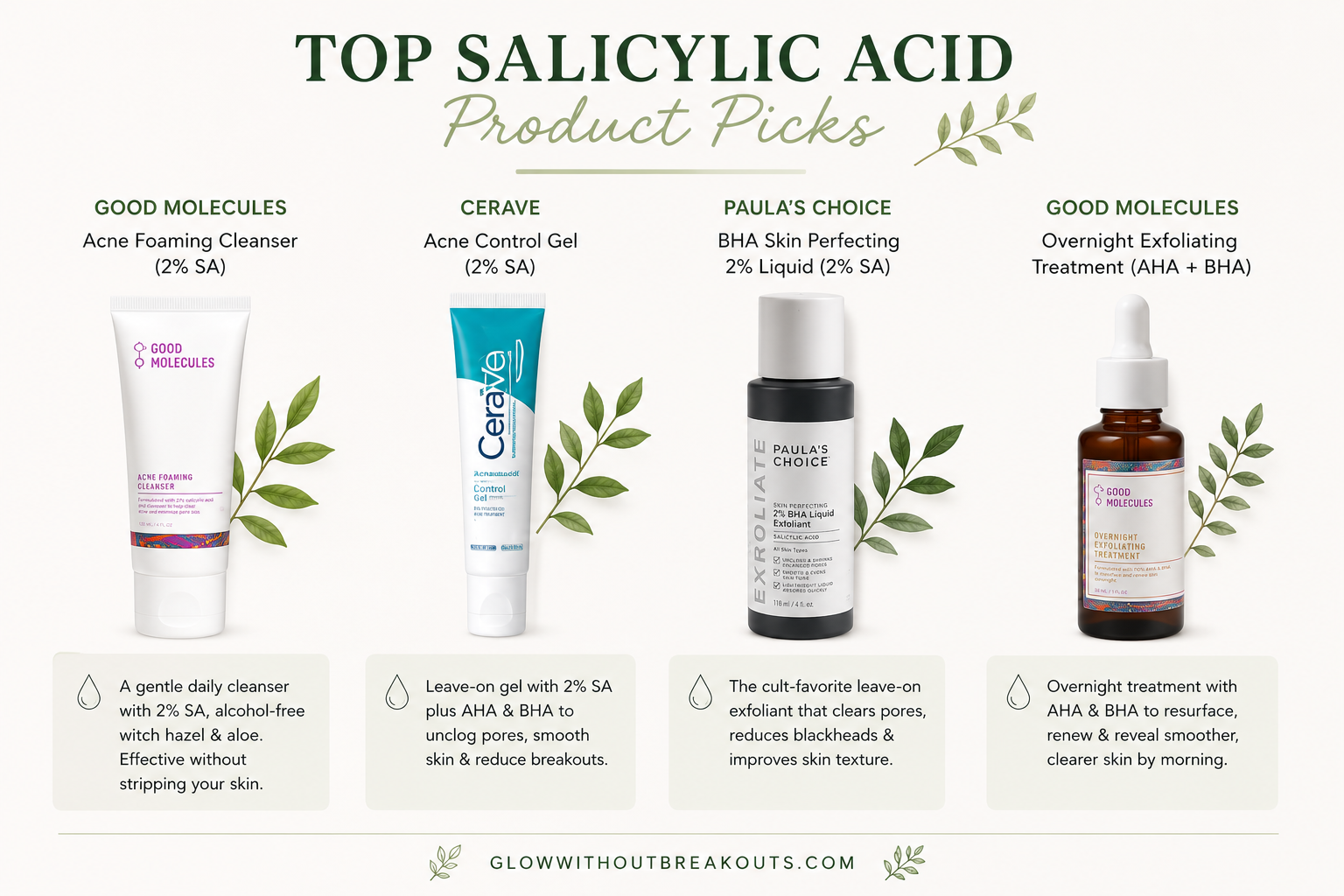
    Top salicylic acid product picks for acne-prone skin including Good Molecules, Paula's Choice, CeraVe, Cetaphil, The Ordinary and La Roche-Posay.
    🛒 Shop Salicylic Acid Products
    Good Molecules Acne Foaming Cleanser (2% SA)
    Good Molecules Overnight Exfoliating Treatment (AHA + BHA)
    Paula’s Choice BHA Skin Perfecting 2% Liquid
    CeraVe Acne Control Gel (2% SA)
    Cetaphil Gentle Clear Clarifying Acne Cream Cleanser (2% SA)
    Cetaphil Gentle Clear Mattifying Acne Moisturizer (0.5% SA)
    The Ordinary Salicylic Acid 2% Solution
    La Roche-Posay Effaclar Medicated Gel Cleanser (2% SA)
    Top benzoyl peroxide product picks for acne-prone skin including PanOxyl, CeraVe, La Roche-Posay Effaclar Duo and pimple patches.
    🛒 Shop Benzoyl Peroxide Products
    PanOxyl Acne Foaming Wash 10% BPO
    CeraVe Acne Foaming Cream Wash 10% BPO
    La Roche-Posay Effaclar Duo (BPO + LHA)
    CeraVe Blemish Barrier Patches
    Cetaphil Fast Rescue Pimple Patches

    Salicylic Acid vs Benzoyl Peroxide for Specific Acne Types

    One of the most useful ways to think about salicylic acid vs benzoyl peroxide is by matching each ingredient to the specific type of acne you are dealing with. Not all acne is the same and the ingredient that works for one type can be completely wrong for another.

    Salicylic Acid vs Benzoyl Peroxide for Hormonal Acne

    Hormonal acne typically shows up as deep, painful cysts around the chin, jawline, and lower cheeks. It is driven by androgen hormones that increase sebum production and trigger inflammation deep in the pore. When it comes to salicylic acid vs benzoyl peroxide for hormonal acne, neither ingredient is a complete solution on its own because the root cause is internal.

    With that being said, benzoyl peroxide is the better topical option for active hormonal breakouts because it targets the bacterial component that makes hormonal cysts so inflamed and painful. Salicylic acid helps prevent the clogging that can make hormonal breakouts worse, so using both strategically: salicylic acid daily and benzoyl peroxide as a spot treatment, gives you the best coverage for hormonal acne.

    If you are dealing with persistent hormonal acne that does not respond to topical treatment, it is worth talking to a dermatologist about prescription options. Topical retinoids, oral medications, and hormonal treatments can work alongside salicylic acid vs benzoyl peroxide for better long-term results.

    Related reading

    Does Stress Really Cause Acne? Here’s What the Science Says

    Read the post →

    Salicylic Acid vs Benzoyl Peroxide for Back and Chest Acne

    Back and chest acne responds really well to both ingredients but in slightly different ways than facial acne. The skin on your back and chest is thicker and less sensitive than facial skin, which means it can generally tolerate higher concentrations and more frequent use without the same level of irritation. In the salicylic acid vs benzoyl peroxide comparison for body acne, benzoyl peroxide body washes are often the most effective starting point because body acne tends to be more inflammatory and bacterial than facial acne. The PanOxyl Acne Foaming Wash 10% BPO is a popular choice for back and chest acne specifically because of its high concentration and wash-off format.

    Salicylic acid body sprays and washes are useful for maintaining clear skin between flare-ups and preventing the clogged pores that contribute to back and chest breakouts. If you sweat a lot or work out regularly, a salicylic acid body wash used after exercise is one of the most effective preventive steps you can take for body acne.

    Salicylic Acid vs Benzoyl Peroxide for Blackheads and Whiteheads

    This is where salicylic acid wins the salicylic acid vs benzoyl peroxide debate clearly and without much contest. Blackheads and whiteheads are non-inflammatory comedones — they are caused by clogged pores, not by bacteria. Benzoyl peroxide kills bacteria and has minimal effect on comedones because there is no bacterial infection to target. Salicylic acid, on the other hand, is specifically designed for this: it penetrates the pore, dissolves the buildup, and prevents new clogs from forming. If blackheads and whiteheads are your primary concern, salicylic acid used consistently is your best over-the-counter option. The Paula’s Choice BHA Skin Perfecting 2% Liquid and the Good Molecules Overnight Exfoliating Treatment are two of the most effective leave-on options for persistent blackheads.

    Salicylic Acid vs Benzoyl Peroxide for Fungal Acne

    Fungal acne, technically called Malassezia folliculitis, is a skin condition that looks like acne but is caused by an overgrowth of yeast rather than bacteria. This is an important distinction in the salicylic acid vs benzoyl peroxide discussion because neither ingredient is the right treatment for fungal acne.

    Benzoyl peroxide targets bacterial acne specifically and has no effect on yeast. Salicylic acid can help with surface exfoliation but will not address the underlying fungal cause. If you have been using salicylic acid vs benzoyl peroxide consistently without improvement and your breakouts are small, uniform, itchy bumps that appear on your forehead, chest, or back, it is worth investigating whether you might have fungal acne rather than bacterial acne. A dermatologist can confirm with a simple exam and the treatment is completely different.

    💡 Pro Tip: If you have been using salicylic acid vs benzoyl peroxide for months without seeing improvement, it is worth reconsidering whether your acne type is actually responding to these ingredients. Hormonal, fungal, and barrier-related breakouts all require different approaches. A dermatologist visit can save you months of using the wrong products.

    Related reading

    Over-Exfoliation Recovery: How to Know When You’ve Gone Too Far

    Read the post →

    Salicylic Acid vs Benzoyl Peroxide: The Final Verdict

    The salicylic acid vs benzoyl peroxide debate does not have a single winner because they are not competing for the same job. Salicylic acid prevents and clears congestion. Benzoyl peroxide kills bacteria and treats active inflamed breakouts. If you only have one in your routine right now, choose based on your primary acne type: blackheads and clogged pores point to salicylic acid, inflamed painful pimples point to benzoyl peroxide. If you have both types of acne, use both strategically by separating them into different nights or different steps.

    The most important thing I learned from years of using salicylic acid vs benzoyl peroxide on my own skin is that more is never better with either of these ingredients. Start with one at a time, introduce slowly, always follow with a good moisturizer, and give your skin time to adjust before adding anything new. A damaged barrier will not respond to either ingredient no matter how well you apply them.

    Related reading

    The Worst Skincare Mistake I Made: And How to Repair Your Barrier

    Read the post →

    More From GlowWithoutBreakouts

    GWB Skin Quiz

    Still not sure whether salicylic acid vs benzoyl peroxide is right for your skin?

    Take the free quiz and get matched to the right routine for your skin type.

    Take the GWB Skin Quiz →

    7 Brutal Rounds: CeraVe vs Cetaphil — Advice From the Lab Rat
    Stop Guessing: 3 Routines Based on Your Acne Skin Type
    Best Cleansers for Acne-Prone Skin: Tested & Ranked
    Best Sunscreen for Acne-Prone Skin
    5 Critical Mistakes That Shattered Your Skin Barrier
    Over-Exfoliation Recovery: How to Fix Damaged Skin
    7+ Powerful Habits That Actually Prevent Breakouts
    Best Ways to Make a Pimple Go Away Fast
    Does Stress Really Cause Acne?
    Best Pillowcase for Acne-Prone Skin
    The Worst Skincare Mistake I Made


    Disclaimer: This post contains affiliate links. If you purchase through these links, I may earn a small commission at no extra cost to you. All opinions are 100% my own and based on personal experience and honest research. This is not medical advice, please consult a dermatologist for persistent acne concerns.
  • 7 Brutal Rounds: CeraVe vs Cetaphil- Who Takes the Cake?

    7 Brutal Rounds: CeraVe vs Cetaphil- Who Takes the Cake?


    GlowWithoutBreakouts.com • Honest Reviews for Acne-Prone Skin
    13 Products Personally Tested • Updated 2026

    If you’ve ever stood in the drugstore aisle wondering about CeraVe vs Cetaphil- this post is for you. I’ve personally tried 13 products across both lines on my sensitive, acne-prone skin, and I’m breaking it all down across 7 honest rounds-just real experience.

    When it comes to CeraVe vs Cetaphil, both brands are dermatologist-recommended, fragrance-free, and affordable. But they are NOT the same. And for acne-prone skin, the differences actually matter.


    CeraVe vs Cetaphil: Quick Brand Overview

    CeraVe

    Developed with dermatologists, CeraVe is built around three essential ceramides that restore and maintain the skin barrier. Their MVE technology delivers ingredients slowly over time for continuous hydration. Great for barrier repair and active acne treatment.

    Cetaphil

    Cetaphil has been around since 1947 and is the go-to for ultra-sensitive skin. Their newer Gentle Clear line specifically targets acne-prone sensitive skin. Cetaphil’s formulas lean more botanical and soothing — less focused on actives, more focused on comfort.


    ⚔️ ROUND 1: CLEANSERS

    In the CeraVe vs Cetaphil cleanser battle, the stakes are high. Cleansing is the foundation of any acne routine — get this wrong and nothing else matters. Here is how both brands stack up and what I personally experienced with each one.

    CeraVe vs Cetaphil- CeraVe Cleansers

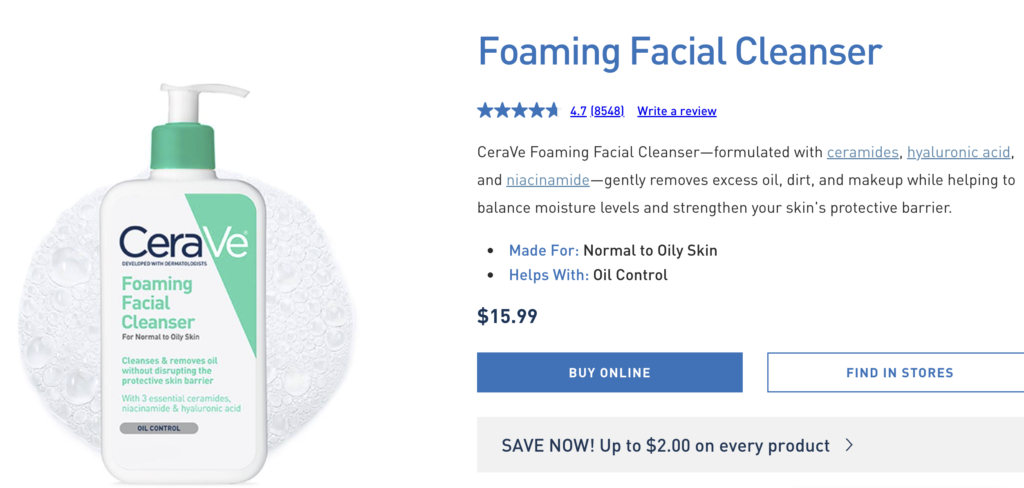
    CeraVe Foaming Facial Cleanser ($15.99)

    Cerave Foaming Facial Cleanser for normal to oily acne-prone skin
    • Made for normal to oily skin
    • Contains ceramides, hyaluronic acid, and niacinamide
    • Removes excess oil without disrupting the skin barrier

    💬 My Review:I used this one for over a year and still go back to it when I’m traveling for the weekend. It really helped clean my skin without overly drying, and it’s a perfect touch to balance skin when paired with the right moisturizer. It’s a great acne-safe face wash especially for combination acne-prone skin — it cleans well but isn’t harsh. A safe staple.

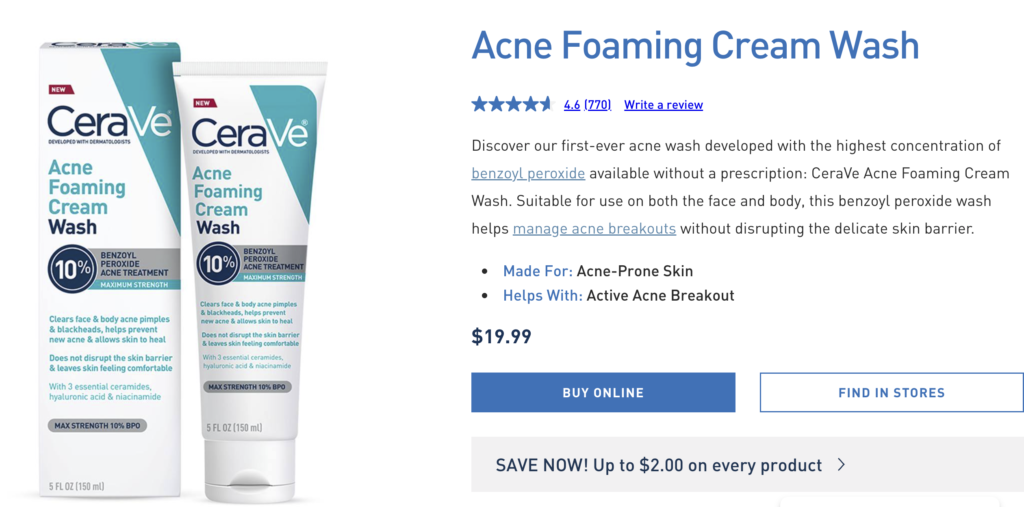
    CeraVe Acne Foaming Cream Wash 10% BPO ($19.99)

    CeraVe Acne Foaming Cream Wash for acne-prone skin: made with 10% benzoyl peroxide to clear acne and prevent new breakouts
    • 10% benzoyl peroxide-highest OTC concentration available
    • Clears face and body acne, blackheads, prevents new breakouts
    • Still contains ceramides and hyaluronic acid to protect barrier

    💬 My Review: This was my favorite for a long time. Once I found it I made sure I never ran out. I would use this daily at night paired with a really good hydrating moisturizer. My skin could handle it even though it is a more stripping face wash, but ONLY because I paired it with really hydrating moisturizers. I have sensitive acne-prone skin and this was a safe go-to that always cleared my skin. I found my skin wasn’t as hydrated as I wanted using it every day, but as someone with frequent breakouts, it left my skin clear, balanced in pigmentation and texture, and comfortable. I’m now at a stage where I can use a less stripping wash, but I still rotate this in about twice a week.

    💡 Pro Tip: Start with just a few nights a week and increase slowly. Do not use more than once per 24 hours- night use only, max 1x per day. Always pair with a rich, hydrating moisturizer.

    CeraVe vs Cetaphil- Cetaphil Cleansers

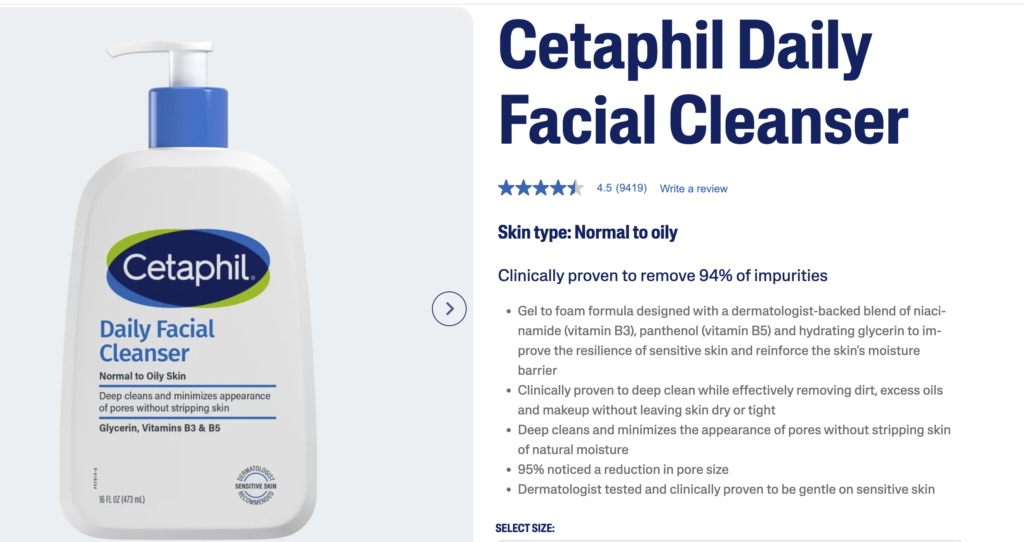
    Cetaphil Daily Facial Cleanser ($13.99)

    Cetaphil Daily Facial Cleanser gel-to-foam cleanser for normal to oily skin
    • Gel-to-foam formula with niacinamide, panthenol, and glycerin
    • Clinically proven to remove 94% of impurities
    • Normal to oily skin, dermatologist tested

    💬 My Review: I’ve used this before and it is very non-stripping which is great for the skin barrier. It’s a good option in an acne-prone routine if your skin is also dry and sensitive. It’s not a foamy cleanser so it doesn’t feel like a deep clean to me, and you have to use more product to really clean and lather on the skin. Great choice for sensitive acne-prone skin though.

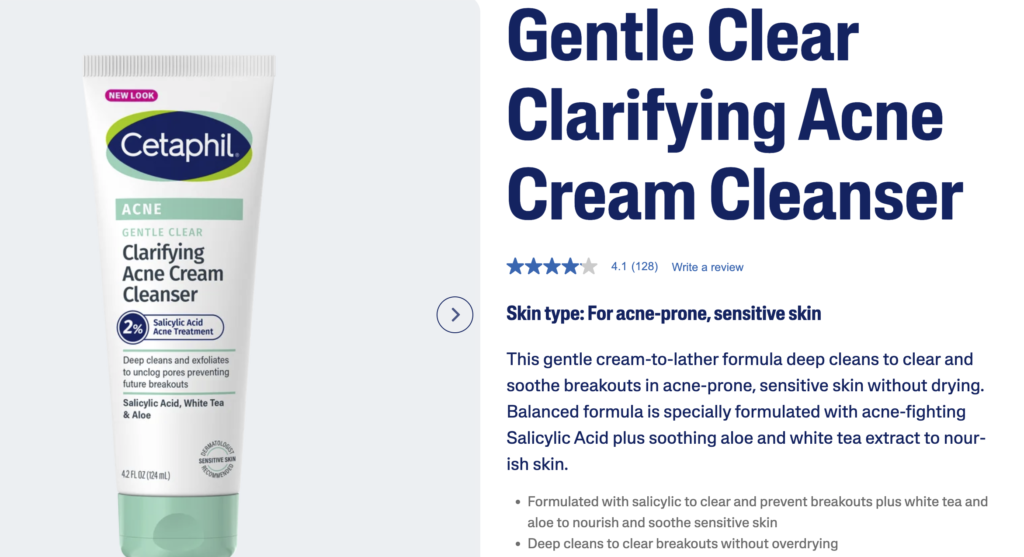
    Cetaphil Gentle Clear Clarifying Acne Cream Cleanser ($12.99)

    Cetaphil Gentle Clear Clarifying Acne Cream Cleanser made with salicylic acid, aloe, and white tea extract to clear acne and calm the skin barrier
    • 2% salicylic acid acne treatment
    • Contains soothing aloe and white tea extract
    • Cream-to-lather formula, deep cleans without overdrying

    💬 My Review: This is a stronger acne wash but still calming thanks to aloe. It leaves the skin feeling clean and refreshed. A good choice for acne-prone skin that wants a real clean but still needs some gentleness.

    ROUND 1 VERDICT- CeraVe vs Cetaphil Cleansers: CeraVe wins for active acne fighters — the 10% BPO wash is one of the strongest OTC options available and I can personally vouch for it. Cetaphil wins for ultra-sensitive skin that cannot tolerate strong actives.


    ⚔️ ROUND 2: MOISTURIZERS

    The CeraVe vs Cetaphil moisturizer comparison is where things get really personal. Skipping moisturizer when you have acne is one of the biggest skincare mistakes — dry skin overproduces oil, which leads to MORE breakouts. Here is what each brand offers and what I personally experienced.

    CeraVe vs Cetaphil- CeraVe Moisturizers

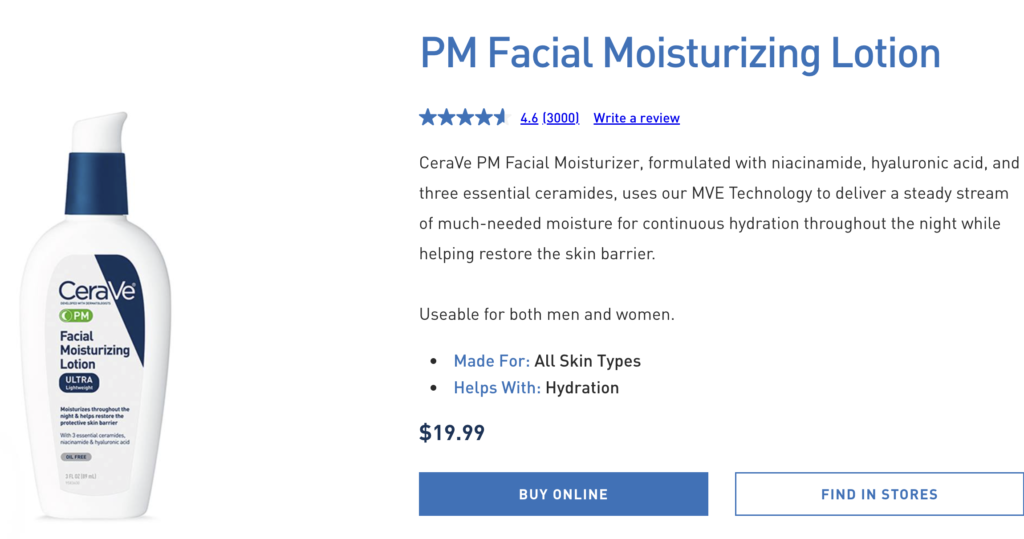
    CeraVe PM Facial Moisturizing Lotion ($19.99)

    CeraVe Facial Moisturizing Lotion made with essential ceramides: perfect for acne-prone skin
    • Niacinamide, hyaluronic acid, and three essential ceramides
    • MVE technology for continuous overnight hydration
    • Made for all skin types

    💬 My Review: This is my favorite acne-safe moisturizer by CeraVe, and honestly one of my favorites overall. Even though it’s labeled PM, you can absolutely use it in the AM too. It’s best before bed because the niacinamide, hyaluronic acid, and ceramides work overnight to calm and protect the skin barrier and prevent acne. When I use this at night and wake up in the morning, my skin feels clean and moisturized but not oily. It’s a must-have.

    💡 Pro Tip: Many people pair this with the CeraVe AM SPF moisturizer (PM at night, AM in the morning), but this alone, morning or night, works beautifully for sensitive acne-prone skin.

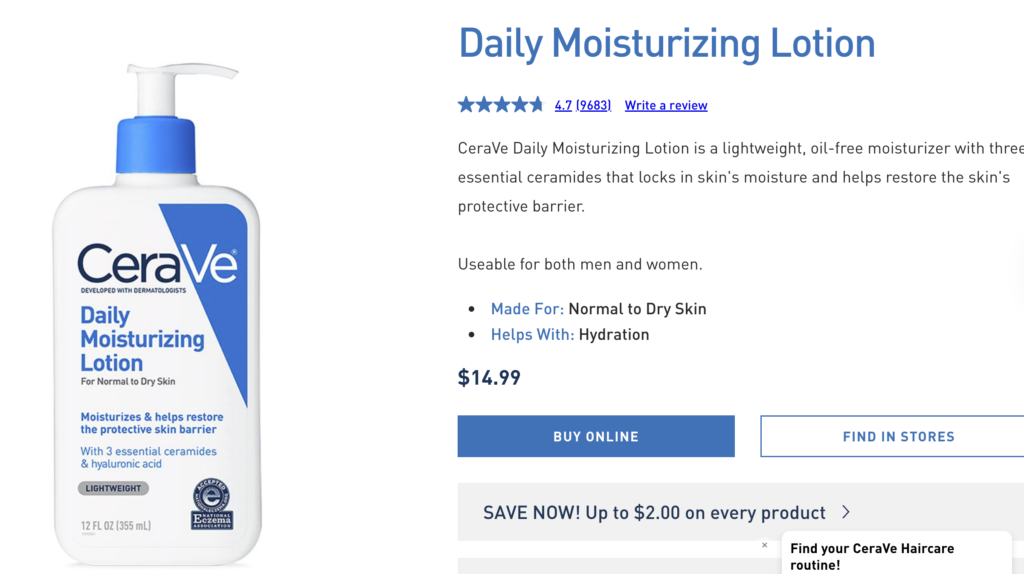
    CeraVe Daily Moisturizing Lotion ($14.99)

    CeraVe Daily Moisturizing Lotion, that's lightweight for normal to dry skin
    • Lightweight formula with three essential ceramides
    • Locks in moisture and helps restore the protective skin barrier
    • Normal to dry skin

    💬 My Review: I definitely recommend this for people with sensitive acne-prone skin. It will protect your skin barrier, not clog your pores, and can be used AM or PM daily. Note: it is not labeled oil-free, so if you have oily acne-prone skin, you may want to switch to a lighter gel moisturizer instead.

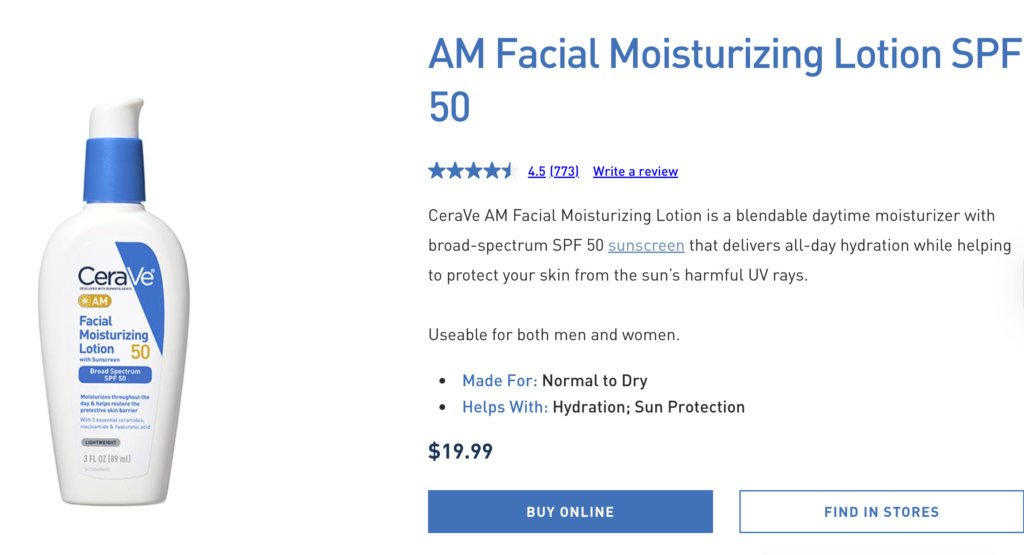
    CeraVe AM Facial Moisturizing Lotion SPF 50 ($19.99)

    CeraVe AM Facial Moisturizing Lotion with SPF 50 to hydrate and protect the skin
    • Broad-spectrum SPF 50 sunscreen + daytime moisturizer in one
    • Ceramides, niacinamide, and hyaluronic acid
    • Normal to dry skin

    💬 My Review: I’ve bought this a few times and did like it. The only thing is that the product separates sometimes- shake it well before use. Overall this is a great product for a moisturizer and sunscreen in one. I recommend it if you like a 2-in-1. Personally I prefer using a separate acne-safe sunscreen with a matte finish over a light layer of moisturizer, but this gives a more hydrated dewy finish which some people will love.

    CeraVe vs Cetaphil- Cetaphil Moisturizers

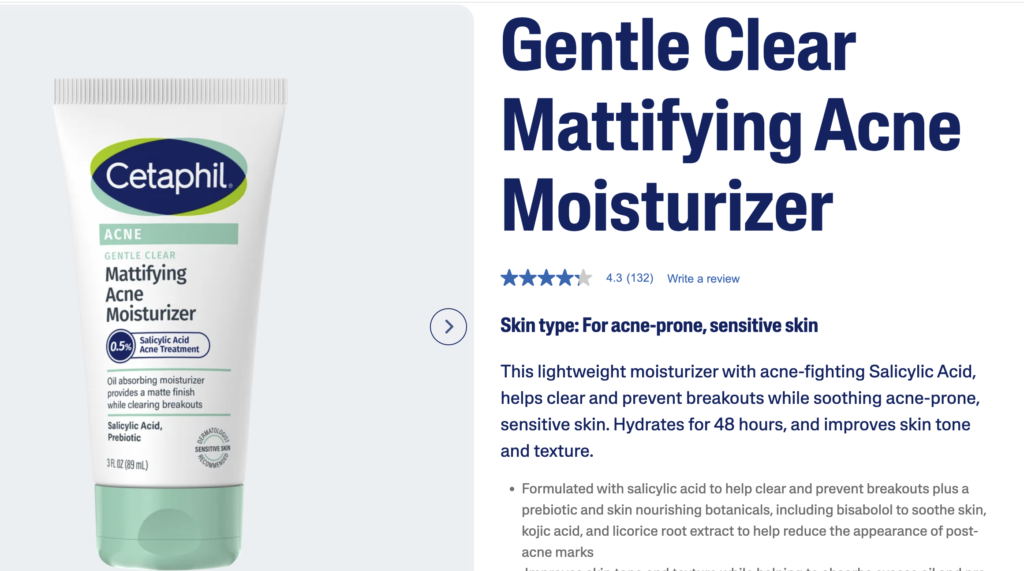
    Cetaphil Gentle Clear Mattifying Acne Moisturizer ($15.99)

    Cetaphil Gentle Clear Mattifying Acne Moisturizer for acne-prone sensitive skin
    • 0.5% salicylic acid treats and prevents breakouts
    • Prebiotic complex and botanicals soothe sensitive skin
    • Matte finish, hydrates for 48 hours

    💬 My Review: I liked this one- it left my skin feeling comfortable and non-greasy so if you like that matte finish feeling this is a solid choice. It wasn’t hydrating enough for my skin when using a stronger cleanser, but it could be a great combo with a gentler cleanser for acne-prone skin. If you have acne-prone skin that is not sensitive or prone to dryness, this would be a great choice.

    ROUND 2 VERDICT- CeraVe vs Cetaphil Moisturizers: CeraVe wins for barrier repair and deep hydration — the PM lotion is my personal favorite. Cetaphil’s Mattifying Moisturizer wins for oily skin types who want a treatment and moisturizer in one step.


    ⚔️ ROUND 3: ACNE TREATMENTS & SPOT CARE

    This is where the CeraVe vs Cetaphil comparison gets really interesting. Both brands have expanded into targeted acne treatments- and I have personal experience with products from both.

    CeraVe vs Cetaphil- CeraVe Treatments

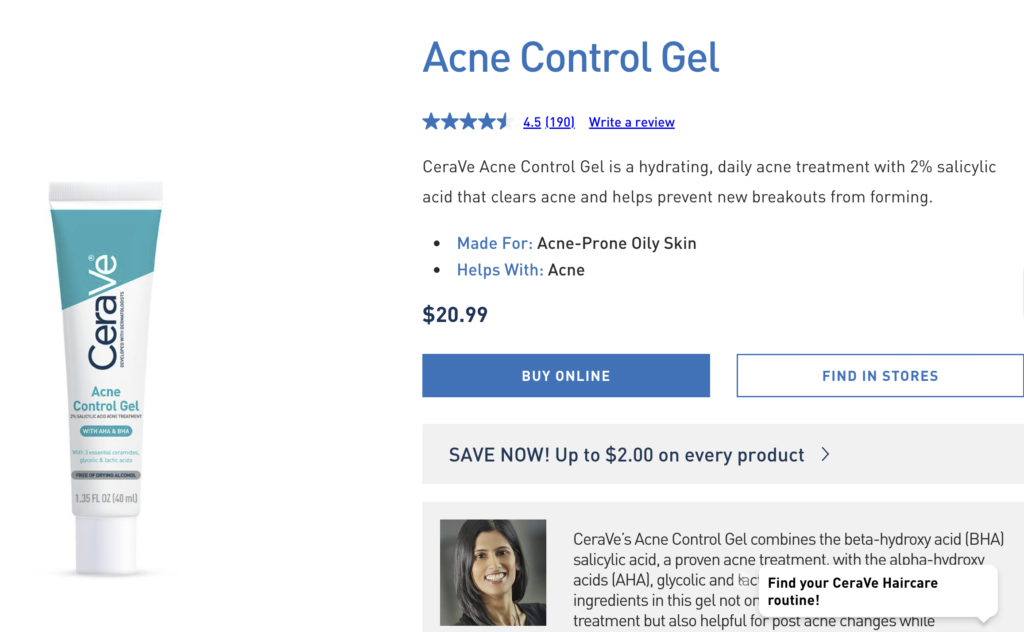
    CeraVe Acne Control Gel ($20.99)

    CeraVe Acne Control Gel for acne-prone oily skin
    • 2% salicylic acid with AHA and BHA
    • Contains ceramides, glycolic and lactic acids
    • Alcohol-free, made for acne-prone oily skin

    💬 My Review: I really like this one for spot treatment directly on pimples. It works well but you must apply it on clean dry skin — it will not work properly if moisturizer is already on your skin.

    💡 Pro Tip: Apply on clean dry skin before any moisturizer. Wait a few minutes to absorb before layering anything on top.

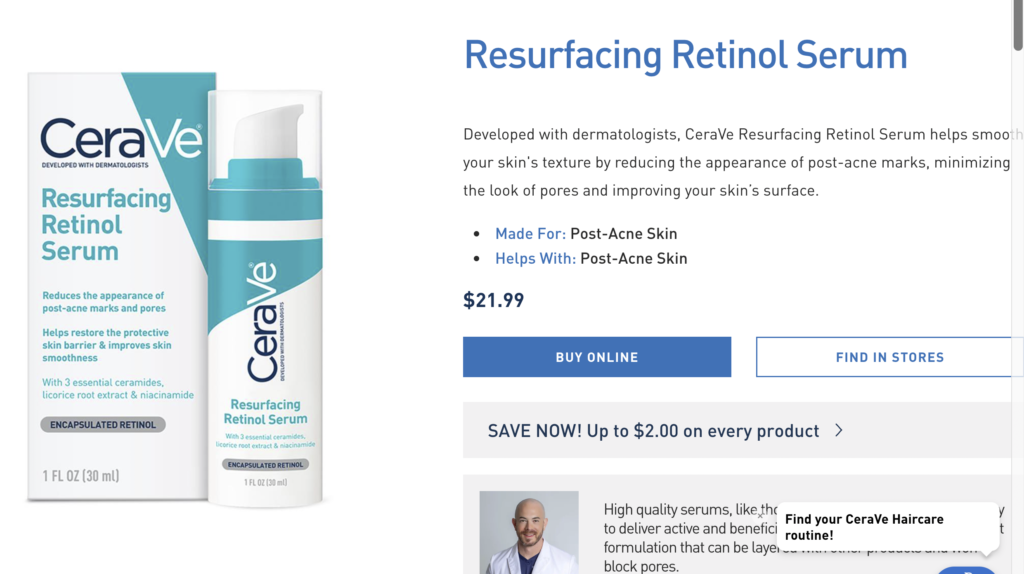
    CeraVe Resurfacing Retinol Serum ($21.99)

    CeraVe Resurfacing Retinol Serum that smooths post-acne skin
    • Encapsulated retinol reduces post-acne marks and pore appearance
    • Ceramides, licorice root extract, and niacinamide
    • Made for post-acne skin

    💬 My Review: I really did not like this product the first time around — but that was my fault. After really giving it a chance and slowly implementing it with the moisturizing sandwich method, this worked great and made my skin very smooth and even after a couple of months. Patience and the right application method are everything with retinol.

    💡 Pro Tip: Use the moisturizing sandwich method: thin layer of moisturizer, then retinol, then moisturizer on top. This buffers the retinol and reduces irritation significantly for sensitive skin.

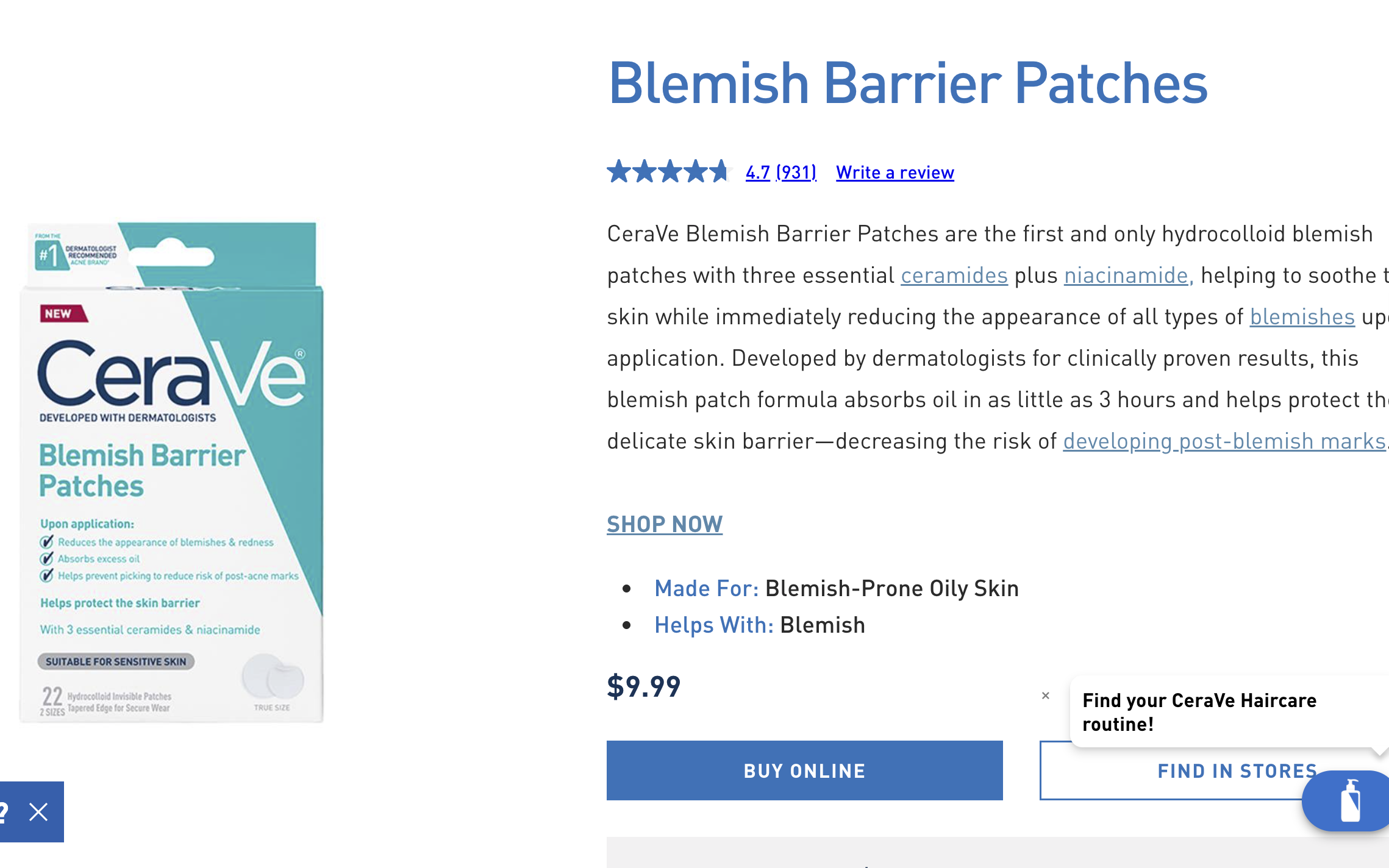
    CeraVe Blemish Barrier Patches

    CeraVe Blemish Barrier Patches with hydrocolloid for spot treatment
    • Hydrocolloid patches that absorb fluid from pimples
    • Protect pimples from picking and bacteria
    • Available in multiple sizes

    💬 My Review: I love these ones. They are not too expensive and get the job done. A solid everyday pimple patch from a brand I already trust for my acne-prone skin.

    CeraVe vs Cetaphil- Cetaphil Treatments

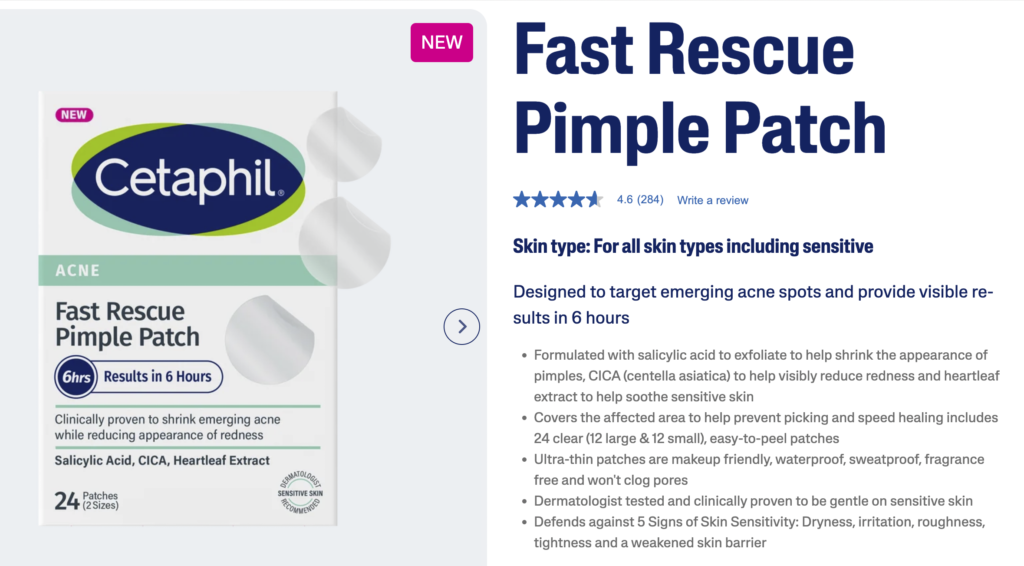
    Cetaphil Fast Rescue Pimple Patch

    Cetaphil Fast Rescue Pimple Patch to target emerging acne
    • Salicylic acid, CICA, and heartleaf extract
    • Results in 6 hours, 24 patches in two sizes
    • Ultra-thin, makeup friendly, waterproof and sweatproof

    💬 My Review: These also work well but they don’t really pull out the satisfying gunk. I don’t think they are hydrocolloid. They are cheaper than CeraVe patches by a few dollars though, so if budget is a priority these still do the job.

    💡 Pro Tip: If you want that satisfying extraction effect, look for patches labeled hydrocolloid specifically. Non-hydrocolloid patches still protect and calm the pimple but work differently.

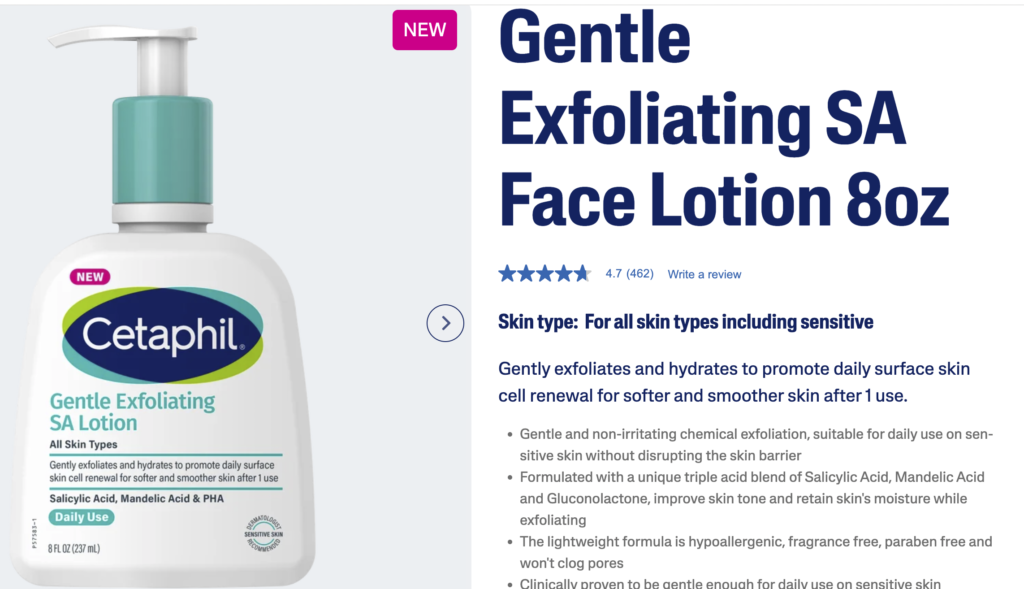
    Cetaphil Gentle Exfoliating SA Face Lotion ($18.99)

    Cetaphil Gentle Exfoliating SA Face Lotion gently exfoliates and hydrates skin-made for all skin types
    • Triple acid blend: Salicylic Acid, Mandelic Acid, and PHA
    • Gentle chemical exfoliation for all skin types including sensitive
    • Fragrance-free, paraben-free, non-comedogenic

    💬 My Review: I love this one- it is very gentle as described. I use it a couple of times a week under a thin layer of moisturizer because I have sensitive skin. It really helps gently exfoliate and even skin tone.

    💡 Pro Tip: Apply a very thin layer on clean dry skin, wait 2 minutes for it to really absorb, then layer with a thin moisturizer on top. If your skin is not sensitive or prone to dryness you can skip the added moisturizer.

    ROUND 3 VERDICT- CeraVe vs Cetaphil Treatments: Tie-depends on your goal. CeraVe wins for active acne treatment and post-acne marks. Cetaphil wins for gentle exfoliation and budget-friendly spot care.


    ⚔️ ROUND 4: MOST AFFORDABLE

    In the CeraVe vs Cetaphil affordability showdown, both brands are drugstore-priced but there are real differences when you break it down per product.

    CeraVe vs Cetaphil- CeraVe Price Range

    • Foaming Facial Cleanser 16oz: ~$15.99
    • Daily Moisturizing Lotion 12oz: ~$14.99
    • PM Facial Moisturizing Lotion 3oz: ~$19.99
    • Acne Foaming Cream Wash 5oz: ~$19.99
    • Acne Control Gel 1.35oz: ~$20.99
    • Resurfacing Retinol Serum 1oz: ~$21.99

    CeraVe vs Cetaphil- Cetaphil Price Range

    • Daily Facial Cleanser 16oz: ~$13.99
    • Gentle Clear Mattifying Moisturizer 3oz: ~$15.99
    • Gentle Clear Clarifying Cleanser 4.2oz: ~$12.99
    • Gentle Exfoliating SA Lotion 8oz: ~$18.99
    • Fast Rescue Pimple Patch 24ct: slightly cheaper than CeraVe patches

    ROUND 4 VERDICT- CeraVe vs Cetaphil Price: Cetaphil is slightly more affordable on basic cleansers and moisturizers. CeraVe’s treatment products cost a little more but deliver stronger actives. Overall both are very comparable in price for what you get.


    ⚔️ ROUND 5: BEST FOR SENSITIVE ACNE-PRONE SKIN

    When comparing CeraVe vs Cetaphil for sensitive acne-prone skin, this is where the real differences show. Having sensitive AND acne-prone skin is one of the most frustrating combinations. You need products strong enough to fight breakouts but gentle enough not to trigger a reaction.

    What Both Brands Get Right

    • Both are 100% fragrance-free
    • Both are non-comedogenic and dermatologist-tested
    • Both are hypoallergenic
    • Both are available at every drugstore and major retailer

    CeraVe vs Cetaphil- Where They Differ

    CeraVe leads with ceramide technology for barrier repair; this is essential if your skin barrier has been damaged by harsh acne treatments over time. If your skin is tight, flaky, or reactive from years of strong products, CeraVe ceramides are your best friend.

    Cetaphil leads with soothing botanicals- aloe, white tea, CICA, heartleaf. If your skin is prone to redness, inflammation, or visible irritation, Cetaphil’s gentler formulas tend to calm things down faster.

    💬 My Review:In my experience, CeraVe’s PM moisturizer and Daily Moisturizing Lotion are unbeatable for keeping sensitive acne-prone skin comfortable and protected. But when my skin gets really reactive or inflamed I reach for Cetaphil’s gentler options first to calm things down.

    ROUND 5 VERDICT- CeraVe vs Cetaphil for Sensitive Skin: CeraVe wins for barrier-damaged sensitive skin. Cetaphil wins for reactive, inflamed sensitive skin. If your skin is both, start with Cetaphil to calm things down then add CeraVe ceramide products as your barrier heals.


    ⚔️ ROUND 6: BEST FOR OILY ACNE-PRONE SKIN

    In the CeraVe vs Cetaphil oily skin round, the stakes are real. Oily skin and acne is the most common combination- you need lightweight products that control shine without adding more congestion.

    CeraVe vs Cetaphil- CeraVe for Oily Skin

    • Foaming Facial Cleanser: removes excess oil effectively without stripping
    • Acne Foaming Cream Wash: deep cleans oily skin and treats active acne simultaneously
    • Acne Control Gel: 2% SA + AHA/BHA combo controls oil and clears congestion

    CeraVe vs Cetaphil- Cetaphil for Oily Skin

    • DermaControl Oil Removing Foam Wash: specifically formulated to reduce excess sebum
    • Gentle Clear Mattifying Acne Moisturizer: matte finish that controls shine while treating acne
    • Daily Facial Cleanser: gentle enough for daily use without over-stripping oily skin

    ROUND 6 VERDICT- CeraVe vs Cetaphil for Oily Skin: Cetaphil edges ahead for dedicated oil control with their DermaControl line. That said, CeraVe’s Foaming Cleanser and Acne Control Gel are excellent supporting products for oily acne-prone skin.


    ⚔️ ROUND 7: BEST FOR BEGINNERS

    In the final CeraVe vs Cetaphil round, we answer the ultimate beginner question: which brand should you reach for first? Here are two simple starter routines you can build today.

    CeraVe vs Cetaphil- Beginner Routine with CeraVe

    CeraVe vs Cetaphil- Beginner Routine with Cetaphil

    ROUND 7 VERDICT- CeraVe vs Cetaphil for Beginners: CeraVe wins for beginners. The Foaming Cleanser + PM Lotion combo is one of the most universally recommended starter routines for acne-prone skin. Simple, affordable, and hard to mess up.


    ✨ Glow Report: Category Winners

    The rounds are done, and the results are in. Here’s your personalized breakdown of category winners. Find what applies to your skin and let the results speak for themselves.

    💰 Most Affordable

    🥇 First Place: Cetaphil Daily Facial Cleanser
    Large 16oz bottle under $14 — one of the most affordable gentle cleansers for acne-prone skin. Non-stripping, barrier-safe, and great for daily use.

    🥈 Runner Up: CeraVe Foaming Facial Cleanser
    Only a dollar or two more and still very affordable for a 16oz bottle. Adds ceramides and niacinamide for extra barrier support.

    🔥 Best for Fast Acne Clearing

    🥇 First Place: CeraVe Acne Foaming Cream Wash (10% BPO)
    Highest OTC benzoyl peroxide concentration available. Personally tested — clears active breakouts fast when paired with a rich hydrating moisturizer. Start slow at 2-3x per week.

    🥈 Runner Up: Cetaphil Gentle Clear Clarifying Acne Cream Cleanser
    2% salicylic acid with aloe and white tea — a gentler but still effective option for clearing breakouts without the intensity of BPO.

    🌸 Best for Sensitive Acne-Prone Skin

    🥇 First Place: CeraVe PM Facial Moisturizing Lotion
    Niacinamide, ceramides, and hyaluronic acid work overnight to calm, protect, and hydrate without clogging pores. My personal favorite — woke up with clean, comfortable skin every time.

    🥈 Runner Up: Cetaphil Gentle Clear Clarifying Acne Cream Cleanser
    The aloe and white tea extract make this one of the most soothing acne cleansers for reactive skin. Cleans without stripping or irritating.

    ✨ Best for Fading Post-Acne Marks

    🥇 First Place: CeraVe Resurfacing Retinol Serum
    Encapsulated retinol + ceramides + licorice root extract visibly smooths texture and fades marks over time. Use the moisturizer sandwich method for sensitive skin — took a couple of months but results were real.

    🥈 Runner Up: Cetaphil Repairing Post-Acne Serum (Bakuchiol)
    A retinol alternative using bakuchiol — gentler on skin that can’t tolerate retinol. Great for reducing post-acne marks without the irritation risk.

    🛢️ Best for Oily Acne-Prone Skin

    🥇 First Place: Cetaphil Gentle Clear Mattifying Acne Moisturizer
    Controls shine with a matte finish while actively treating breakouts with 0.5% salicylic acid. Comfortable and non-greasy — great if you hate that heavy moisturizer feel.

    🥈 Runner Up: CeraVe Acne Control Gel
    2% SA + AHA/BHA combo controls oil and clears congestion. Apply on clean dry skin before moisturizer for best results.

    ☀️ Best 2-in-1 Moisturizer + SPF

    🥇 First Place: CeraVe AM Facial Moisturizing Lotion SPF 50
    Hydrating dewy finish with broad-spectrum SPF 50. Shake well before use — it can separate. Perfect for a one-step morning routine with a glowy finish.

    🥈 Runner Up: Cetaphil DermaControl Oil Absorbing Moisturizer SPF 30
    SPF 30 with a matte finish — better pick if you have oily skin and want shine control built into your SPF moisturizer.

    🌿 Best Ultra Gentle & Soothing Cleanser

    🥇 First Place: Cetaphil Gentle Clear Clarifying Acne Cream Cleanser
    2% salicylic acid balanced with aloe and white tea extract. Strong enough to fight acne but calming enough for reactive skin. Clean and refreshed without tightness.

    🥈 Runner Up: Cetaphil Daily Facial Cleanser
    The gentlest option on this list. No actives, just a thorough non-stripping cleanse. Best for very reactive skin that needs a break from all actives.

    🔰 Best for Beginners

    🥇 First Place: CeraVe Foaming Cleanser + CeraVe PM Lotion
    One of the most universally recommended starter combos for acne-prone skin. Simple, affordable, and hard to mess up. Used this for over a year and still reach for it when traveling.

    🥈 Runner Up: Cetaphil Daily Facial Cleanser + Cetaphil Gentle Clear Mattifying Moisturizer
    A great Cetaphil beginner combo — ultra gentle cleanser paired with an acne-treating moisturizer. Good for oily beginners who want a matte finish.

    🩹 Best Spot Treatment

    🥇 First Place: CeraVe Acne Control Gel
    2% SA + AHA/BHA targets pimples directly on clean dry skin. Fast-acting and effective for congested oily skin. Don’t apply over moisturizer — it won’t absorb properly.

    🥈 Runner Up: Cetaphil Gentle Clear Triple-Action Acne Serum
    0.5% salicylic acid serum shown to improve breakouts in 3 days. Gentler formula — better for sensitive skin that can’t handle higher concentrations.

    🩹 Best Pimple Patch

    🥇 First Place: CeraVe Pimple Patches
    Hydrocolloid patches that actually pull out the gunk overnight. Not the cheapest but they deliver visible results. A trustworthy pick from a brand built for acne-prone skin.

    🥈 Runner Up: Cetaphil Fast Rescue Pimple Patch
    A few dollars cheaper and still effective at calming and protecting pimples. Not hydrocolloid so won’t pull out gunk, but great for overnight protection and reducing redness.

    💆 Best for Dry + Acne-Prone Skin

    🥇 First Place: CeraVe Daily Moisturizing Lotion
    Three ceramides protect and restore the barrier without clogging pores. Great for dry acne-prone skin AM or PM. Note: not labeled oil-free so switch to a gel if you’re very oily.

    🥈 Runner Up: CeraVe PM Facial Moisturizing Lotion
    Slightly richer formula with niacinamide and ceramides — great overnight option for dry acne-prone skin that needs extra barrier support while sleeping.

    🧖 Best for Gentle Exfoliation

    🥇 First Place: Cetaphil Gentle Exfoliating SA Face Lotion
    Triple acid blend (Salicylic Acid, Mandelic Acid, PHA) gently exfoliates all skin types including sensitive. Use 2x a week on clean dry skin, wait 2 minutes, then layer a thin moisturizer.

    🥈 Runner Up: CeraVe Acne Control Gel
    While primarily a spot treatment, the AHA/BHA combo makes it a solid gentle exfoliating option for oily acne-prone skin used as an all-over treatment a few nights a week.


    Where to Buy CeraVe vs Cetaphil Products

    CeraVe on Amazon
    Cetaphil on Amazon
    CeraVe at Target
    Cetaphil at Target
    CeraVe at Walmart
    Cetaphil at Walmart
    CeraVe Official Website
    Cetaphil Official Website


    More From GlowWithoutBreakouts

    Best Cleansers for Acne-Prone Skin: Tested & Ranked
    Best Sunscreen for Acne-Prone Skin
    Over-Exfoliation Recovery: How to Fix Damaged Skin
    5 Critical Mistakes That Shattered Your Skin Barrier
    Best Ways to Make a Pimple Go Away Fast
    8 Best Tips to Prevent Breakouts and Acne
    Does Stress Really Cause Acne?
    Best Pillowcase for Acne-Prone Skin
    Best Oil Cleansers for Acne-Prone Skin
    The Worst Skincare Mistake I Made


    Disclaimer: This post contains affiliate links. If you purchase through these links, I may earn a small commission at no extra cost to you. All opinions are 100% my own and based on personal experience and honest research. This is not medical advice — please consult a dermatologist for persistent acne concerns.